Quote
"Only if mathematical rigor is adhered to, can systems problems be dealt with effectively, and so it is that the systems engineer must, at least, develop an appreciation for mathematical rigor if not also considerable mathematical competence."
"Over 80 million people have participated in Cub Scout Pinewood Derbies. Pinewood is a case study of the design of a Cub Scout Pinewood Derby for one particular scout pack. The system helps manage the entire race from initial entry through final results. Many alternatives for race format, scoring, and judging are presented."

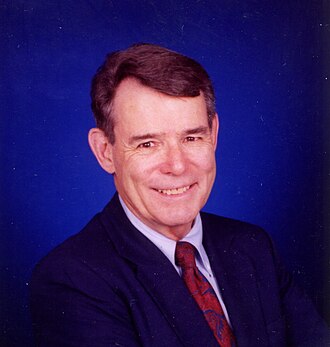
Albert Wayne Wymore was an American mathematician, systems engineer, Professor Emeritus of Systems and Industrial Engineering of the University of Arizona, and one of the founding fathers of systems engineering.
"Only if mathematical rigor is adhered to, can systems problems be dealt with effectively, and so it is that the systems engineer must, at least, develop an appreciation for mathematical rigor if not also considerable mathematical competence."
"All that can be done pedagogically is to show the student how some phenomena have been modeled, let him model some phenomena under supervision, and then hope he will be successful on his own—or know enough to secure assistance."
"[The process of system design is]... consisting of the development of a sequence of mathematical models of systems, each one more detailed than the last."
"Every author has several motivations for writing, and authors of technical books always have, as one motivation, the personal need to understand; that is, they write because they want to learn, or to understand a phenomenon, or to think through a set of ideas."
"A. Wayne Wymore founded the first academic department of Systems Engineering in the world at the University of Arizona in 1960. He pioneered Mathematical-based Systems Engineering and later led Model-based Systems Engineering. He was an early and ardent supporter of the fomenting of INCOSE. He has led self-evaluation of Systems Engineering education, and continues to be one of the most prominent theoreticians of the Systems Engineering community. In addition to his teaching, writing, and consulting, he has participated in pro bono projects to bring a Systems Engineering approach to social service organizations."
"System design can be requirements based, function based, or model based. Model based system engineering and design has an advantage of executable models that improve efficiency and rigor. One of the earliest developments of this technique was Wymore’s (1993) book entitled Model-based System Engineering, although the phrase “model-based system design” was in the title and topics of Rosenblit’s (1985) PhD dissertation. Model-based systems engineering depends on having and using well-structured models that are appropriate for the given problem domain."