Quote
"The problem of the design of a system must be stated strictly in terms of its requirements, not in terms of a solution or a class of solutions."
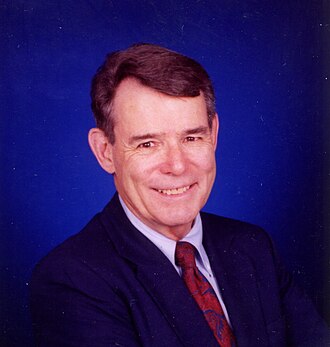 A. Wayne Wymore
A. Wayne Wymore
author ·
Albert Wayne Wymore was an American mathematician, systems engineer, Professor Emeritus of Systems and Industrial Engineering of the University of Arizona, and one of the founding fathers of systems engineering.
"The problem of the design of a system must be stated strictly in terms of its requirements, not in terms of a solution or a class of solutions."
A. Wayne Wymore"Every author has several motivations for writing, and authors of technical books always have, as one motivation, the personal need to understand; that is, they write because they want to learn, or to understand a phenomenon, or to think through a set of ideas."
A. Wayne Wymore"Over 80 million people have participated in Cub Scout Pinewood Derbies. Pinewood is a case study of the design of a Cub Scout Pinewood Derby for one particular scout pack. The system helps manage the entire race from initial entry through final results. Many alternatives for race format, scoring, and judging are presented."
A. Wayne Wymore"[The word system is often defined in a way] that seems the most appropriate for the purpose of any given discussion."
A. Wayne Wymore"[The process of system design is]... consisting of the development of a sequence of mathematical models of systems, each one more detailed than the last."
A. Wayne Wymore"During this period I was able to carry out only one project of real interest to me. Pure Oil was a fully integrated oil company in the sense that they engaged in exploration for oil, construction of oil wells, production of crude oil, transportation to refineries, distribution of refinery products to company owned storage facilities and to gas stations. We developed a linear programming model of the whole network hoping to discover the optimum allocation to and from connected nodes in order to meet required deliveries at minimum cost. Then we collected all the data needed by our model and ran the model. The computations took several days and the results were disappointing: The optimum allocations were not significantly different from their current practices. Is it possible that we had discovered a system of human beings in which everyone knew the payoff functions and constraints, and, over time, had evolved behavior patterns that enabled them to achieve near optimum performance? Or was it possible that our model was not detailed enough as it was based so closely on current practice that no new behavior could emerge? Or was our data incorrect? This was disappointing but great experience."
A. Wayne Wymore"If all the theories pertinent to systems engineering could be discussed within a common framework by means of a standard set of nomenclature and definitions, many separate courses might not be required."
A. Wayne Wymore"Only if mathematical rigor is adhered to, can systems problems be dealt with effectively, and so it is that the systems engineer must, at least, develop an appreciation for mathematical rigor if not also considerable mathematical competence."
A. Wayne Wymore"Wayne Wymore is now well established as an important leader in systems engineering and a founder of a highly original "school of thought" in the area of systems design. His contribution to this area, which will be the subject of a special issue of this journal in the near future, is best exposed in a trilogy consisting of this book and its two predecessors [Wymore, 1967, 1976]. Wymores approach to systems design is characterized by mathematical rigor, comprehensiveness, and broad applicability."
A. Wayne Wymore"A. Wayne Wymore founded the first academic department of Systems Engineering in the world at the University of Arizona in 1960. He pioneered Mathematical-based Systems Engineering and later led Model-based Systems Engineering. He was an early and ardent supporter of the fomenting of INCOSE. He has led self-evaluation of Systems Engineering education, and continues to be one of the most prominent theoreticians of the Systems Engineering community. In addition to his teaching, writing, and consulting, he has participated in pro bono projects to bring a Systems Engineering approach to social service organizations."
A. Wayne Wymore"System design can be requirements based, function based, or model based. Model based system engineering and design has an advantage of executable models that improve efficiency and rigor. One of the earliest developments of this technique was Wymore’s (1993) book entitled Model-based System Engineering, although the phrase “model-based system design” was in the title and topics of Rosenblit’s (1985) PhD dissertation. Model-based systems engineering depends on having and using well-structured models that are appropriate for the given problem domain."
A. Wayne Wymore"All that can be done pedagogically is to show the student how some phenomena have been modeled, let him model some phenomena under supervision, and then hope he will be successful on his own—or know enough to secure assistance."
A. Wayne Wymore