Quote
"My passionate interest in social justice and social responsibility has always stood in curious contrast to a marked lack of desire for direct association with men and women."
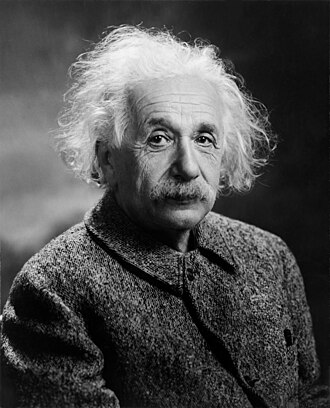 Albert Einstein
"Professor Smith has kindly submitted his book to me before publication. After reading it thoroughly and with intense interest I am glad to comply with his request to give him my impression. The work is a broadly conceived attempt to portray mans fear-induced animistic and mythic ideas with all their far-flung transformations and interrelations. It relates the impact of these phantasmagorias on human destiny and the causal relationships by which they have become crystallized into organized religion. This is a biologist speaking, whose scientific training has disciplined him in a grim objectivity rarely found in the pure historian. This objectivity has not, however, hindered him from emphasizing the boundless suffering which, in its end results, this mythic thought has brought upon man. Professor Smith envisages as a redeeming force, training in objective observation of all that is available for immediate perception and in the interpretation of facts without preconceived ideas. In his view, only if every individual strives for truth can humanity attain a happier future; the atavisms in each of us that stand in the way of a friendlier destiny can only thus be rendered ineffective. His historical picture closes with the end of the nineteenth century, and with good reason. By that time it seemed that the influence of these mythic, authoritatively anchored forces which can be denoted as religious, had been reduced to a tolerable level in spite of all the persisting inertia and hypocrisy. Even then, a new branch of mythic thought had already grown strong, one not religious in nature but no less perilous to mankind — exaggerated nationalism. Half a century has shown that this new adversary is so strong that it places in question mans very survival. It is too early for the present-day historian to write about this problem, but it is to be hoped that one will survive who can undertake the task at a later date."
Albert Einstein was a German-born theoretical physicist best known for developing the theory of relativity. Einstein also made important contributions to quantum theory. His mass–energy equivalence formula E = mc2, which arises from special relativity, has been called "the world's most famous equation". He received the 1921 Nobel Prize in Physics for "his services to theoretical physics, and espec
"My passionate interest in social justice and social responsibility has always stood in curious contrast to a marked lack of desire for direct association with men and women."
Albert Einstein"When I examine myself and my methods of thought I come to the conclusion that the gift of fantasy has meant more to me than my talent for absorbing positive knowledge."
Albert Einstein"The physicists say that I am a mathematician, and the mathematicians say that I am a physicist. I am a completely isolated man and though everybody knows me, there are very few people who really know me."
Albert Einstein"The individual has become more conscious than ever of his dependence upon society. But he does not experience this dependence as a positive asset, as an organic tie, as a protective force, but rather as a threat to his natural rights, or even to his economic existence. Moreover, his position in society is such that the egotistical drives of his make-up are constantly being accentuated, while his social drives, which are by nature weaker, progressively deteriorate."
Albert Einstein"There are few enough people with sufficient independence to see the weaknesses and follies of their contemporaries and remain themselves untouched by them. And these isolated few usually soon lose their zeal for putting things to rights when they have come face to face with human obduracy. Only to a tiny minority is it given to fascinate their generation by subtle humour and grace and to hold the mirror up to it by the impersonal agency of art. To-day I salute with sincere emotion the supreme master of this method, who has delighted — and educated — us all."
Albert Einstein"A new type of thinking is essential if mankind is to survive and move toward higher levels."
Albert Einstein"We have created a wealthy society with tens of millions of talented, resourceful individuals who play virtually no role whatsoever as citizens. Bringing these people in — with their networks of influence, their knowledge, and their resources — is the key to creating the capacity for shared intelligence that we need to solve our problems."
 Al Gore
"As in respect of the first wonder we are all on the same level, how comes it that the philosophic mind should, in all ages, be the privilege of a few? The most obvious reason is this: The wonder takes place before the period of reflection, and (with the great mass of mankind) long before the individual is capable of directing his attention freely and consciously to the feeling, or even to its exciting causes. Surprise (the form and dress which the wonder of ignorance usually puts on) is worn away, if not precluded, by custom and familiarity."
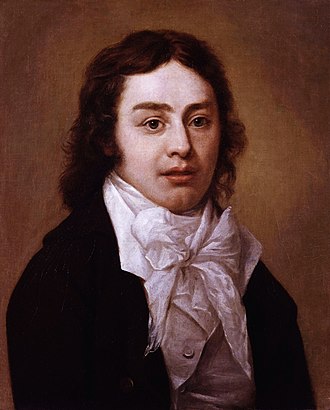 Samuel Taylor Coleridge
"The dualistic philosophy reigned supreme in Europe, dominating the development of Western science. But with the advent of atomic physics, findings based on demonstrable experiment were seen to negate the dualistic theory, and the trend of thought since then has been back to the monistic conception of the ancient Taoists."
"Under the rule of a repressive whole, liberty can be made into a powerful instrument of domination. The range of choice open to the individual is not the decisive factor in determining the degree of human freedom, but what can be chosen and what is chosen by the individual."
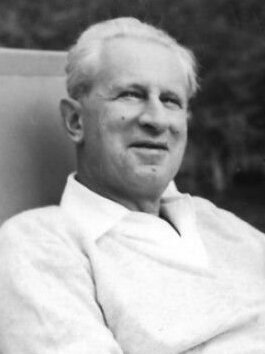 Herbert Marcuse
"All economic activity is carried out through time. Every individual economic process occupies a certain time, and all linkages between economic processes necessarily involve longer or shorter periods of time."
"I believe that the main lesson which our generation has learnt is that we must find a new limit for the activities of government, a limit which leaves ample scope for sensible experimentation but which secures the freedom of the individual as the mainspring of all social and political activity. The whole purpose of these lectures has been to suggest that we can find such a limit if we are willing to revive and develop the ancient ideal of the Rule of Law."