SHAWORDS

Robert E. Lee carried two banners toward fame and immortality. First, — Robert E. Lee

"Robert E. Lee carried two banners toward fame and immortality. First, as a soldier, he was a leader of supreme ability, highly successful by any measure of that profession. Second, he was a man of great mental capacity, of rare integrity and spiritual force. There are those historians who believe Lee suspected from the beginning that the cause of the South was virtually hopeless. He was certainly a man who by intellectual gift had to see a fact for what it was without disguising reality behind wishful thought. Yet once he had carefully examined his conscience and chosen his course, he wholeheartedly dedicated all his great military wisdom and intuition to further the Confederate cause. General Lee emerged from the War Between the States not as a vanquished commander, but as one of the great heroes of American history, and the admiration felt for him throughout the North was no less sincere than the affection he inspired among all people in the South. Other men fell from favor on both sides. The two Presidents, Davis and Lincoln, were vilified in their own camp, as well as the enemys. Other commanders, North and South alike, knew the bite of severe, persistent criticism. Even Grant and Sherman, finally to translate the overwhelming numerical and superiority of the North into victory, were not immune. But Lee rode serenely along, respected even by those who opposed the cause he served."
Robert E. Lee
Robert E. Lee
Robert E. Lee
author56 quotes

Robert Edward Lee was a Confederate general whose early actions in the American Civil War led to his appointment as the overall commander of the Confederate States Army near the end of the war. He led the Army of Northern Virginia, the Confederacy's most powerful army, from 1862 until its surrender in 1865, earning a reputation as one of the war's most skilled tacticians.

More by Robert E. Lee

View all →
Quote
"The forbearing use of power does not only form a touchstone, but the manner in which an individual enjoys certain advantages over others is a test of a true gentleman. The power which the strong have over the weak, the employer over the employed, the educated over the unlettered, the experienced over the confiding, even the clever over the silly — the forbearing or inoffensive use of all this power or authority, or a total abstinence from it when the case admits it, will show the gentleman in a plain light. The gentleman does not needlessly and unnecessarily remind an offender of a wrong he may have committed against him. He cannot only forgive, he can forget; and he strives for that nobleness of self and mildness of character which imparts sufficient strength to let the past be but the past. A true man of honor feels humbled himself when he cannot help humbling others."
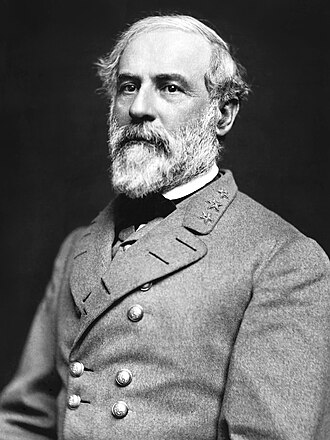
Robert E. LeeRobert E. Lee
Quote
"We were immediately taken before General Lee, who demanded the reason why we ran away. We frankly told him that we considered ourselves free. He then told us he would teach us a lesson we never would forget. He then ordered us to the barn, where, in his presence, we were tied firmly to posts by a Mister Gwin, our overseer, who was ordered by General Lee to strip us to the waist and give us fifty lashes each, excepting my sister, who received but twenty. We were accordingly stripped to the skin by the overseer, who, however, had sufficient humanity to decline whipping us. Accordingly Dick Williams, a county constable, was called in, who gave us the number of lashes ordered. General Lee, in the meantime, stood by, and frequently enjoined Williams to lay it on well, an injunction which he did not fail to heed. Not satisfied with simply lacerating our naked flesh, General Lee then ordered the overseer to thoroughly wash our backs with brine, which was done. * The evidence consisting against this account includes the testimony in 1863 in the Boston Liberator in Lees defense, in addition that Amanda Parks, sister of one of the two accompanying escaped slaves with Norris tried to visit Lee in Washington in 1866, and failing to meet him at his hotel, later wrote him. Her letter has not survived but the Generals response has and the nature of the content, combined with her attempted voluntary meeting with the man who would have whipped her brother, throws a considerable doubt upon the Norris account."
Robert E. LeeRobert E. Lee

More on Wisdom

View all →
Quote
"An [hypertext] encyclopaedia will be an overall attempt by the knowledgeable, the learned societies or anyone else, to represent the state-of-the-art in their field. An encyclopaedia will be a living document, as up to date as it can be, instantly accessible at any time. It will contain carefully authored explanations and summaries of the subject, as well as computer-generated indexes of literature. A reference to a paper from the encyclopaedia conveys authority and acceptance by academic society. A measure of a paper’s standing may be conveyed by the number of links it is away from an encyclopaedia."
Tim Berners-LeeTim Berners-Lee