Quote
"[T]he human reason discovers new relations between things not by deduction, but by that unpredictable blend of speculation and insight... induction, which—like other forms of imagination—cannot be formalized."
 Jacob Bronowski
"Science as we know it is indeed a creation of the last three hundred years. It has been made in and by the world that took its settled shape about 1660, when Europe at last shook off the long nightmare of religious wars and settled into a life of inquisitive trade and industry. Science is embodied in those new societies; it has been made by them and has helped to make them."
Jacob Bronowski was a Polish-British mathematician and philosopher. He is best known for developing a humanistic approach to science, and as the presenter and writer of the thirteen-part 1973 BBC television documentary series, and accompanying book, The Ascent of Man. He was widely regarded as "one of the most revered intellectuals on the global stage."
"[T]he human reason discovers new relations between things not by deduction, but by that unpredictable blend of speculation and insight... induction, which—like other forms of imagination—cannot be formalized."
Jacob Bronowski"When a man counts one, two, three, he is not only doing mathematics, he is on the path to the mysticism of numbers in Pythagoras and Vitruvius and Kepler, to the Trinity and the signs of the Zodiac."
Jacob Bronowski"The symbol of the University is the iron statue outside the Rathskeller of a barefoot goose girl that every student kisses at graduation. The University is a Mecca to which students come with something less than perfect faith. It is important that students bring a certain ragamuffin, barefoot irreverence to their studies; they are not here to worship what is known but to question it."
Jacob Bronowski"Almost everything that we do that is worth doing is done in the first place in the minds eye."
Jacob Bronowski"We are all afraid - for our confidence, for the future, for the world. That is the nature of the human imagination. Yet every man, every civilization, has gone forward because of its engagement with what it has set itself to do. The personal commitment of a man to his skill, the intellectual commitment and the emotional commitment working together as one, has made the Ascent of Man."
Jacob Bronowski"What we really mean by free will... is the visualizing of alternatives and making a choice between them. ...the central problem of human consciousness depends on this ability to imagine."
Jacob Bronowski"Be the change that you wish to see in the world."
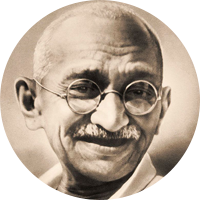 Mahatma Gandhi
"we are engaged in a grim experiment never before attempted. We are subjecting whole populations to exposure to chemicals which animal experiments have proved to be extremely poisonous and in many cases cumulative in their effect. These exposures now begin at or before birth and-unless we change our methods-will continue through the lifetime of those now living. No one knows what the result will be, because we have no previous experience to guide us."
"pity this busy monster, manunkind, not. Progress is a comfortable disease: your victim (death and life safely beyond) plays with the bigness of his littleness"
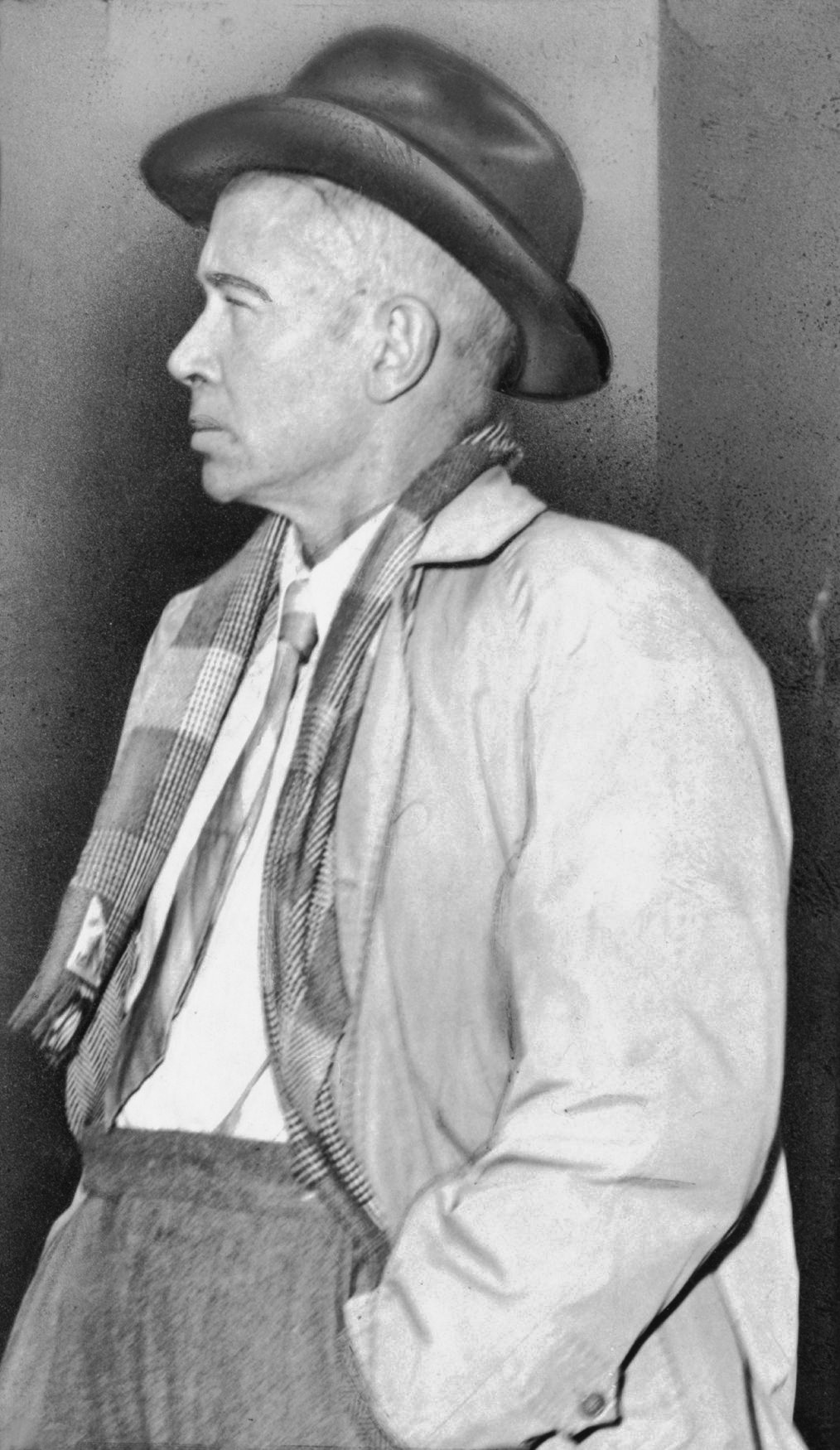 E. E. Cummings
"I believe that the unity of man as opposed to other living things derives from the fact that man is the conscious life of himself. Man is conscious of himself, of his future, which is death, of his smallness, of his impotence; he is aware of others as others; man is in nature, subject to its laws even if he transcends it with his thought."
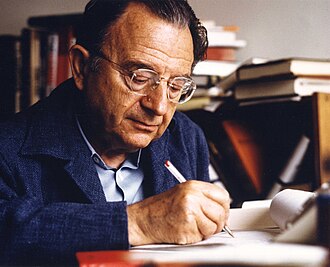 Erich Fromm
"“We need brains, is the bottom line,” Ivy said. “We’re not hunter-gatherers anymore. We’re all living like patients in the intensive care unit of a hospital. What keeps us alive isn’t bravery, or athleticism, or any of those other skills that were valuable in a caveman society. It’s our ability to master complex technological skills. It is our ability to be nerds. We need to breed nerds.”"
"I have been clinically depressed for most of my life. I once used drugs to fix it. Then I stopped. I stopped because I decided they were making me stupid, and Id rather be miserable than stupid. I am what I am."