Quote
"There had to be one man in town independent enough to sass the banker!"
S
Sinclair Lewis"She had called Martin a lie-hunter, a truth-seeker. They decided now that most people who call themselves truth-seekers—persons who scurry about chattering of Truth as though it were a tangible separable thing, like houses or salt or bread—did not so much desire to find Truth as to cure their mental itch. In novels, these truth-seekers quested the secret of life in laboratories which did not seem to be provided with Bunsen flames or reagents; or they went, at great expense and much discomfort from hot trains and undesirable snakes, to Himalayan monasteries, to learn from unaseptic sages that the Mind can do all sort of edifying things if one will but spend thirty or forty years in eating rice and gazing on ones navel. To these high matters Martin responded, Rot! He insisted that there is no Truth but only many truths; that Truth is not a colored bird to be chased among the rocks and captured by its tail, but a skeptical attitude toward life. He insisted that no one could expect more than, by stubbornness or luck, to have the kind of work he enjoyed and an ability to become better acquainted with the facts of that work than the average job-holder. ~ Ch. 25"
Harry Sinclair Lewis was an American novelist, short-story writer, and playwright. In 1930, he became the first author from the United States to receive the Nobel Prize in Literature, which was awarded "for his vigorous and graphic art of description and his ability to create, with wit and humor, new types of characters." Lewis wrote six popular novels: Main Street (1920), Babbitt (1922), Arrowsmi
"There had to be one man in town independent enough to sass the banker!"
"Slow yellow river flowing, willows that gesture in tepid August airs, and four children playing at greatness, as, doubtless, great men themselves must play."
"Probably none of the Weagles gave five minutes thought a year to theology or ecclesiology, except Ora, who occasionally stirred up a lot of interesting family irritation by announcing that he was going to become a Catholic, an Episcopalian, a Buddhist, or a Seventh Day Adventist."
"Myron reflected that there are so many people in the world who are eager to do for you things that you do not wish done, provided only that you will do for them things that you dont wish to do."
"Theyve worked out elaborate charts classifying all intellectual occupations and interests, with the methods and materials and tools, and especially the goals—the aims, the ideals, the moral purposes—that are suited to each of them. Really tremendous! Why, a musician or an engineer, for example, could look at his chart and tell accurately whether he was progressing fast enough, at his age, and if not, just what his trouble was, and the remedy. ~ Ch. 40"
"Every compulsion is put upon writers to become safe, polite, obedient, and sterile. In protest, I declined election to the National Institute of Arts and Letters some years ago, and now I must decline the Pulitzer Prize."
"Be the change that you wish to see in the world."
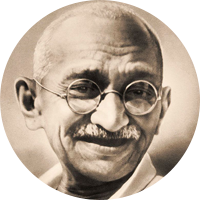 Mahatma Gandhi
"we are engaged in a grim experiment never before attempted. We are subjecting whole populations to exposure to chemicals which animal experiments have proved to be extremely poisonous and in many cases cumulative in their effect. These exposures now begin at or before birth and-unless we change our methods-will continue through the lifetime of those now living. No one knows what the result will be, because we have no previous experience to guide us."
"pity this busy monster, manunkind, not. Progress is a comfortable disease: your victim (death and life safely beyond) plays with the bigness of his littleness"
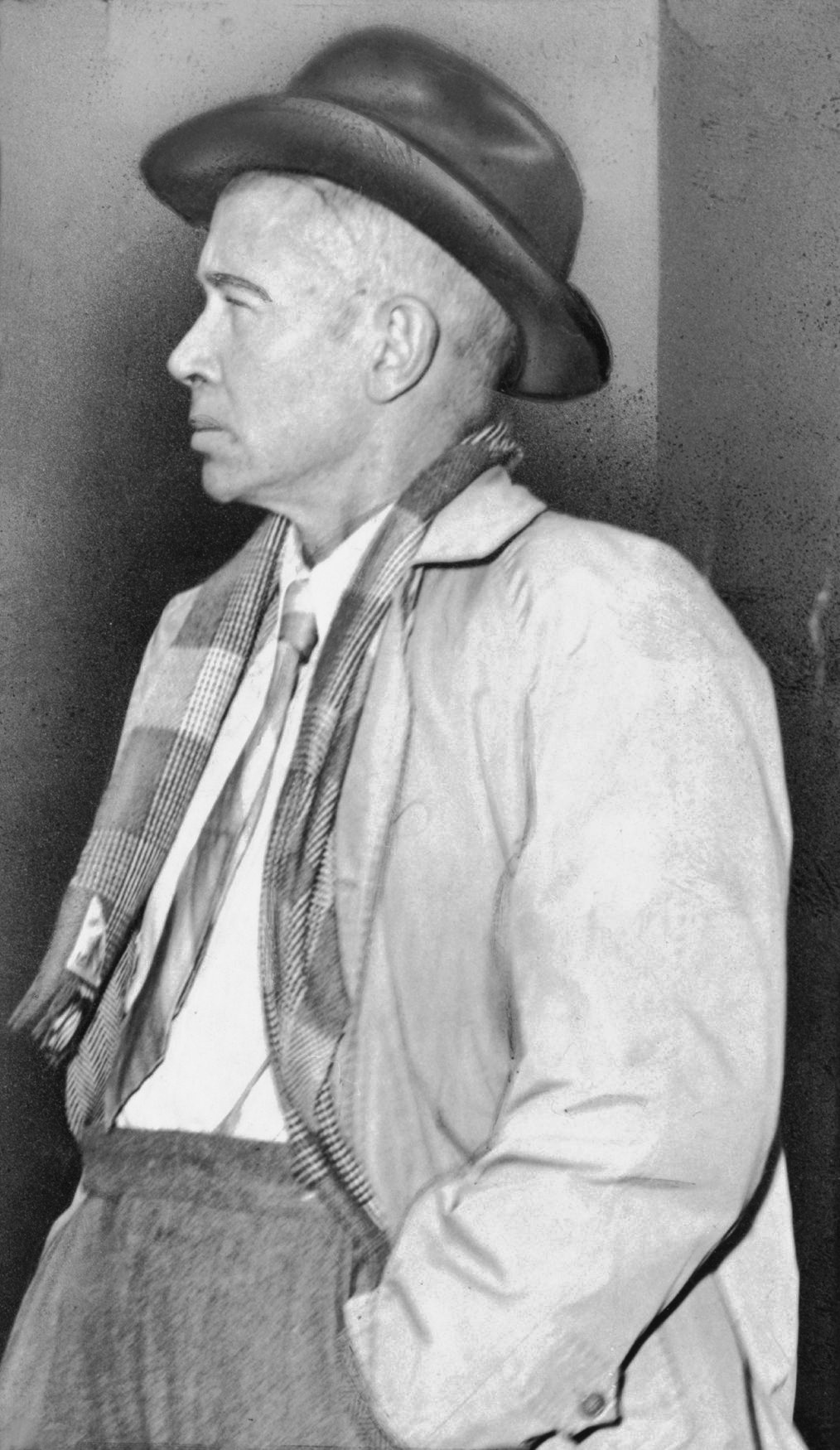 E. E. Cummings
"I believe that the unity of man as opposed to other living things derives from the fact that man is the conscious life of himself. Man is conscious of himself, of his future, which is death, of his smallness, of his impotence; he is aware of others as others; man is in nature, subject to its laws even if he transcends it with his thought."
 Erich Fromm
"“We need brains, is the bottom line,” Ivy said. “We’re not hunter-gatherers anymore. We’re all living like patients in the intensive care unit of a hospital. What keeps us alive isn’t bravery, or athleticism, or any of those other skills that were valuable in a caveman society. It’s our ability to master complex technological skills. It is our ability to be nerds. We need to breed nerds.”"
"I have been clinically depressed for most of my life. I once used drugs to fix it. Then I stopped. I stopped because I decided they were making me stupid, and Id rather be miserable than stupid. I am what I am."