Quote
"Ancient philosophy proposed to mankind an art of living. By contrast, modern philosophy appears above all as the construction of a technical jargon reserved for specialists."
P
Pierre Hadot"Socrates splits himself into two, so that there are two Socrates: the Socrates who knows in advance how the discussion is going to end, and the Socrates who travels the entire dialectical path along with his interlocutor."
Pierre Hadot was a French philosopher and historian of philosophy specializing in ancient philosophy, particularly Neoplatonism, Epicureanism and Stoicism.
"Ancient philosophy proposed to mankind an art of living. By contrast, modern philosophy appears above all as the construction of a technical jargon reserved for specialists."
"One could say that what differentiates ancient from modern philosophy is the fact that, in ancient philosophy, it was not only Chrysippus or Epicurus who, just because they had developed a philosophical discourse, were considered philosophers. Rather, every person who lived according to the precepts of Chrysippus or Epicurus was every bit as much a philosopher as they."
"Si ces expériences sont rares, elles n’en donnent pas moins sa tonalité fondamentale au mode de vie plotinien, puisque celui-ci nous apparaît maintenant comme l’attente du surgissement imprévisible de ces moments privilégiés qui donnent tout leur sens à la vie."
"À mes yeux, c’est seulement l’ascèse de la rigueur scientifique, ce détachement de soi qu’exige un jugement objectif et impartial, qui pourra nous donner le droit de nous impliquer nous-mêmes dans l’histoire, de lui donner un sens existentiel."
"Incommensurables donc, mais aussi inséparables. Pas de discours qui mérite d’être appelé philosophique, s’il est séparé de la vie philosophique, pas de vie philosophique, si elle n’est étroitement liée au discours philosophique. C’est là d’ailleurs que réside le danger inhérent à la vie philosophique: l’ambiguïté du discours philosophique."
"With the advent of medieval Scholasticism, … we find a clear distinction between theologia and philosophia. Theology became conscious of its autonomy qua supreme science, which philosophy was emptied of its spiritual exercises, which, from now on, were relegated to Christian mysticism and ethics. Reduced to the rank of a “handmaid of theology,” philosophy’s role was henceforth to furnish theology with conceptual—and hence purely theoretical—material. When, in the modern age, philosophy regained its autonomy, it still retained many features inherited from this medieval conception. In particular, it maintained its purely theoretical character, which even evolved in the direction of a more and more thorough systemization. Not until Nietzsche, Bergson, and existentialism does philosophy consciously return to being a concrete attitude, a way of life and of seeing the world."
"I should say that when people talk about capitalism its a bit of a joke. Theres no such thing. No country, no business class, has ever been willing to subject itself to the free market, free market discipline. Free markets are for others. Like, the Third World is the Third World because they had free markets rammed down their throat. Meanwhile, the enlightened states, England, the United States, others, resorted to massive state intervention to protect private power, and still do. Thats right up to the present. I mean, the Reagan administration for example was the most protectionist in post-war American history. Virtually the entire dynamic economy in the United States is based crucially on state initiative and intervention: computers, the internet, telecommunication, automation, pharmaceutical, you just name it. Run through it, and you find massive ripoffs of the public, meaning, a system in which under one guise or another the public pays the costs and takes the risks, and profit is privatized. Thats very remote from a free market. Free market is like what India had to suffer for a couple hundred years, and most of the rest of the Third World."
"He, who begins by loving Christianity better than Truth, will proceed by loving his own Sect or Church better than Christianity, and end in loving himself better than all."
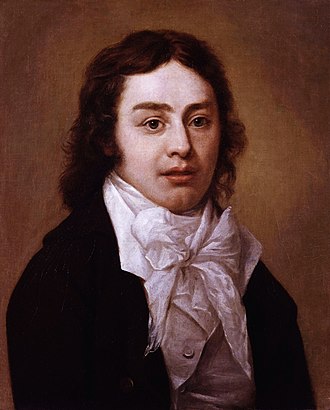 Samuel Taylor Coleridge
"I believe that the unity of man as opposed to other living things derives from the fact that man is the conscious life of himself. Man is conscious of himself, of his future, which is death, of his smallness, of his impotence; he is aware of others as others; man is in nature, subject to its laws even if he transcends it with his thought."
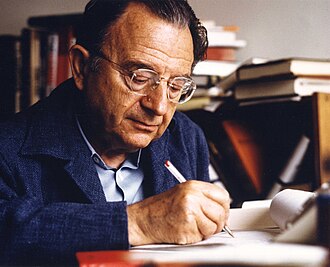 Erich Fromm
"You cant manage yourself, Root. How do you expect to manage others?"
"Do not try to make the brilliant pupil a replica of yourself."
"I believe that man is in the last resort so free a being that his right to be what he believes himself to be cannot be contested."