Quote
"A constitution that is made for all nations is made for none; it is a pure abstraction, an academic exercise made according to some hypothetical ideal, which should be addressed to man in his imaginary dwelling place."
C
Constitutions"Some men look at constitutions with sanctimonious reverence and deem them like the ark of the covenant, too sacred to be touched. They ascribe to the men of the preceding age a wisdom more than human and suppose what they did to be beyond amendment. I knew that age well; I belonged to it and labored with it. It deserved well of its country. It was very like the present but without the experience of the present; and forty years of experience in government is worth a century of book-reading; and this they would say themselves were they to rise from the dead."
A constitution, or supreme law, is the aggregate of fundamental principles or established precedents that constitute the legal basis of a polity, organization or other type of entity, and commonly determines how that entity is to be governed.
"A constitution that is made for all nations is made for none; it is a pure abstraction, an academic exercise made according to some hypothetical ideal, which should be addressed to man in his imaginary dwelling place."
"So, while the people are indeed supreme over the written Constitution, the spiritual constitution is supreme over them. The French Revolutionists wrote constitutions too—every drunken writer among them tossed off a constitution. Where are they? All vanished. Why? Because they were not in harmony with the constitution of the universe. The power of the Constitution is not dependent on any Government, but on its inherent rightness and practicability."
"By reducing too the faculty of borrowing within its natural limits, it would bridle the spirit of war, to which too free a course has been procured by the inattention of money -lenders to this law of nature, that succeeding generations are not responsible for the preceding. On similar ground it may be proved that no society can make a perpetual Constitution, or even a perpetual law. The earth belongs always to the living generation. They may manage it then, and what proceeds from it, as they please, during their usufruct. They are masters too of their own persons, and consequently may govern them as they please. But persons and property make the sum of the objects of government. The constitution and the laws of their predecessors extinguished then in their natural course with those who gave them being. This could preserve that being till it ceased to be itself, and no longer. Every constitution then, and every law, naturally expires at the end of 19 years."
"A constitution, as Solon said, is good for a certain people and for a certain time. It shouldn’t be mummified."
"I am certainly not an advocate for frequent and untried changes in laws and constitutions. I think moderate imperfections had better be borne with; because, when once known, we accommodate ourselves to them, and find practical means of correcting their ill effects. But I know also, that laws and institutions must go hand in hand with the progress of the human mind. As that becomes more developed, more enlightened, as new discoveries are made, new truths disclosed, and manners and opinions change with the change of circumstances, institutions must advance also, and keep pace with the times. We might as well require a man to wear still the coat which fitted him when a boy, as civilized society to remain ever under the regimen of their barbarous ancestors."
"A constitution is made of a spirit, institutions, and a practice."
"The wound is the place where the Light enters you."
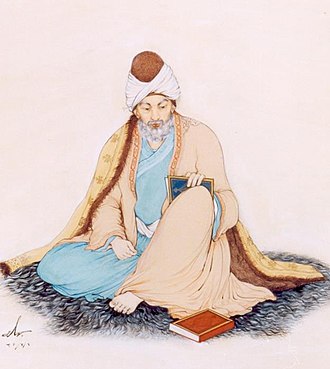 Rumi
Rumi"Be the change that you wish to see in the world."
 Mahatma Gandhi
"In philosophy equally as in poetry it is the highest and most useful prerogative of genius to produce the strongest impressions of novelty, while it rescues admitted truths from the neglect caused by the very circumstance of their universal admission."
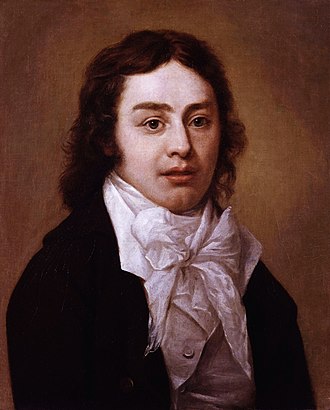 Samuel Taylor Coleridge
"An [hypertext] encyclopaedia will be an overall attempt by the knowledgeable, the learned societies or anyone else, to represent the state-of-the-art in their field. An encyclopaedia will be a living document, as up to date as it can be, instantly accessible at any time. It will contain carefully authored explanations and summaries of the subject, as well as computer-generated indexes of literature. A reference to a paper from the encyclopaedia conveys authority and acceptance by academic society. A measure of a paper’s standing may be conveyed by the number of links it is away from an encyclopaedia."
 Tim Berners-Lee
"The British intellectual tradition is empirical and liberal, the French is rationalist and aristocratic, and the German is idealist and conservative. ...In the great ontological debate between mind and matter, German philosophy comes down solidly on the side of mind. Its emphasis is intuition as opposed to reason, ideas as opposed to facts."
"To know the mighty works of God, to comprehend His wisdom and majesty and power; to appreciate, in degree, the wonderful workings of His laws, surely all this must be a pleasing and acceptable mode of worship to the Most High, to whom ignorance cannot be more grateful than knowledge."