Quote
"I was walking downstairs carrying a drink in one hand and a book in the other. Dont try that after ninety."
S
Studs Terkel"Something was still there, that something that distinguishes an artist from a performer: the revealing of self. Here I be. Not for long, but here I be. In sensing her mortality, we sensed our own."
Louis "Studs" Terkel was an American writer, historian, actor, and broadcaster. He received the Pulitzer Prize for General Nonfiction in 1985 for The Good War and is best remembered for his oral histories of common Americans, and for hosting a long-running radio show in Chicago.
"I was walking downstairs carrying a drink in one hand and a book in the other. Dont try that after ninety."
"At a time when pimpery, lick-spittlery, and picking the publics pocket are the order of the day — indeed, officially proclaimed as virtue — the poet must play the madcap to keep his balance. And ours."
"A man comes from New York. He says, "These petitions, your name is on all of them: anti-poll tax, anti-lynching, friendship with the Soviet Union.... dont you know the communists were behind them?" And he said, "Look, you can get out of this pretty easy. All you got to do is say the communists duped you. You were dumb. You didnt mean it." I said, "But I did mean it!" To this day people say, "Oh, Studs, you were so heroic." Heroic? I was scared shitless! But my ego was at stake. My vanity. "Whaddya mean, Im dumb?"
"Terkel has built a career on the hunch that pretty much everyone might be worth trying to talk to: the rich and famous, certainly, and burglars and murderers and Ku Klux Klansmen — but most of all the teeming, unexamined mass of American life in between. Armed with a tape recorder, he has interviewed hundreds of people, producing a series of books that tell the story of the American century verbatim, and from the ground up: day-labourers, poor farmers and gangsters for Hard Times, his book about the Depression; everyone from steelworkers to hookers for Working, about the realities of employment in America; and his Pulitzer Prize-winning chronicle of the second world war, The Good War. They are the sound of a nation spontaneously unburdening itself to the first person who had thought to ask."
"You know, "power corrupts, and absolute power corrupts absolutely"? Its the same with powerlessness. Absolute powerlessness corrupts absolutely. Einstein said everything had changed since the atom was split, except the way we think. We have to think anew."
"I was born in the year the Titanic sank. The Titanic went down, and I came up. That tells you a little about the fairness of life."
"I should say that when people talk about capitalism its a bit of a joke. Theres no such thing. No country, no business class, has ever been willing to subject itself to the free market, free market discipline. Free markets are for others. Like, the Third World is the Third World because they had free markets rammed down their throat. Meanwhile, the enlightened states, England, the United States, others, resorted to massive state intervention to protect private power, and still do. Thats right up to the present. I mean, the Reagan administration for example was the most protectionist in post-war American history. Virtually the entire dynamic economy in the United States is based crucially on state initiative and intervention: computers, the internet, telecommunication, automation, pharmaceutical, you just name it. Run through it, and you find massive ripoffs of the public, meaning, a system in which under one guise or another the public pays the costs and takes the risks, and profit is privatized. Thats very remote from a free market. Free market is like what India had to suffer for a couple hundred years, and most of the rest of the Third World."
"He, who begins by loving Christianity better than Truth, will proceed by loving his own Sect or Church better than Christianity, and end in loving himself better than all."
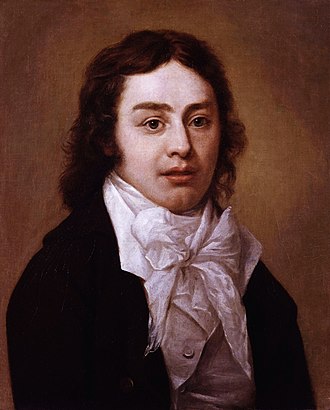 Samuel Taylor Coleridge
"I believe that the unity of man as opposed to other living things derives from the fact that man is the conscious life of himself. Man is conscious of himself, of his future, which is death, of his smallness, of his impotence; he is aware of others as others; man is in nature, subject to its laws even if he transcends it with his thought."
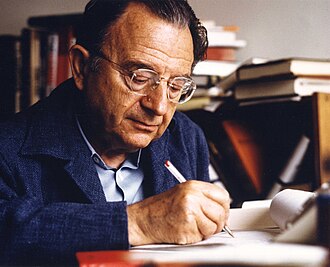 Erich Fromm
"You cant manage yourself, Root. How do you expect to manage others?"
"Do not try to make the brilliant pupil a replica of yourself."
"I believe that man is in the last resort so free a being that his right to be what he believes himself to be cannot be contested."