Quote
"I have very strongly this feeling... that our everyday life is at one and the same time banal, overfamiliar, platitudinous and yet mysterious and extraordinary."
B
Bryan Magee"Speaking for myself, I am not one of those people who are able to deal with the problem by ignoring the questions: it may be a matter of temperament, but for me the apparent unanswerability of the questions sharpens the persistence with which they nag at my mind. Scarcely a day has gone by since my childhood in which I have not thought of them. In fact, the truth is that I have lived my life in thrall to them. They seem to me obviously the most important and interesting questions there are, and in my heart of hearts I do not really understand why not everybody sees them as such. And yet at the end of it all I have no solutions. I am as baffled now by the larger metaphysical questions of my existence as I was when I was a child — indeed more so, because my understanding of the depths and difficulties of the questions themselves is now so much greater."
Bryan Edgar Magee was a British philosopher, broadcaster, politician, and author, known for bringing philosophy to a popular audience.
"I have very strongly this feeling... that our everyday life is at one and the same time banal, overfamiliar, platitudinous and yet mysterious and extraordinary."
"The basic drive behind real philosophy is curiosity about the world, not interest in the writings of philosophers. Each of us emerges from the preconsciousness of babyhood and simply finds himself here, in it, in the world. That experience alone astonishes some people. What is all this — what is the world? And what are we? From the beginning of humanity some have been under a compulsion to ask these questions, and have felt a craving for the answers. This is what is really meant by any such phrase as "mankinds need for metaphysics."
"As Voltaire once remarked, "It is the privilege of the real genius, especially one who opens up a new path, to make great mistakes with impunity." The Copernican revolution brought about by Kant was, I think, the most important single turning point in the history of philosophy. For that reason there has been, ever since, a watershed in understanding between those who have taken his work on board and those who have not. For a good many of the problems he uncovered, the solutions he put forward have not stood the test of time, but his uncovering of the problems remains the most illuminating thing a philosopher has ever done. Because of the fundamental character of these problems, and because Kant did not solve them, confronting them has been the most important challenge to philosophy ever since."
"It could be that the total scenario for human beings is an insoluble mystery until we die, followed by nothing at all."
"Some of my readers may find themselves thinking that the mere fact that millions of human beings, including many highly intelligent and deeply thoughtful ones, have had strongly held religious beliefs is itself a reason for giving them serious intellectual attention — not necessarily for believing them, of course, but for finding them interesting and for treating them with respect. I would agree with this if the reasons given for them commanded respect. But I have yet to encounter such reasons. What are claimed as proofs are not proofs, and all such "proofs" have long since been discredited, the most important of them by Christians themselves, such as Kant. Yet they go on being trotted out: assertions are made without evidence; mutually contradictory claims proliferate; historical knowledge is defied; mistranslations abound; language is used in a way that slithers unacknowledged between literal meaning and metaphor; the whole vocabulary rests on unsecured presuppositions. Superstitions and belief in magic are perennial in just the same way as religion, and something near to being universal among mankind; and why this is so may be interesting, but in most cases the beliefs themselves are devoid of interesting content, at least to me."
"Be the change that you wish to see in the world."
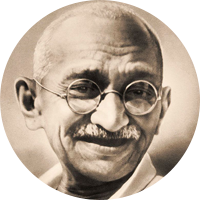 Mahatma Gandhi
"we are engaged in a grim experiment never before attempted. We are subjecting whole populations to exposure to chemicals which animal experiments have proved to be extremely poisonous and in many cases cumulative in their effect. These exposures now begin at or before birth and-unless we change our methods-will continue through the lifetime of those now living. No one knows what the result will be, because we have no previous experience to guide us."
"pity this busy monster, manunkind, not. Progress is a comfortable disease: your victim (death and life safely beyond) plays with the bigness of his littleness"
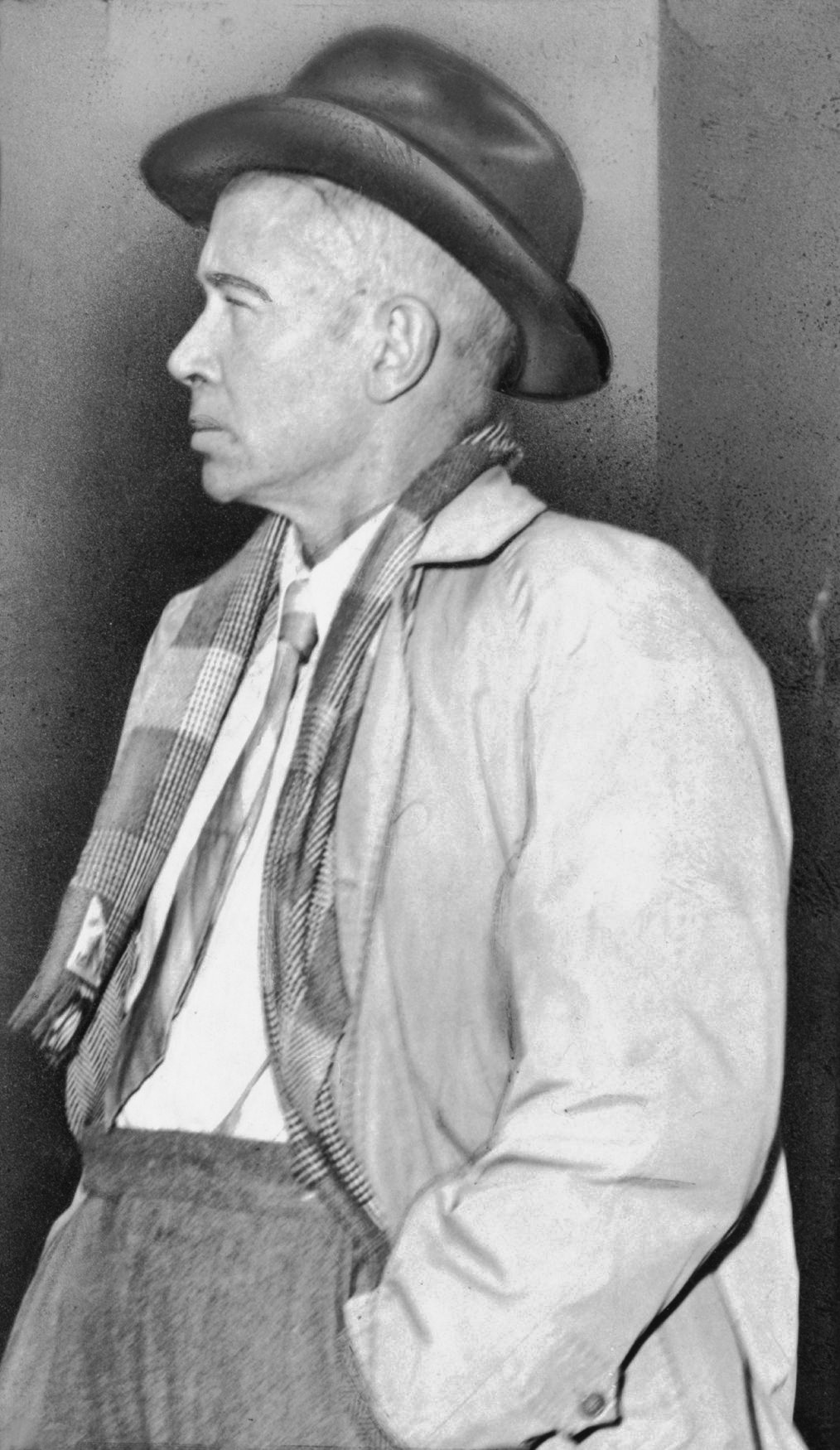 E. E. Cummings
"I believe that the unity of man as opposed to other living things derives from the fact that man is the conscious life of himself. Man is conscious of himself, of his future, which is death, of his smallness, of his impotence; he is aware of others as others; man is in nature, subject to its laws even if he transcends it with his thought."
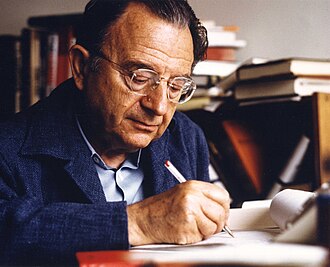 Erich Fromm
"“We need brains, is the bottom line,” Ivy said. “We’re not hunter-gatherers anymore. We’re all living like patients in the intensive care unit of a hospital. What keeps us alive isn’t bravery, or athleticism, or any of those other skills that were valuable in a caveman society. It’s our ability to master complex technological skills. It is our ability to be nerds. We need to breed nerds.”"
"I have been clinically depressed for most of my life. I once used drugs to fix it. Then I stopped. I stopped because I decided they were making me stupid, and Id rather be miserable than stupid. I am what I am."