SHAWORDS

[T]he book will trace the concentration camps origins in the nineteent — Concentration camp

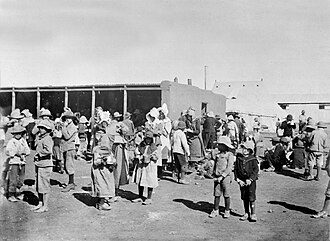
"[T]he book will trace the concentration camps origins in the nineteenth-century colonial settings such as Australia and the United States, in Cuba, South Africa, and German South-West Africa (today Namibia) in the last years of the nineteenth and first years of the twentieth centuries, and in the genocide of Armenians during the last days of the Ottoman Empire. It will go on to examine the Nazi camp system, comparing labour camps devised to build the racial community with concentration camps... to exclude and eventually eradicate unwanted others. It will show that the images and testimonies of the liberation of the Nazi camps have shaped our definition of concentration camps. It will... examine the Stalinist system of camps and special settlements known as the and compare the totalitarian countries use of camps with those of other... settings, such as the American internment of Japanese-American citizens during the Second World War, Francos camps during and after the Spanish Civil War, Britains use of camps for Jewish displaced persons in Cyprus trying to reach Palestine after the Second World War, the colonial powers resort to camps during the wars of decolonization, such as in Algeria, Malaya, and Kenya, the Chinese use of camps during the Maoist period, the Khmer Rouges attempt to turn the whole of Cambodia into a giant concentration camp in the 1970s, the reappearance of concentration camps during the genocide in Bosnia in the 1990s, and the contemporary camp system in North Korea. I will show that this widespread use of concentration camps... tells us something about the modern state and about the ways... such practices are learned, borrowed, and spread..."
Concentration camp
Concentration camp
Concentration camp
author34 quotes

A concentration camp is a prison or other facility used for the internment of political prisoners or politically targeted demographics, such as members of national or ethnic minority groups, on the grounds of national security, or for exploitation or punishment.

More by Concentration camp

View all →
Quote
"Total loyalty to the movement, which is the psychological basis for total domination, can be expected, Arendt contends, "only from the completely isolated human being" who does not have any social ties. In times of war, revolution, or economic crisis, these masses of isolated people become available for mobilization by totalitarian regimes. Membership... promises... a cure for their "loneliness" and feeling of "not belonging to the world..." The totalitarian propaganda offers "a lying world of consistency which is more adequate to [their] needs... than reality itself." Clinging to the ideology and propaganda of the... movement, these "uprooted masses" can feel at home "through sheer imagination." ...[I]n Arendts conception of total domination, the subjects of this power move in two distinct circles: the wider circle... in society... members... prepared to provide total loyalty to the movement. The narrower circle... inmates of the concentration camps—the "laboratories" in which the experiment of total domination is fully realized."
Concentration campConcentration camp
Quote
"The Gulag had antecedents in Czarist Russia, in the forced-labor brigades... in Siberia from the seventeenth century to the beginning of the twentieth. It... took on its modern... familiar form almost immediately after the Russian Revolution. Mass terror against real and alleged opponents was part of the Revolution from the very beginning—and by... 1918, Lenin... had already demanded that "unreliable elements" be locked up in concentration camps outside major towns. A string of aristocrats, merchants, and other people defined as potential "enemies" were duly imprisoned. By 1921, there were... eighty-four camps... mostly designed to "rehabilitate" these first enemies of the people."
Concentration campConcentration camp
Quote
"[A] high school teacher in Granada, a woman of Navajo ancestry married to a Chicano... related that she had been there when the trains came in and had seen "the people crying and herded like cattle into army trucks and hauled up to the camp." ...[S]he came right up with the tabooed words: "We [Granadians] were the recipients of the concentration camp." But had no one in town protested..? No... "There was a lot of prejudice in here in the Arkansas Valley then. Stores in Lamar... had signs: NO JAPS ALLOWED."
Concentration campConcentration camp
Quote
"Until the very end... Foucault continued to investigate the "process of subjectivization" that, in the passage from the ancient to the modern world, bring the individual to objectify his own self, constituting himself as a subject and, at the same time, binding himself to a power of external control. ...Foucault never brought his insights to bear on... the exemplary place of modern : the politics of the great totalitarian states of the twentieth century. The inquiry that began with a reconstruction of the grand enfermement in hospitals and prisons did not end with an analysis of the concentration camp. If, on the other hand... studies of Hannah Arendt dedicated to the structure of totalitarian states in the postwar period, have a limit, it is precisely the absence of any biopolitical perspective. Arendt very clearly discerns the link between totalitarian rule and the particular condition of life that is the camp: "The supreme goal of all totalitarian states," she writes... "is not only the freely admitted, long ranging ambition for global rule, but also the never admitted and immediately realized attempt at total domination. The concentration camps are the laboratories in the experiment of total domination, for, human nature being what it is, this goal can be achieved only under the extreme circumstances of human made hell."
Concentration campConcentration camp