Quote
"One hates to think that all of existence is trivial."
S
Sheri S. Tepper"“The human problem?” I asked, somewhat offended. She put her arm around me. “Forgive me, Gretamara, but your race as a whole has the unfailing habit of fouling its nest, killing its original planet, and doing its best to kill any others to which it is moved. Because we love and admire the human race for its many good qualities, we call this not ‘the human condition,’ meaning an irrevocable state, but ‘the human problem,’ one we wish to solve. The effort has gone on for some millennia, without result, and some of those involved in the effort are beginning to believe it is a waste of time and treasure.”"
Sheri Stewart Tepper was an American writer of science fiction, horror and mystery novels. She is primarily known for her feminist science fiction, which explored themes of sociology, gender and equality, as well as theology and ecology. Often referred to as an eco-feminist of science fiction literature, Tepper personally preferred the label eco-humanist. Some of her novels fall into the category
"One hates to think that all of existence is trivial."
"“Love cannot be owed,” said the retreating shadow. “It can only be given.”"
"“This is not philosophy, this is reality. Will you please keep in mind what’s going on!”"
"Perhaps my cynicism comes in good time. Better I have it early than too late."
"Don’t you find that predators are those who most often assert absolute rights to personal freedoms?"
"“Oh, but I am soiled beyond all cleansing.…” “Nonsense,” said Mavin impatiently. “You are silly beyond all belief, but that is your sole sin I am aware of, young man.”"
"At one point a heated discussion arose over the possible interpretation of Lolita as a grandiose metaphor of the classic Europeans hopeless love for young, seductive, barbaric America. In his afterword to the novel Nabokov himself mentions this as the naive theory of one of the publishers who turned the book down. And although there cant be the slightest doubt that Nabokov did not mean to limit Lolita to that interpretation, there is no reason to exclude it as one of the novels many dimensions. The point, I felt, became obvious when one drew the line between Lolita as a delightfully frivolous story on the verge of pornography and Lolita as a literary masterpiece, the only convincing love story of our century."
 Lolita
"Lovely food, for rabbits, that is."
"One makes mistakes; that is life. But it is never a mistake to have loved."
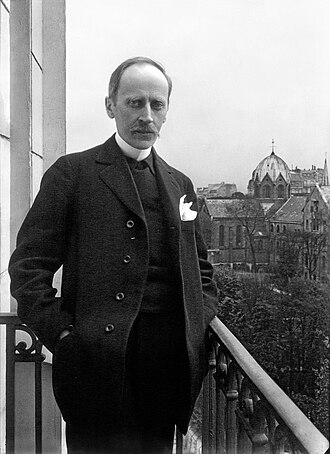 Romain Rolland
"[explaining to Ernie how April apologized to him] She just showed up at the factory, took off her coat, and begged me to take her. We made love in a way that Ive only ever seen in nature films."
 MouseHunt (film)
"Love is always love, come whence it may. A heart that beats at your approach, an eye that weeps when you go away are things so rare, so sweet, so precious that they must never be despised."
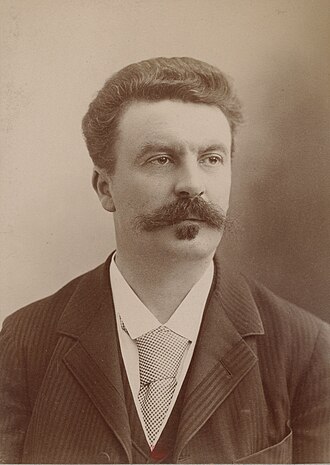 Guy de Maupassant
"He was obeyed, yet he inspired neither love nor fear, nor even respect. He inspired uneasiness. That was it! Uneasiness. Not a definite mistrust — just uneasiness — nothing more. You have no idea how effective such a... a... faculty can be. He had no genius for organizing, for initiative, or for order even. That was evident in such things as the deplorable state of the station. He had no learning, and no intelligence. His position had come to him — why? Perhaps because he was never ill . . . He had served three terms of three years out there . . . Because triumphant health in the general rout of constitutions is a kind of power in itself."