Quote
"A sentence always means more. Even a single word, within the weave of incommensurable connotation, can, and usually does."
 George Steiner
"The journalistic vision sharpens to the point of maximum impact every event, every individual and social configuration; but the honing is uniform."
Francis George Steiner, FBA was a French and American literary critic, essayist, philosopher, novelist and educator. He wrote extensively about the relationship between language, literature and society, as well as the impact of the Holocaust. A 2001 article in The Guardian described Steiner as a "polyglot and polymath".
"A sentence always means more. Even a single word, within the weave of incommensurable connotation, can, and usually does."
George Steiner"For it is a plain fact that, most certainly in the West, the writings, works of art, musical compositions which are of central reference, comport that which is "grave and constant" (Joyces epithets) in the mystery of our condition."
George Steiner"Tragedy springs from outrage; it protests at the conditions of life. It carries in it the possibilities of disorder, for all tragic poets have something of the rebelliousness of Antigone. Goethe, on the contrary, loathed disorder. He once said that he preferred injustice, signifying by that cruel assertion not his support for reactionary political ideals, but his conviction that injustice is temporary and reparable whereas disorder destroys the very possibilities of human progress. Again, this is an anti-tragic view; in tragedy it is the individual instance of injustice that infirms the general pretence of order. One Hamlet is enough to convict a state of rottenness."
George Steiner"We come after. We know now that a man can read Goethe or Rilke in the evening, that he can play Bach and Schubert, and go to his days work at Auschwitz in the morning. To say that he has read them without understanding or that his ear is gross, is cant. In what way does this knowledge bear on literature and society, on the hope, grown almost axiomatic from the time of Plato to that of Matthew Arnold, that culture is a humanizing force, that the energies of spirit are transferable to those of conduct?"
George Steiner"What lies beyond mans word is eloquent of God. That is the joyously defeated recognition expressed in the poems of St. John of the Cross and of the mystic tradition."
George Steiner"Almost alone among cognitive-aesthetic movements and strategies of interpretation, deconstruction neither champions any body of past literature or art, nor does it act as vanguard or advocate for any contemporary or incipient school. The New Criticism and T. S. Eliot strove for the revaluation of Metaphysical poetry so as to underwrite, in turn, certain tactics of modenity. Aristotle was advocate for Sophocles. Deconstruction is, intentionally, marginal (a key trope) to all histories of taste and manifestos for innovation."
George Steiner"We have created a wealthy society with tens of millions of talented, resourceful individuals who play virtually no role whatsoever as citizens. Bringing these people in — with their networks of influence, their knowledge, and their resources — is the key to creating the capacity for shared intelligence that we need to solve our problems."
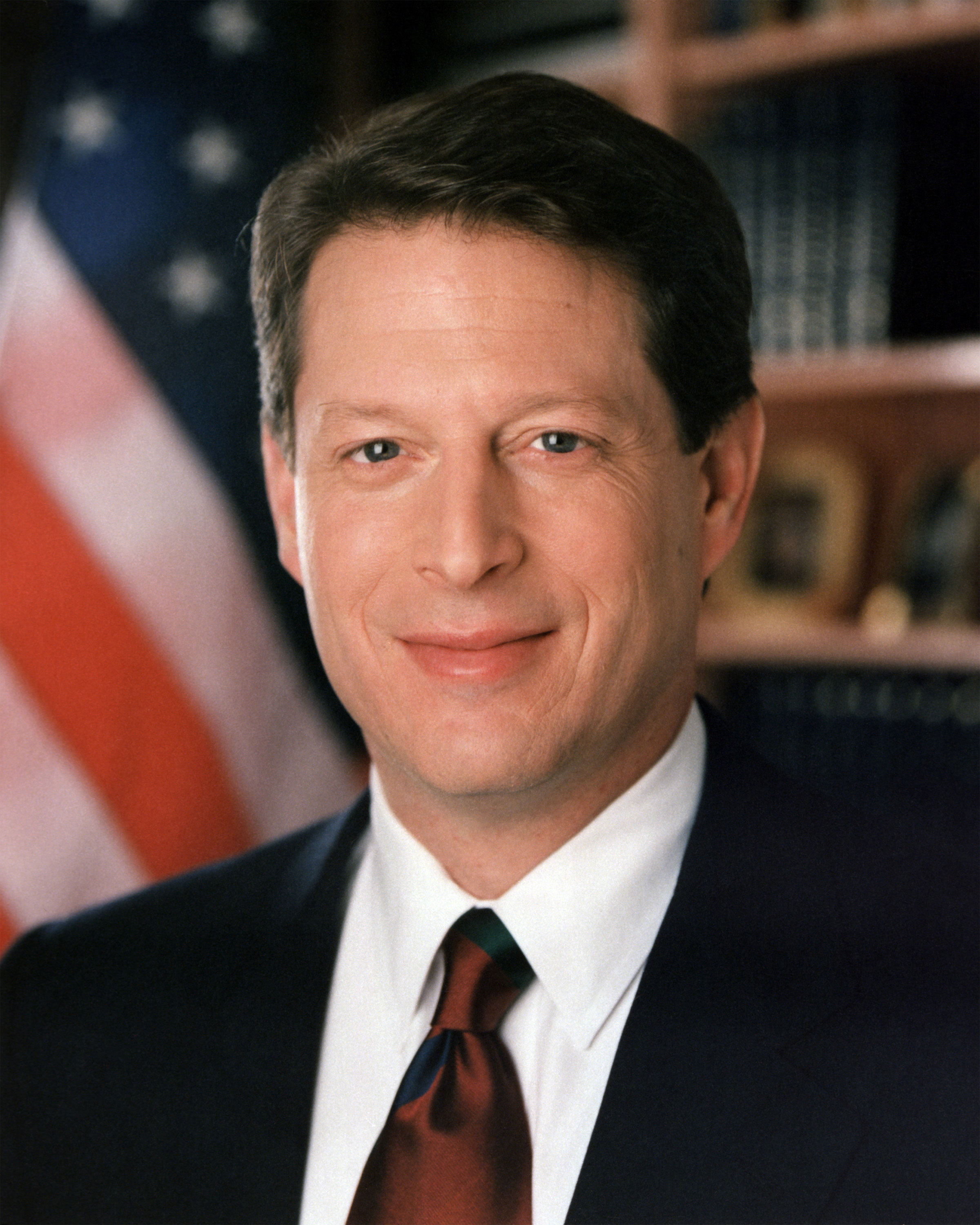 Al Gore
"As in respect of the first wonder we are all on the same level, how comes it that the philosophic mind should, in all ages, be the privilege of a few? The most obvious reason is this: The wonder takes place before the period of reflection, and (with the great mass of mankind) long before the individual is capable of directing his attention freely and consciously to the feeling, or even to its exciting causes. Surprise (the form and dress which the wonder of ignorance usually puts on) is worn away, if not precluded, by custom and familiarity."
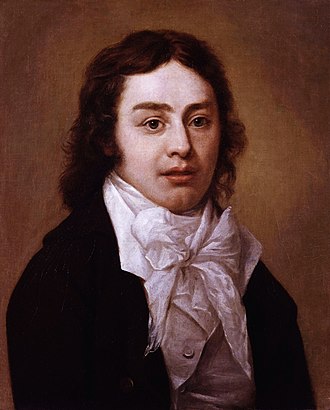 Samuel Taylor Coleridge
"The dualistic philosophy reigned supreme in Europe, dominating the development of Western science. But with the advent of atomic physics, findings based on demonstrable experiment were seen to negate the dualistic theory, and the trend of thought since then has been back to the monistic conception of the ancient Taoists."
"Under the rule of a repressive whole, liberty can be made into a powerful instrument of domination. The range of choice open to the individual is not the decisive factor in determining the degree of human freedom, but what can be chosen and what is chosen by the individual."
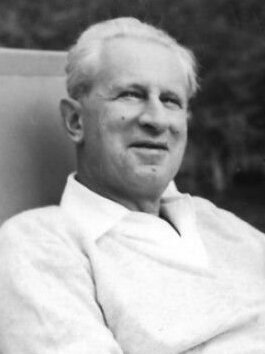 Herbert Marcuse
"All economic activity is carried out through time. Every individual economic process occupies a certain time, and all linkages between economic processes necessarily involve longer or shorter periods of time."
"I believe that the main lesson which our generation has learnt is that we must find a new limit for the activities of government, a limit which leaves ample scope for sensible experimentation but which secures the freedom of the individual as the mainspring of all social and political activity. The whole purpose of these lectures has been to suggest that we can find such a limit if we are willing to revive and develop the ancient ideal of the Rule of Law."