SHAWORDS

The judgment that human life is worth living, or rather can and ought — Herbert Marcuse

"The judgment that human life is worth living, or rather can and ought to be made worth living, … underlies all intellectual effort; it is the a priori of social theory, and its rejection (which is perfectly logical) rejects theory itself."
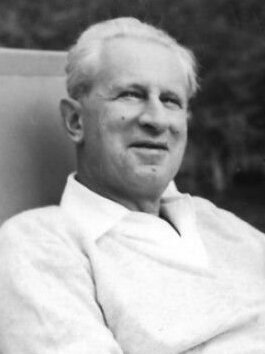
Herbert Marcuse
Herbert Marcuse
Herbert Marcuse
author138 quotes

Herbert Marcuse was a German and American philosopher, social critic, and political theorist, associated with the Frankfurt School of critical theory. Born in Berlin, Marcuse studied at the Friedrich Wilhelm University of Berlin and then at the University of Freiburg, where he received his PhD. He was a prominent figure in the Frankfurt-based Institute for Social Research, which later became known

More by Herbert Marcuse

View all →
Quote
"They [great works of literature] are invalidated not because of their literary obsolescence. Some of these images pertain to contemporary literature and survive in its most advanced creations. What has been invalidated is their subversive force, their destructive content—their truth. In this transformation, they find their home in everyday living. The alien and alienating oeuvres of intellectual culture become familiar goods and services. Is their massive reproduction and consumption only a change in quantity, namely, growing appreciation and understanding, democratization of culture? The truth of literature and art has always been granted (if it was granted at all) as one of a “higher” order, which should not and indeed did not disturb the order of business. What has changed in the contemporary period is the difference between the two orders and their truths. The absorbent power of society depletes the artistic dimension by assimilating its antagonistic contents. In the realm of culture, the new totalitarianism manifests itself precisely in a harmonizing pluralism, where the most contradictory works and truths peacefully coexist in indifference. Prior to the advent of this cultural reconciliation, literature and art were essentially alienation, sustaining and protecting the contradiction—the unhappy consciousness of the divided world, the defeated possibilities, the hopes unfulfilled, and the promises betrayed. They were a rational, cognitive force, revealing a dimension of man and nature which was repressed and repelled in reality."
Herbert MarcuseHerbert Marcuse

More on Life

View all →