SHAWORDS

the sword also means clean-ness + death — T. E. Lawrence

"the sword also means clean-ness + death"
T
T. E. Lawrence
T. E. Lawrence
author44 quotes

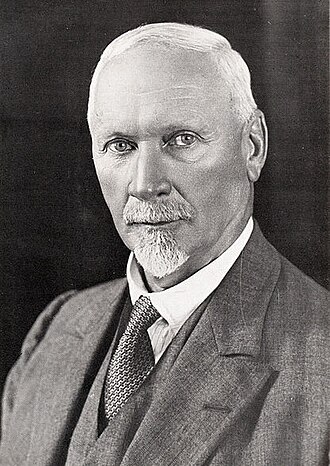
Thomas Edward Lawrence was a British Army officer, archaeologist, diplomat and writer known for his role during the Arab Revolt and Sinai and Palestine campaign against the Ottoman Empire in the First World War. The breadth and variety of his activities and associations, and Lawrence's ability to describe them vividly in writing, earned him international fame as Lawrence of Arabia, a title used fo

More by T. E. Lawrence

View all →
Quote
"The people of England have been led in Mesopotamia into a trap from which it will be hard to escape with dignity and honor. They have been tricked into it by a steady withholding of information. The Baghdad communiques are belated, insincere, incomplete. Things have been far worse than we have been told, our administration more bloody and inefficient than the public knows. It is a disgrace to our imperial record, and may soon be too inflamed for any ordinary cure. We are today not far from a disaster."
T
T. E. Lawrence
Quote
"Men have looked upon the desert as barren land, the free holding of whoever chose; but in fact each hill and valley in it had a man who was its acknowledged owner and would quickly assert the right of his family or clan to it, against aggression. Even the wells and trees had their masters, who allowed men to make firewood of the one and drink of the other freely, as much as was required for their need, but who would instantly check anyone trying to turn the property to account and to exploit it or its products among others for private benefit. The desert was held in a crazed communism by which Nature and the elements were for the free use of every known friendly person for his own purposes and no more. Logical outcomes were the reduction of this licence to privilege by the men of the desert, and their hardness to strangers unprovided with introduction or guarantee, since the common security lay in the common responsibility of kinsmen."
T
T. E. Lawrence
Quote
"The Bedouin could not look for God within him: he was too sure that he was within God. He could not conceive anything which was or was not God, Who alone was great; yet there was a homeliness, an everyday-ness of this climatic Arab God, who was their eating and their fighting and their lusting, the commonest of their thoughts, their familiar resource and companion, in a way impossible to those whose God is so wistfully veiled from them by despair of their carnal unworthiness of Him and by the decorum of formal worship. Arabs felt no incongruity in bringing God into the weaknesses and appetites of their least creditable causes. He was the most familiar of their words; and indeed we lost much eloquence when making Him the shortest and ugliest of our monosyllables. This creed of the desert seemed inexpressible in words, and indeed in thought. It was easily felt as an influence, and those who went into the desert long enough to forget its open spaces and its emptiness were inevitably thrust upon God as the only refuge and rhythm of being. The Bedawi might be a nominal Sunni, or a nominal Wahabi, or anything else in the Semitic compass, and he would take it very lightly, a little in the manner of the watchmen at Zions gate who drank beer and laughed in Zion because they were Zionists. Each individual nomad had his revealed religion, not oral or traditional or expressed, but instinctive in himself; and so we got all the Semitic creeds with (in character and essence) a stress on the emptiness of the world and the fullness of God; and according to the power and opportunity of the believer was the expression of them."
T
T. E. Lawrence

More on Death

View all →
Quote
"I did not go to join Kurtz there and then. I did not. I remained to dream the nightmare out to the end, and to show my loyalty to Kurtz once more. Destiny. My destiny! Droll thing life is — that mysterious arrangement of merciless logic for a futile purpose. The most you can hope from it is some knowledge of yourself — that comes too late — a crop of unextinguishable regrets. I have wrestled with death. It is the most unexciting contest you can imagine. It takes place in an impalpable grayness, with nothing underfoot, with nothing around, without spectators, without clamor, without glory, without the great desire of victory, without the great fear of defeat, in a sickly atmosphere of tepid skepticism, without much belief in your own right, and still less in that of your adversary. If such is the form of ultimate wisdom, then life is a greater riddle than some of us think it to be. I was within a hairs-breadth of the last opportunity for pronouncement, and I found with humiliation that probably I would have nothing to say. This is the reason why I affirm that Kurtz was a remarkable man. He had something to say. He said it. Since I had peeped over the edge myself, I understand better the meaning of his stare, that could not see the flame of the candle, but was wide enough to embrace the whole universe, piercing enough to penetrate all the hearts that beat in the darkness. He had summed up — he had judged. The horror! He was a remarkable man. After all, this was the expression of some sort of belief; it had candor, it had conviction, it had a vibrating note of revolt in its whisper, it had the appalling face of a glimpsed truth — the strange commingling of desire and hate."
H
Heart of Darkness
Quote
"Oh Rama, here I go again! Listen to you, sounding like Death Vader. You people need cigarettes as much as this country needs another C-average President. Plus you look like a human Pez dispenser! Here are your cigarettes, and here is some gum so you can blow bubbles for that WEIRD-ASS HOLE YOU HAVE IN YOUR NECK. And here are some batteries, for your creeping-me-out machine. Now get the park out of my store! I hope I am reincarnated as a turtleneck... I like to tank you for getting that joke!"
M
Mind of Mencia
Quote
"I also know that the shock of Annabels death consolidated the frustration of that nightmare summer, made of it a permanent obstacle to any further romance throughout the cold years of my youth. The spiritual and the physical had been blended in us with a perfection that must remain incomprehensible to the matter-of-fact, crude, standard-brained youngsters of today. Long after her death I felt her thoughts floating through mine. Long before we met we had had the same dreams. We compared notes. We found strange affinities. The same June of the same year (1919) a stray canary had fluttered into her house and mine, in two widely separated countries. Oh, Lolita, had you loved me thus!"
LolitaLolita