Quote
"First, utopianism is probably a necessary social device for generating the superhuman efforts without which no major revolution is achieved."
E
Eric Hobsbawm"There are cases - perhaps mine is among them - where this discovery can be particularly helpful. Much of my life, probably most of my conscious life, was devoted to a hope which has been plainly disappointed, and to a cause which has plainly failed: the communism initiated by the October Revolution. But there is nothing which can sharpen the historians mind like defeat."
Eric John Ernest Hobsbawm was a British historian of the rise of industrial capitalism, socialism and nationalism. His best-known works include his tetralogy about what he called the "long 19th century" and the "short 20th century", and an edited volume that introduced the influential idea of "invented traditions". He was a life-long Marxist, and his socio-political convictions influenced the char
"First, utopianism is probably a necessary social device for generating the superhuman efforts without which no major revolution is achieved."
"Religion, from being something like the sky, from which no man can escape and which contains all that is above the earth, became something like a bank of clouds, a large but limited and changing feature of the human firmament. Of all the ideological changes this is by far the most profound, though its practical consequences were more ambiguous and undetermined than was then supposed. At all events, it is the most unprecedented."
"Much less useful, I think however, is the search for deep structures and particularly the search for la conscience. I may be entirely heterodox, but I dont think historians have an awful lot to learn from Freud, who was a bad historian, whenever he actually wrote anything about history. I have no opinions about Freuds psychology, but I regard the belated discovery of Freud in France some forty years after the rest of the world as by no means an unqualified plus. It seems to me it is a minus, insofar as it diverts attention into the unconscious or deep structures from, I wont say conscious, but anyway logical cohesion. It neglects system. It seems to me the problem of mentalities is not simply that of discovering that people are different, and how they are different, and making readers feel the difference, as Richard Cobb does so well. It is to find a logical connection between various forms of behaviour, of thinking and feeling, to see them as being mutually consistent. It is, if you like, to see why it makes sense, let us say, for people to believe about famous robbers that they are invisible and invulnerable, even though they obviously are not. We must see such beliefs not purely as an emotional reaction but as part of a coherent system of beliefs about society, about the role of those who believe, and the role of those about whom the beliefs are held."
"Though the web of history cannot be unravelled into separate threads without destroying it, a certain amount of subdivision of the subject is, for practical purposes, essential."
"Nevertheless it is evident — if only from the Greek example just cited — that proto-nationalism, where it existed, made the task of nationalism easier, however great the differences between the two, insofar as existing symbols and sentiments of proto-national community could he mobilized behind a modern cause or a modern state. But this is far from saying that the two were the same, or even that one must logically or inevitably lead into the other. For it is evident that proto-nationalism alone is clearly not enough to form nationalities, nations, let alone states."
"Words are witnesses which often speak louder than documents. Let us consider a few English words, which were invented or gained their modern meanings, substantially in the period of sixty years with which this volume deals. They are such words as industry, industrialist, factory, middle class, working class, and socialism. They include aristocracy, as well as railway, liberal and conservative as political terms, nationality, scientist, and engineer, proletariat, and (economic) crisis."
"Be the change that you wish to see in the world."
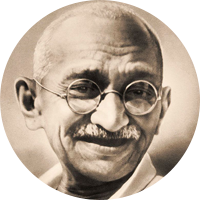 Mahatma Gandhi
"we are engaged in a grim experiment never before attempted. We are subjecting whole populations to exposure to chemicals which animal experiments have proved to be extremely poisonous and in many cases cumulative in their effect. These exposures now begin at or before birth and-unless we change our methods-will continue through the lifetime of those now living. No one knows what the result will be, because we have no previous experience to guide us."
"pity this busy monster, manunkind, not. Progress is a comfortable disease: your victim (death and life safely beyond) plays with the bigness of his littleness"
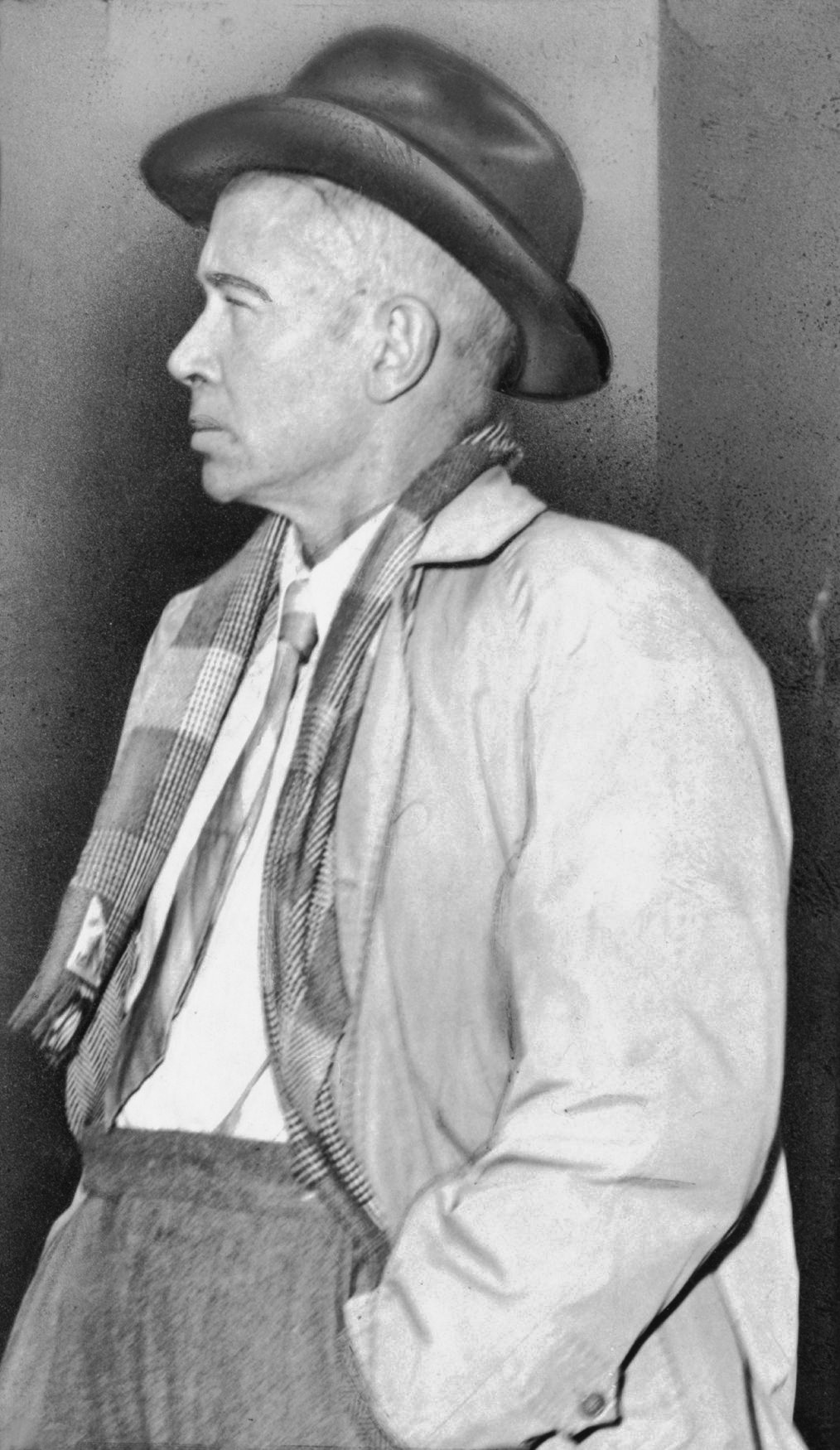 E. E. Cummings
"I believe that the unity of man as opposed to other living things derives from the fact that man is the conscious life of himself. Man is conscious of himself, of his future, which is death, of his smallness, of his impotence; he is aware of others as others; man is in nature, subject to its laws even if he transcends it with his thought."
 Erich Fromm
"“We need brains, is the bottom line,” Ivy said. “We’re not hunter-gatherers anymore. We’re all living like patients in the intensive care unit of a hospital. What keeps us alive isn’t bravery, or athleticism, or any of those other skills that were valuable in a caveman society. It’s our ability to master complex technological skills. It is our ability to be nerds. We need to breed nerds.”"
"I have been clinically depressed for most of my life. I once used drugs to fix it. Then I stopped. I stopped because I decided they were making me stupid, and Id rather be miserable than stupid. I am what I am."