Quote
"The wish to hurt, the momentary intoxication with pain, is the loophole through which the pervert climbs into the minds of ordinary men."
F
Force"There are many changes in what concepts are important when we go from classical to quantum mechanics. ... In particular, the force concept gradually fades away, while the concepts of energy and momentum become of paramount importance. You remember that instead of particle motions, one deals with probability amplitudes which vary in space and time. In these amplitudes there are wavelengths related to momenta, and frequencies related to energies. The momenta and energies, which determine the phases of wave functions, are therefore the important quantities in quantum mechanics. Instead of forces, we deal with the way interactions change the wavelength of the waves. The idea of a force becomes quite secondary—if it is there at all. When people talk about nuclear forces, for example, what they usually analyze and work with are the energies of interaction of two nucleons, and not the force between them. Nobody ever differentiates the energy to find out what the force looks like."
In physics, a force is an action that can cause an object to change its velocity or its shape, or to resist other forces, or to cause changes of pressure in a fluid. In mechanics, force makes ideas like pushing or pulling mathematically precise. Because the magnitude and direction of a force are both important, force is a vector quantity. The SI unit of force is the newton (N), and force is often
"The wish to hurt, the momentary intoxication with pain, is the loophole through which the pervert climbs into the minds of ordinary men."
"The laws of motion of visible and tangible, or molar, matter had been worked out to a great degree of refinement and embodied in the branches of science known as Mechanics, Hydrostatics, and Pneumatics. These laws had been shown to hold good... throughout the universe on the assumption that all such masses of matter possessed inertia and were susceptible of acquiring motion, in two ways, firstly by impact, or impulse from without; and, secondly, by the operation of certain hypothetical causes of motion termed forces, which were usually supposed to be resident in the particles of the masses themselves, and to operate at a distance, in such a way as to tend to draw any two such masses together, or to separate them more widely."
"The danger is becoming greater. As the arsenals of the superpowers grow in size and sophistication and as other governments—perhaps even, in the future, dozens of governments—acquire these weapons, it may be only a matter of time before madness, desperation, greed or miscalculation lets loose the terrible force."
"The use of force alone is but temporary. It may subdue for a moment; but it does not remove the necessity of subduing again; and a nation is not governed, which is perpetually to be conquered."
"Power is not a star war but a war of hawks If you want to overcome any predatory animal you must hold on to your strength relax your fertility and act completely normally If you feel fear on your face you will become prey."
"The real strength of a person is when you control yourself during anger You may lose everything because in some matters there is no need to use force."
"We have created a wealthy society with tens of millions of talented, resourceful individuals who play virtually no role whatsoever as citizens. Bringing these people in — with their networks of influence, their knowledge, and their resources — is the key to creating the capacity for shared intelligence that we need to solve our problems."
 Al Gore
"As in respect of the first wonder we are all on the same level, how comes it that the philosophic mind should, in all ages, be the privilege of a few? The most obvious reason is this: The wonder takes place before the period of reflection, and (with the great mass of mankind) long before the individual is capable of directing his attention freely and consciously to the feeling, or even to its exciting causes. Surprise (the form and dress which the wonder of ignorance usually puts on) is worn away, if not precluded, by custom and familiarity."
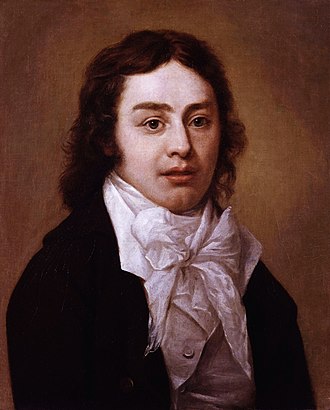 Samuel Taylor Coleridge
"The dualistic philosophy reigned supreme in Europe, dominating the development of Western science. But with the advent of atomic physics, findings based on demonstrable experiment were seen to negate the dualistic theory, and the trend of thought since then has been back to the monistic conception of the ancient Taoists."
"Under the rule of a repressive whole, liberty can be made into a powerful instrument of domination. The range of choice open to the individual is not the decisive factor in determining the degree of human freedom, but what can be chosen and what is chosen by the individual."
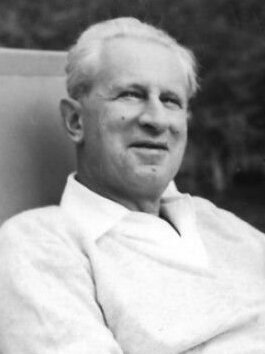 Herbert Marcuse
"All economic activity is carried out through time. Every individual economic process occupies a certain time, and all linkages between economic processes necessarily involve longer or shorter periods of time."
"I believe that the main lesson which our generation has learnt is that we must find a new limit for the activities of government, a limit which leaves ample scope for sensible experimentation but which secures the freedom of the individual as the mainspring of all social and political activity. The whole purpose of these lectures has been to suggest that we can find such a limit if we are willing to revive and develop the ancient ideal of the Rule of Law."