Quote
"Clear views and certain," Mr. Thomas Hardy once wrote of his own agnosticism. Well, we cannot all have the certainty of agnostics."
A
Agnosticism"There are people whose mind would recoil from actual negation, but who have no objection to complete indifference; and it is this that is the most to be feared, for, to deny something, one must think about it to some extent, however little that may be, whereas an attitude of indifference makes it possible not to think about it at all."
Agnosticism is a position that questions the existence of God or the divine. On a psychological level, it is a personal attitude that suspends judgment, withholding both belief and disbelief. In philosophy, agnosticism is often treated as a general claim stating that God's existence is unknown or unknowable. In the broadest sense, agnosticism is not restricted to theology and can also express skep
"Clear views and certain," Mr. Thomas Hardy once wrote of his own agnosticism. Well, we cannot all have the certainty of agnostics."
"One should not have the arrogance to declare that God does not exist."
"As a matter of fact agnosticism is a theory of knowledge: it is defined as that theory of knowledge which ends in doubt, or disbelief of some or all of the powers of knowing possessed by the human mind. In a word, it is the opposite to gnosticism. Gnosticism attributed to the human mind a greater power of knowing than it actually possessed. Agnosticism denies to the human mind a power of attaining knowledge which it does possess. It is important to remember that agnosticism, as such, is a theory about knowledge and not about religion. This fact is frequently overlooked and the probe of empiric test confined illegitimately to the sphere of religious knowledge."
"Each person, then, is subject to two quite different requirements in connection with any proposition he considers: (1) he should try his best to bring it about that if that proposition is true then he believe it; and (2) he should try his best to bring it about that if that proposition is false then he not believe it. Each requirement by itself would be quite simple: to fulfill the first, our purely intellectual being could simply believe every proposition that comes along; to fulfill the second, he could refrain from believing any proposition that comes along. To fulfill both is more difficult. If he had only the second requirement—that of trying his best to bring it about that if a proposition is false then he not believe that proposition—then he could always play it safe and never act at all, doxastically. But sometimes more than just playing it safe is necessary if he is also to fulfill the first requirement: that of trying his best, with respect to the propositions he considers, to believe the ones that are true."
"Belief is otiose; reality is sufficiently awesome as it stands."
"I say that I am an agnostic. People think thats pusillanimous and covering your bets. But its not based on any belief or yearning for an afterlife but on the fact that we actually know so little about the cosmos. It is a tribute to the complexity and, at our present stage of development, the unknowability of the universe."
"The smart way to keep people passive and obedient is to strictly limit the spectrum of acceptable opinion, but allow very lively debate within that spectrum - even encourage the more critical and dissident views. That gives people the sense that theres free thinking going on, while all the time the presuppositions of the system are being reinforced by the limits put on the range of the debate."
"With much care and skill power has been broken into fragments in the American township, so that the maximum possible number of people have some concern with public affairs."
"The people reign over the American political world as God rules over the universe. It is the cause and the end of all things; everything rises out of it and is absorbed back into it."
"I should say that when people talk about capitalism its a bit of a joke. Theres no such thing. No country, no business class, has ever been willing to subject itself to the free market, free market discipline. Free markets are for others. Like, the Third World is the Third World because they had free markets rammed down their throat. Meanwhile, the enlightened states, England, the United States, others, resorted to massive state intervention to protect private power, and still do. Thats right up to the present. I mean, the Reagan administration for example was the most protectionist in post-war American history. Virtually the entire dynamic economy in the United States is based crucially on state initiative and intervention: computers, the internet, telecommunication, automation, pharmaceutical, you just name it. Run through it, and you find massive ripoffs of the public, meaning, a system in which under one guise or another the public pays the costs and takes the risks, and profit is privatized. Thats very remote from a free market. Free market is like what India had to suffer for a couple hundred years, and most of the rest of the Third World."
"I appeal to all pupils, students and young people, asking you to focus on the horizons that are opening up for you, and which you could only dream of a year ago. Our future will depend on your desire for education and moral values as well as on your entrepreneurial spirit."
"We have created a wealthy society with tens of millions of talented, resourceful individuals who play virtually no role whatsoever as citizens. Bringing these people in — with their networks of influence, their knowledge, and their resources — is the key to creating the capacity for shared intelligence that we need to solve our problems."
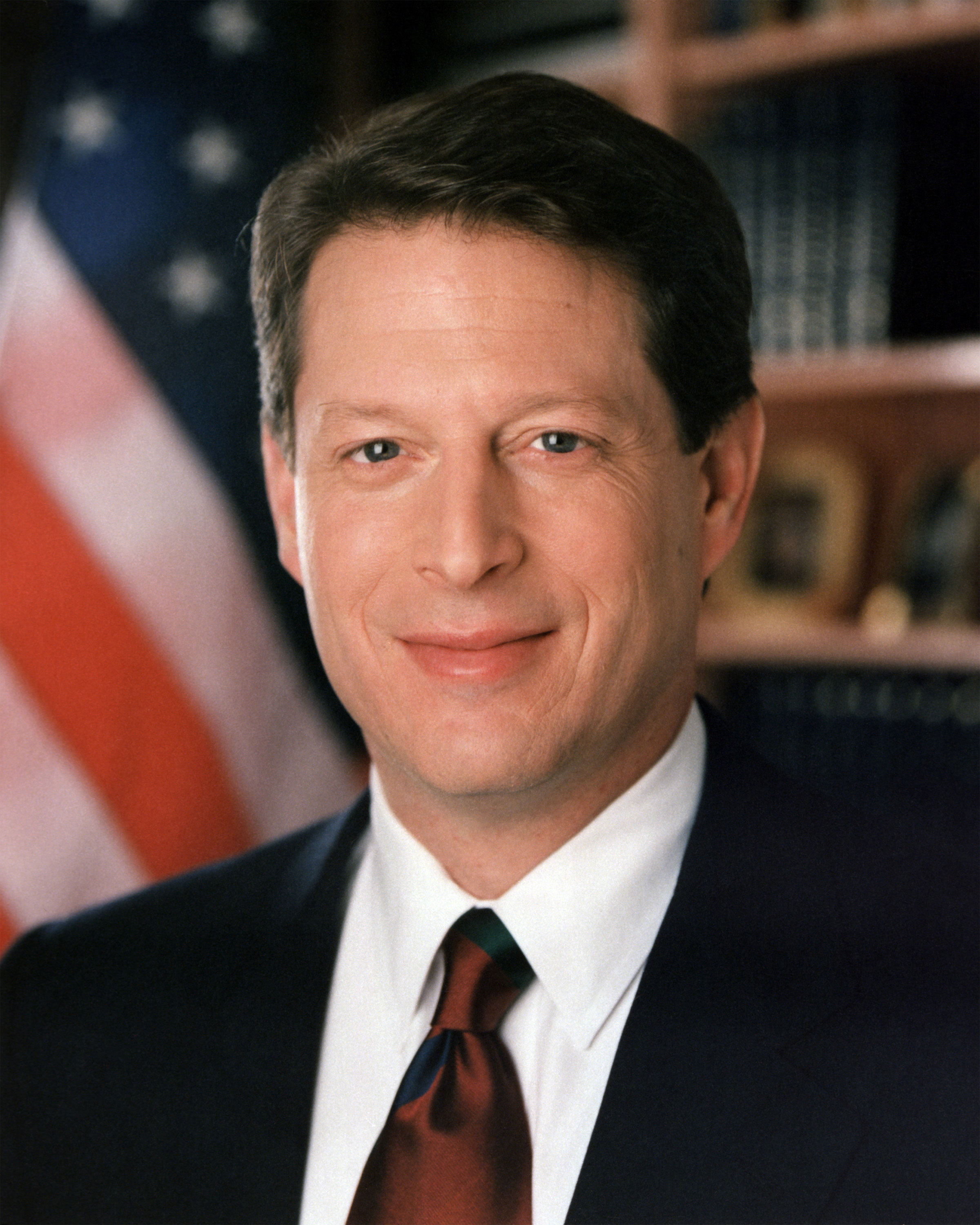 Al Gore