Quote
"I obviously hoped that everything that I found would make a difference, … It ended up being way behind my wildest dreams."
 Jimmy Carter
"There is a strong religious commitment to the sanctity of human life, but, paradoxically, some of the most fervent protectors of microscopic stem cells are the most ardent proponents of the death penalty."
James Earl Carter Jr. was an American politician and humanitarian who served as the 39th president of the United States from 1977 to 1981. A member of the Democratic Party, Carter served from 1971 to 1975 as the 76th governor of Georgia and from 1963 to 1967 in the Georgia State Senate. He lived longer than any other president in US history, reaching age 100.
"I obviously hoped that everything that I found would make a difference, … It ended up being way behind my wildest dreams."
Jimmy Carter"Any system of economics is bankrupt if it sees either value or virtue in unemployment. We simply cannot check inflation by keeping people out of work.."
Jimmy Carter"Weve made a major expansion in what is called countercyclical revenue sharing to focus into the most deprived urban ghetto, unemployed areas, to be administered by Patricia Harris. And Ive already signed into law a $4 billion public works bill. Under a new urban program that we are proposing, the Secretary of HUD, Patricia Harris, will have the authority to target large amounts of this money, in her judgment, on areas that are the most needy. For a long time in the past whenever a Federal program was approved by the Congress and the Republican Presidents, a large portion of that money went to areas where the need was least, in the suburban areas for housing and jobs went to areas with already low unemployment. We have reversed that now, and were going to send the Federal money where its needed most. Another of my first tasks has been to reorganize the Federal Government and to handle discrimination complaints faster and more effectively than we have in the past. The Equal Employment Opportunity Commission now has a backlog of 130,000 cases. Many of these cases arent considered for 3 years. There are seven different Federal agencies that are supposed to be taking care of these needs, these discriminatory practices. Thats not been done yet. Because these cases have dragged on so long, quite often the witnesses have disappeared and the victims have given up. This is one of our top priorities--to reorganize the structure. Its not an easy or quick thing that can be done, and the person in charge of it is Eleanor Holmes Norton."
Jimmy Carter"I appreciate the chance to come. Youve probably noticed that I was a little late in arriving. I met Alex Haley outside, and I made the mistake of saying, "Alex, hows your family?" Unfortunately, he told me. And it took a while to get in."
Jimmy Carter"A party with a narrow vision, a party that is afraid of the future, a party whose leaders are inclined to shoot from the hip, a party that has never been willing to put its investment in human beings who are below them in economic and social status."
Jimmy Carter"If there was a problem, he wanted to tackle it without considering the political consequences or balancing it against other priorities. As he reflected years later: "I have to say I could have put it off to a second term thats what Johnson had done; thats what Nixon had done; thats what Ford had done, and got away with it. But I didnt think it was right to continue with it." Even when Rosalynn advised him to wait until a second term, he replied, "Suppose there is no second term?" It was not that he was ignorant of the politics of decisions like Panama, but his overriding, guiding principle of presidential governance was to do things that needed to be done, in the certain belief that if he did the "right thing," he would ultimately be rewarded by the American people with another term. But as he later admitted, he underestimated the difficulty of applying this principle to the task in Panama. His insistence on immediately tackling the tough challenges, regardless of political costs and competing priorities, was at once his strength and weakness."
Jimmy Carter"In the life of the mass-order, the culture of the generality tends to conform to the demands of the average human being. Spirituality decays through being diffused among the masses when knowledge is impoverished in every possible way by rationalisation until it becomes accessible to the crude understanding of all."
"The first thing I remember about the world — and I pray that it may be the last — is that I was a stranger in it. This feeling, which everyone has in some degree, and which is, at once, the glory and desolation of homo sapiens, provides the only thread of consistency that I can detect in my life."
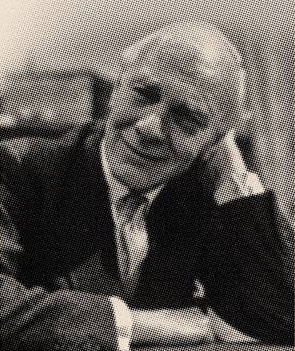 Malcolm Muggeridge
"Jewish custom, which traces descent solely from the mother, is more sensible and more discreet. Our own lawgivers cant accept the fact that there are many things in family life that are best kept shrouded in mystery."
"One makes mistakes; that is life. But it is never a mistake to have loved."
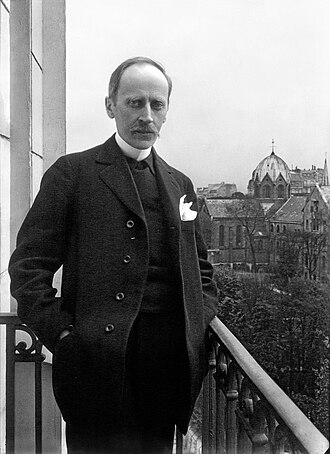 Romain Rolland
"If it fulfills our hopes, this center will be, at once, a symbol and a reflection and a hope. It will symbolize our belief that the world of creation and thought are at the core of all civilization. Only recently in the White House we helped commemorate the 400th anniversary of Shakespeare. The political conflicts and ambitions of his England are known to the scholar and to the specialist. But his plays will forever move men in every corner of the world. The leaders that he wrote about live far more vividly in his words than in the almost forgotten facts of their own rule. Our civilization, too, will largely survive in the works of our creation. There is a quality in art which speaks across the gulf dividing man from man and nation from nation, and century from century. That quality confirms the faith that our common hopes may be more enduring than our conflicting hostilities. Even now men of affairs are struggling to catch up with the insights of great art. The stakes may well be the survival of civilization. The personal preferences of men in government are not important--except to themselves. However, it is important to know that the opportunity we give to the arts is a measure of the quality of our civilization. It is important to be aware that artistic activity can enrich the life of our people, which really is the central object of Government. It is important that our material prosperity liberate and not confine the creative spirit."
"I did not go to join Kurtz there and then. I did not. I remained to dream the nightmare out to the end, and to show my loyalty to Kurtz once more. Destiny. My destiny! Droll thing life is — that mysterious arrangement of merciless logic for a futile purpose. The most you can hope from it is some knowledge of yourself — that comes too late — a crop of unextinguishable regrets. I have wrestled with death. It is the most unexciting contest you can imagine. It takes place in an impalpable grayness, with nothing underfoot, with nothing around, without spectators, without clamor, without glory, without the great desire of victory, without the great fear of defeat, in a sickly atmosphere of tepid skepticism, without much belief in your own right, and still less in that of your adversary. If such is the form of ultimate wisdom, then life is a greater riddle than some of us think it to be. I was within a hairs-breadth of the last opportunity for pronouncement, and I found with humiliation that probably I would have nothing to say. This is the reason why I affirm that Kurtz was a remarkable man. He had something to say. He said it. Since I had peeped over the edge myself, I understand better the meaning of his stare, that could not see the flame of the candle, but was wide enough to embrace the whole universe, piercing enough to penetrate all the hearts that beat in the darkness. He had summed up — he had judged. The horror! He was a remarkable man. After all, this was the expression of some sort of belief; it had candor, it had conviction, it had a vibrating note of revolt in its whisper, it had the appalling face of a glimpsed truth — the strange commingling of desire and hate."