SHAWORDS

There is nothing which so generally strikes the imagination, and engag — William Blackstone

"There is nothing which so generally strikes the imagination, and engages the affections of mankind, as the right of property; or that sole and despotic dominion which one man claims and exercises over the external things of the world, in total exclusion of the right of any other individual in the universe. And yet there are very few, that will give themselves the trouble to consider the original and foundation of this right."
W
William Blackstone
William Blackstone
author17 quotes

Sir William Blackstone was an English jurist, justice, and Tory politician most noted for his Commentaries on the Laws of England, which became the best-known description of the doctrines of the English common law. Born into a middle-class family in London, Blackstone was educated at Charterhouse School before matriculating at Pembroke College, Oxford, in 1738. After switching to and completing a

More by William Blackstone

View all →
Quote
"All the several pleas and excuses, which protect the committer of a forbidden act from the punishment which is otherwise annexed thereto, may be reduced to this single consideration, the want or defect of will. An involuntary act, as it has no claim to merit, so neither can it induce any guilt: the concurrence of the will, when it has its choice either to do or to avoid the fact in question, being the only thing that renders human actions either praiseworthy or culpable. Indeed, to make a complete crime, cognizable by human laws, there must be both a will and an act."
W
William Blackstone
Quote
"The absolute rights of man, considered as a free agent, endowed with discernment to know good from evil, and with power of choosing those measures which appear to him to be most desirable, are usually summed up in one general appellation, and denominated the natural liberty of mankind. This natural liberty consists properly in a power of acting as one thinks fit, without any restraint or control, unless by the law of nature: being a right inherent in us by birth, and one of the gifts of God to man at his creation, when he endowed him with the faculty of freewill. But every man, when he enters into society, gives up a part of his natural liberty, as the price of so valuable a purchase; and, in consideration of receiving the advantages of mutual commerce, obliges himself to conform to those laws, which the community has thought proper to establish."
W
William Blackstone
Quote
"So great moreover is the regard of the law for private property, that it will not authorize the least violation of it; no, not even for the general good of the whole community. If a new road, for instance, were to be made through the grounds of a private person, it might perhaps be extensively beneficial to the public; but the law permits no man, or set of men, to do this without consent of the owner of the land. In vain may it be urged, that the good of the individual ought to yield to that of the community; for it would be dangerous to allow any private man, or even any public tribunal, to be the judge of this common good, and to decide whether it be expedient or no. Besides, the public good is in nothing more essentially interested, than in the protection of every individuals private rights, as modelled by the municipal law. In this, and similar cases the legislature alone can, and indeed frequently does, interpose, and compel the individual to acquiesce. But how does it interpose and compel? Not by absolutely stripping the subject of his property in an arbitrary manner; but by giving him a full indemnification and equivalent for the injury thereby sustained."
W
William Blackstone
Quote
"Man, considered as a creature, must necessarily be subject to the laws of his creator, for he is entirely a dependent being...This law of nature, being co-eval with mankind and dictated by God himself, is of course superior in obligation to any other. It is binding over all the globe, in all countries, and at all times: no human laws are of any validity, if contrary to this; and such of them as are valid derive all their force, and all their authority, mediately or immediately, from this original."
W
William Blackstone
Quote
"If the parliament will positively enact a thing to be done which is unreasonable, I know of no power that can control it: and the examples usually alleged in support of this sense of the rule do none of them prove, that where the main object of a statute is unreasonable the judges are at liberty to reject it; for that were to set the judicial power above that of the legislature, which would be subversive of all government. But where some collateral matter arises out of the general words, and happens to be unreasonable; there the judges are in decency to conclude that this consequence was not foreseen by the parliament, and therefore they are at liberty to expound the statute by equity, and only quoad hoc disregard it."
W
William Blackstone

More on Dua

View all →
Quote
"Glen is not a homosexual. Glen is a transvestite, but he is not a homosexual. Transvestism is the term given by medical science to those persons who desperately wish to wear the clothing of the opposite sex, yet whose sex life in all instances remains quite normal. Would you be surprised to know that this rough, tough individual is wearing pink, satin undies under his rough exterior clothing? He is. Then there is your friend the milkman who...who knows how to find comfort at home."
G
Glen or Glenda
Quote
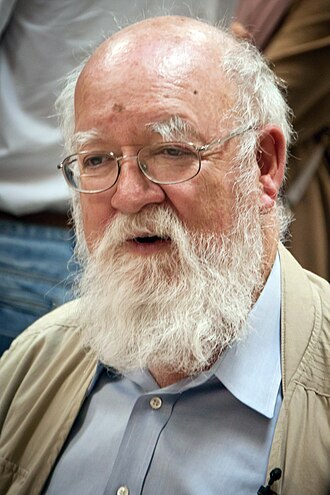
"In a Thumbnail Sketch here is [the Multiple Drafts theory of consciousness] so far:There is no single, definitive "stream of consciousness," because there is no central Headquarters, no Cartesian Theatre where "it all comes together" for the perusal of a Central Meaner. Instead of such a single stream (however wide), there are multiple channels in which specialist circuits try, in parallel pandemoniums, to do their various things, creating Multiple Drafts as they go. Most of these fragmentary drafts of "narrative" play short-lived roles in the modulation of current activity but some get promoted to further functional roles, in swift succession, by the activity of a virtual machine in the brain. The seriality of this machine (its "von Neumannesque" character) is not a "hard-wired" design feature, but rather the upshot of a succession of coalitions of these specialists.The basic specialists are part of our animal heritage. They were not developed to perform peculiarly human actions, such as reading and writing, but ducking, predator-avoiding, face-recognizing, grasping, throwing, berry-picking, and other essential tasks. They are often opportunistically enlisted in new roles, for which their talents may more or less suit them. The result is not bedlam only because the trends that are imposed on all this activity are themselves part of the design. Some of this design is innate, and is shared with other animals. But it is augmented, and sometimes even overwhelmed in importance, by microhabits of thought that are developed in the individual, partly idiosyncratic results of self-exploration and partly the predesigned gifts of culture. Thousands of memes, mostly borne by language, but also by wordless "images" and other data structures, take up residence in an individual brain, shaping its tendencies and thereby turning it into a mind."
Daniel DennettDaniel Dennett
Quote
"While our primary goal is to maintain the most powerful military force in the world at the lowest possible cost, we will never be unmindful of those communities and individuals who are temporarily affected by changes in the pattern of Defense spending. Men and women, who have devoted their lives and their resources to the needs of their country, are entitled to help and consideration in making the transition to other pursuits. We will continue to help local communities by mobilizing and coordinating all the resources of the Federal Governments to overcome temporary difficulties created by the curtailment of any Defense activity. We will phase out unnecessary Defense operations in such a way as to lessen the impact on any community, and we will work with local communities to develop energetic programs of self-help, calling on the resources of state and local governments--and of private industry--as well as those of the Federal Government. There is ample evidence that such measures can succeed. Former military bases are now in use throughout the country in communities which have not only adjusted to necessary change, but have created greater prosperity for themselves as a result. Their accomplishments are a tribute to the ingenuity of thousands of our citizens, and a testimony to the strength and resiliency of our economy and our system of government."
L
Lyndon B. Johnson
Quote
"Are people naturally destructive, immoral, predatory and self-seeking, only to be kept in order by harsh laws and fiercely deterrent mandatory sentences? Or are men and women naturally orderly, merciful, humane and bred with a need for justice and mutual aid? Of course these qualities, or defects, are not evenly distributed, and undoubtedly there is much of each in all of us, but when it comes to the law some sort of distinction can be drawn. Are you a Shylock or a Bassanio? Shylock pinned his faith on the words in the contract, the nature of his bond and the duty of the state to uphold the letter of the law regardless of human suffering. Bassanio put another point of view. More important than the sanctity of the law was the plight of the individual parties in the particular case."
J
John Mortimer
Quote
"Viewed in the light of such facts, we may conclude slavery to have been the occasion of the increase of human feeling among the Negroes. The doctrine which we deduce from this condition of slavery among the Negroes, and which constitutes the only side of the question that has an interest for our inquiry, is that which we deduce from the Idea: viz., that the “Natural condition” itself is one of absolute and thorough injustice – contravention of the Right and Just. Every intermediate grade between this and the realization of a rational State retains – as might be expected – elements and aspects of injustice; therefore we find slavery even in the Greek and Roman States, as we do serfdom down to the latest times. But thus existing in a State, slavery is itself a phase of advance from the merely isolated sensual existence – a phase of education – a mode of becoming participant in a higher morality and the culture connected with it. Slavery is in and for itself injustice, for the essence of humanity is Freedom; but for this man must be matured. The gradual abolition of slavery is therefore wiser and more equitable than its sudden removal."
G
Georg Wilhelm Friedrich Hegel