Quote
"Much converse do I find in thee, Historian of my infancy! Float near me; do not yet depart! Dead times revive in thee: Thou bringst, gay creature as thou art! A solemn image to my heart."
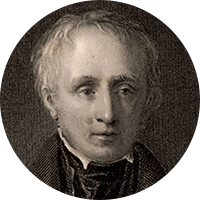 William Wordsworth
"These beauteous forms, Through a long absence, have not been to me As is a landscape to a blind mans eye: But oft, in lonely rooms, and mid the din Of towns and cities, I have owed to them, In hours of weariness, sensations sweet, Felt in the blood, and felt along the heart; And passing even into my purer mind, With tranquil restoration:—feelings too Of unremembered pleasure: such, perhaps, As have no slight or trivial influence On that best portion of a good mans life, His little, nameless, unremembered acts Of kindness and of love. Nor less, I trust, To them I may have owed another gift, Of aspect more sublime; that blessed mood, In which the burthen of the mystery, In which the heavy and the weary weight Of all this unintelligible world Is lightend:—that serene and blessed mood, In which the affections gently lead us on,— Until, the breath of this corporeal frame And even the motion of our human blood Almost suspended, we are laid asleep In body, and become a living soul: While with an eye made quiet by the power Of harmony, and the deep power of joy, We see into the life of things."
"Much converse do I find in thee, Historian of my infancy! Float near me; do not yet depart! Dead times revive in thee: Thou bringst, gay creature as thou art! A solemn image to my heart."
William Wordsworth"Hail to thee, far above the rest In joy of voice and pinion! Thou, linnet! in thy green array, Presiding spirit here to-day, Dost lead the revels of the May; And this is thy dominion."
William Wordsworth"Thou, while thy babes around thee cling, Shalt show us how divine a thing A Woman may be made."
William Wordsworth"Type of the wise who soar, but never roam; True to the kindred points of Heaven and Home!"
William Wordsworth"Who is the happy Warrior? Who is he That every man in arms should wish to be?"
William Wordsworth"I travelled among unknown men, In lands beyond the sea; Nor, England! did I know till then What love I bore to thee."
William Wordsworth"At one point a heated discussion arose over the possible interpretation of Lolita as a grandiose metaphor of the classic Europeans hopeless love for young, seductive, barbaric America. In his afterword to the novel Nabokov himself mentions this as the naive theory of one of the publishers who turned the book down. And although there cant be the slightest doubt that Nabokov did not mean to limit Lolita to that interpretation, there is no reason to exclude it as one of the novels many dimensions. The point, I felt, became obvious when one drew the line between Lolita as a delightfully frivolous story on the verge of pornography and Lolita as a literary masterpiece, the only convincing love story of our century."
 Lolita
"Lovely food, for rabbits, that is."
"One makes mistakes; that is life. But it is never a mistake to have loved."
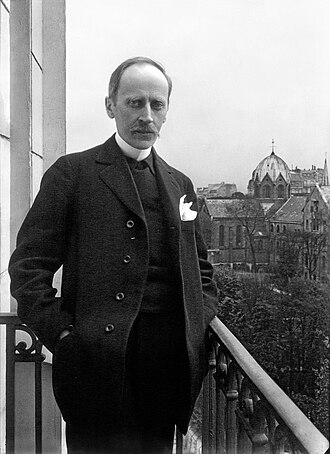 Romain Rolland
"[explaining to Ernie how April apologized to him] She just showed up at the factory, took off her coat, and begged me to take her. We made love in a way that Ive only ever seen in nature films."
 MouseHunt (film)
"Love is always love, come whence it may. A heart that beats at your approach, an eye that weeps when you go away are things so rare, so sweet, so precious that they must never be despised."
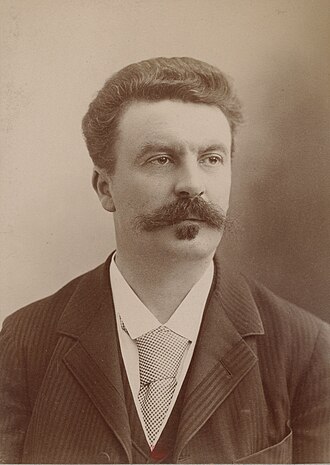 Guy de Maupassant
"He was obeyed, yet he inspired neither love nor fear, nor even respect. He inspired uneasiness. That was it! Uneasiness. Not a definite mistrust — just uneasiness — nothing more. You have no idea how effective such a... a... faculty can be. He had no genius for organizing, for initiative, or for order even. That was evident in such things as the deplorable state of the station. He had no learning, and no intelligence. His position had come to him — why? Perhaps because he was never ill . . . He had served three terms of three years out there . . . Because triumphant health in the general rout of constitutions is a kind of power in itself."