Quote
"The gods love what is mysterious, and dislike what is evident."
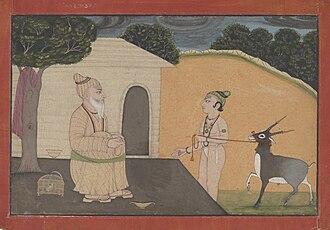 Upanishads
"Thinking evolves the objective. All the three worlds exist through thinking. The Kosmos melts away on its dissolution. This thinking should carefully be diagnosed."
The Upanishads are Sanskrit texts of the late Vedic and post-Vedic periods that "document the transition from the archaic ritualism of the Veda into new religious ideas and institutions" and the emergence of the central religious concepts of Hinduism. They are the most recent addition to the Vedas, the oldest scriptures of Hinduism, and deal with meditation, philosophy, consciousness, and ontologi
"The gods love what is mysterious, and dislike what is evident."
Upanishads"When the speech of this dead person enters into the fire, breath into the air, the eye into the sun, the mind into the moon, the hearing into space, into the earth the body, into the ether the self, into the shrubs the hairs of the body, into the trees the hairs of the head, when the blood and the seed are deposited in the water, where is then that person?"
Upanishads"As large as this ether (all space) is, so large is that ether within the heart. Both heaven and earth are contained within it, both fire and air, both sun and moon, both lightning and stars; and whatever there is of him (the Self) here in the world, and whatever is not (i. e. whatever has been or will be), all that is contained within it."
Upanishads"The Danish nuclear physicist Niels Bohr once wrote, “I go into the Upanishads to ask questions,” and the Upanishads, the midwife birthing early Hinduism out of Vedic religion, ask these questions with even more urgency than Don Quixote or Holden Caulfield."
Upanishads"Know the Self to be sitting in the chariot, the body to be the chariot, the intellect (buddhi) the charioteer, and the mind the reins. The senses they call the horses, the objects of the senses their roads. When he (the Highest Self) is in union with the body, the senses, and the mind, then wise people call him the Enjoyer."
Upanishads"सत्यमेव जयते (satyameva jayate)"
Upanishads