Quote
"An artisan busies himself with his work for three hours each day and spends nine hours in study."
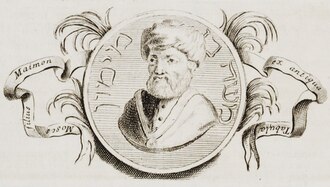 Maimonides
"This gift... which God gave us in order to enable us to perfect ourselves, to learn and to teach, must not be employed in doing that which is for us most degrading and perfectly disgraceful... Those who employ the faculty of thinking and speaking in the service of that sense which is no honour to us, who think more than necessary of drink and love, or even sing of these things; they employ and use the divine gift in acts of rebellion against the Giver, and in transgression of his commandments."
Moses ben Maimon, commonly known as Maimonides and also referred to by the Hebrew acronym Rambam, was a Sephardic Jewish rabbi who is widely acknowledged as one of the most prolific and influential Torah scholars of the Middle Ages. Originally from Córdoba, where he was born on Passover Eve of 1135 or 1138, his family was exiled from Muslim-ruled Spain when they refused to convert to Islam shortly
"An artisan busies himself with his work for three hours each day and spends nine hours in study."
Maimonides"The third class of evils comprise those which everyone causes to himself by his own action. This is the largest class, and is far more numerous than the second class. It is especially of these evils that all men complain,—only few men are found that do not sin against themselves by this kind of evil. ...This class of evil originates in mans vices, such as excessive desire for eating, drinking, and love; indulgence in these things in undue measure, or in improper manner, or partaking of bad food. This course brings diseases and afflictions upon the body and soul alike."
Maimonides"Aristotle was guided by that which appears to be the nature of things. The Ashariyah refused to ascribe to God ignorance about anything... they preferred to admit the above-mentioned absurdities. The Mutazilites refused to assume that God does what is wrong and unjust; on the other hand, they would not contradict common sense and say that it was not wrong to inflict pain on the guiltless, or that the mission of the Prophets and the giving of the Law had no intelligible reason. They likewise preferred to admit the above-named absurdities. But they even contradicted themselves, because they believe on the one hand that God knows everything, and on the other that man has free will. By a little consideration we discover the contradiction."
Maimonides"A person who lives in a place where the norms of behavior are evil and the inhabitants do not follow the straight path should move to a place where the people are righteous and follow the ways of the good.If all the places with which he is familiar and of which he hears reports follow improper paths, as in our times, ... he should remain alone in seclusion. ...If they are wicked and sinful and do not allow him to reside there unless he mingle with them and follow their evil behavior, he should go out to caves, thickets, and deserts."
Maimonides"Abraham ... was sunk in Ur of the Chaldees among foolish idolaters. His father and mother and all the people worshipped the stars. ... He knew that all were mistaken and that what caused them to err was worship of the images which drove the Truth out of their minds. ... It was proper to destroy and smash the idols so that the people should not err by them like those who think there is no god save images."
Maimonides"Teach your tongue to say "I do not know" and you will progress."
Maimonides"At one point a heated discussion arose over the possible interpretation of Lolita as a grandiose metaphor of the classic Europeans hopeless love for young, seductive, barbaric America. In his afterword to the novel Nabokov himself mentions this as the naive theory of one of the publishers who turned the book down. And although there cant be the slightest doubt that Nabokov did not mean to limit Lolita to that interpretation, there is no reason to exclude it as one of the novels many dimensions. The point, I felt, became obvious when one drew the line between Lolita as a delightfully frivolous story on the verge of pornography and Lolita as a literary masterpiece, the only convincing love story of our century."
 Lolita
"Lovely food, for rabbits, that is."
"One makes mistakes; that is life. But it is never a mistake to have loved."
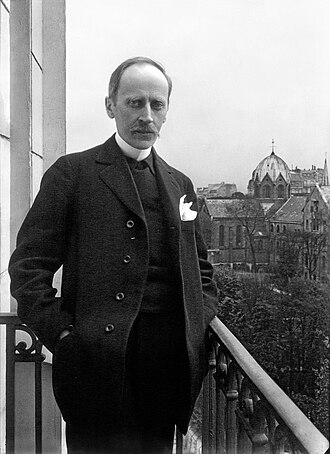 Romain Rolland
"[explaining to Ernie how April apologized to him] She just showed up at the factory, took off her coat, and begged me to take her. We made love in a way that Ive only ever seen in nature films."
 MouseHunt (film)
"Love is always love, come whence it may. A heart that beats at your approach, an eye that weeps when you go away are things so rare, so sweet, so precious that they must never be despised."
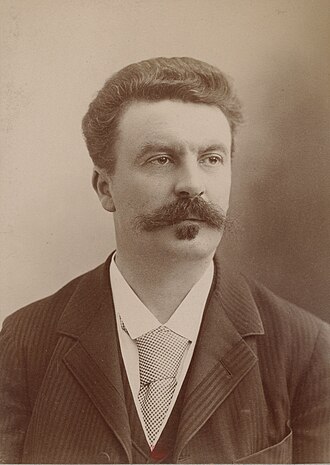 Guy de Maupassant
"He was obeyed, yet he inspired neither love nor fear, nor even respect. He inspired uneasiness. That was it! Uneasiness. Not a definite mistrust — just uneasiness — nothing more. You have no idea how effective such a... a... faculty can be. He had no genius for organizing, for initiative, or for order even. That was evident in such things as the deplorable state of the station. He had no learning, and no intelligence. His position had come to him — why? Perhaps because he was never ill . . . He had served three terms of three years out there . . . Because triumphant health in the general rout of constitutions is a kind of power in itself."