Quote
"Right is of no sex, Truth is of no color, God is the Father of us all, and we are all Brethren."
F
Frederick Douglass"Vainly you talk about voting it down. When you have cast your millions of ballots, you have not reached the evil. It has fastened its root deep into the heart of the nation, and nothing but God’s truth and love can cleanse the land. We must change the moral sentiment."
Frederick Douglass was an American social reformer, abolitionist, orator, writer, and statesman. He was the most important leader of the movement for African-American civil rights in the 19th century.
"Right is of no sex, Truth is of no color, God is the Father of us all, and we are all Brethren."
"I make no pretension to patriotism. So long as my voice can be heard on this or the other side of the Atlantic, I will hold up America to the lightning scorn of moral indignation. In doing this, I shall feel myself discharging the duty of a true patriot; for he is a lover of his country who rebukes and does not excuse its sins. It is righteousness that exalteth a nation while sin is a reproach to any people."
"To make a contented slave it is necessary to make a thoughtless one. It is necessary to darken the moral and mental vision and, as far as possible, to annihilate the power of reason."
"What a world of inconsistency, as well as of wickedness, is suggested by the smooth and gliding phrase, AMERICAN SLAVE TRADE; and how strange and perverse is that moral sentiment which loathes, execrates, and brands as piracy and as deserving of death the carrying away into captivity men, women, and children from the African coast; but which is neither shocked nor disturbed by a similar traffic, carried on with the same motives and purposes, and characterized by even more odious peculiarities on the coast of our MODEL REPUBLIC. We execrate and hang the wretch guilty of this crime on the coast of , while we respect and applaud the guilty participators in this murderous business on enlightened shores of the Chesapeake. The inconsistency is so flagrant and glaring, that it would seem to cast a doubt on the doctrine of the innate moral sense of mankind."
"Strange things have happened of late and are still happening. Some of these tend to dim the lustre [sic] of the American name, and chill the hopes once entertained for the cause of American liberty. He is a wiser man than I am, who can tell how low the moral sentiment of this republic may yet fall. When the moral sense of a nation begins to decline and the wheel of progress to roll backward, there is no telling how low the one will fall or where the other may stop."
"You have seen how a man was made a slave; you shall see how a slave was made a man."
"At one point a heated discussion arose over the possible interpretation of Lolita as a grandiose metaphor of the classic Europeans hopeless love for young, seductive, barbaric America. In his afterword to the novel Nabokov himself mentions this as the naive theory of one of the publishers who turned the book down. And although there cant be the slightest doubt that Nabokov did not mean to limit Lolita to that interpretation, there is no reason to exclude it as one of the novels many dimensions. The point, I felt, became obvious when one drew the line between Lolita as a delightfully frivolous story on the verge of pornography and Lolita as a literary masterpiece, the only convincing love story of our century."
 Lolita
"Lovely food, for rabbits, that is."
"One makes mistakes; that is life. But it is never a mistake to have loved."
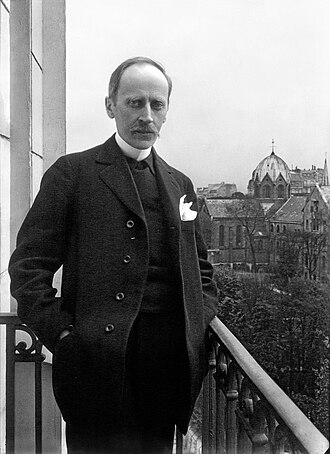 Romain Rolland
"[explaining to Ernie how April apologized to him] She just showed up at the factory, took off her coat, and begged me to take her. We made love in a way that Ive only ever seen in nature films."
 MouseHunt (film)
"Love is always love, come whence it may. A heart that beats at your approach, an eye that weeps when you go away are things so rare, so sweet, so precious that they must never be despised."
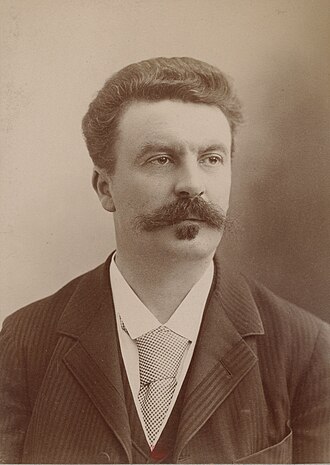 Guy de Maupassant
"He was obeyed, yet he inspired neither love nor fear, nor even respect. He inspired uneasiness. That was it! Uneasiness. Not a definite mistrust — just uneasiness — nothing more. You have no idea how effective such a... a... faculty can be. He had no genius for organizing, for initiative, or for order even. That was evident in such things as the deplorable state of the station. He had no learning, and no intelligence. His position had come to him — why? Perhaps because he was never ill . . . He had served three terms of three years out there . . . Because triumphant health in the general rout of constitutions is a kind of power in itself."