Quote
"We thought, lets not fight Wikipedia, but instead teach students to use it better."
 Wikipedia
"We can learn a lot from Wikipedia about Internet governance and collective knowledge-building. It’s ultimately up to the site’s editors to choose to learn to temper their fortress mentality, get more outside eyes and ears, listen to the most moderate and reflective among them, and perhaps even entertain the idea that they might sometimes be wrong. Wikipedia’s future may depend on it."
Wikipedia is a free online encyclopedia written and maintained by a community of volunteers, known as Wikipedians, through open collaboration and the wiki software MediaWiki. Founded by Jimmy Wales and Larry Sanger in 2001, Wikipedia has been hosted since 2003 by the Wikimedia Foundation, an American nonprofit organization funded mainly by donations from readers. Wikipedia is the largest and most-
"We thought, lets not fight Wikipedia, but instead teach students to use it better."
Wikipedia"Deeply inappropriate for the European Commission to be lobbying publicly *and* misleading the public in this way. ... the Wikipedia community is not so narrow minded as to let the rest of the Internet suffer just because we are big enough that they try to throw us a bone. Justice matters."
Wikipedia"Like many university lecturers, I used to warn my own students off using Wikipedia (as pointless an injunction as telling them not to use Google, or not to leave their essay to the last minute). I finally gave up doing so about three years ago,..."
Wikipedia"Progress has been slow, but several independent ventures show how the attitudes of major players in the biomedical ecosystem are beginning to shift further, and take Wikipedia more seriously."
Wikipedia"For the record the Daily Mail banned all its journalists from using Wikipedia as a sole source in 2014 because of its unreliability."
Wikipedia"Shoppin online for deals on some writable media. I edit Wikipedia."
Wikipedia"In the life of the mass-order, the culture of the generality tends to conform to the demands of the average human being. Spirituality decays through being diffused among the masses when knowledge is impoverished in every possible way by rationalisation until it becomes accessible to the crude understanding of all."
"I did not go to join Kurtz there and then. I did not. I remained to dream the nightmare out to the end, and to show my loyalty to Kurtz once more. Destiny. My destiny! Droll thing life is — that mysterious arrangement of merciless logic for a futile purpose. The most you can hope from it is some knowledge of yourself — that comes too late — a crop of unextinguishable regrets. I have wrestled with death. It is the most unexciting contest you can imagine. It takes place in an impalpable grayness, with nothing underfoot, with nothing around, without spectators, without clamor, without glory, without the great desire of victory, without the great fear of defeat, in a sickly atmosphere of tepid skepticism, without much belief in your own right, and still less in that of your adversary. If such is the form of ultimate wisdom, then life is a greater riddle than some of us think it to be. I was within a hairs-breadth of the last opportunity for pronouncement, and I found with humiliation that probably I would have nothing to say. This is the reason why I affirm that Kurtz was a remarkable man. He had something to say. He said it. Since I had peeped over the edge myself, I understand better the meaning of his stare, that could not see the flame of the candle, but was wide enough to embrace the whole universe, piercing enough to penetrate all the hearts that beat in the darkness. He had summed up — he had judged. The horror! He was a remarkable man. After all, this was the expression of some sort of belief; it had candor, it had conviction, it had a vibrating note of revolt in its whisper, it had the appalling face of a glimpsed truth — the strange commingling of desire and hate."
"Ive been taking a closer look at these graduates. They are actually taller, stronger, smarter than we were, smart enough maybe to take our mistakes as their messages, to make our weaknesses their lessons, and to make our example — good and not so good — part of their education."
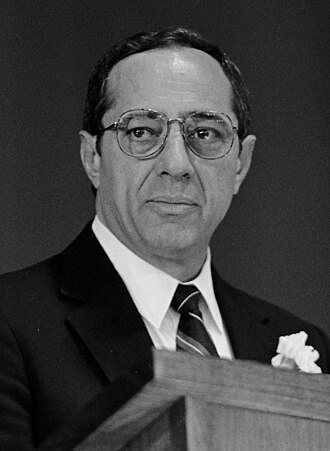 Mario Cuomo
"All men suppose what is called Wisdom to deal with the first causes and the principles of things; so that, as has been said before, the man of experience is thought to be wiser than the possessors of any sense-perception whatever, the artist wiser than the men of experience, the masterworker than the mechanic, and the theoretical kinds of knowledge to be more of the nature of Wisdom than the productive."
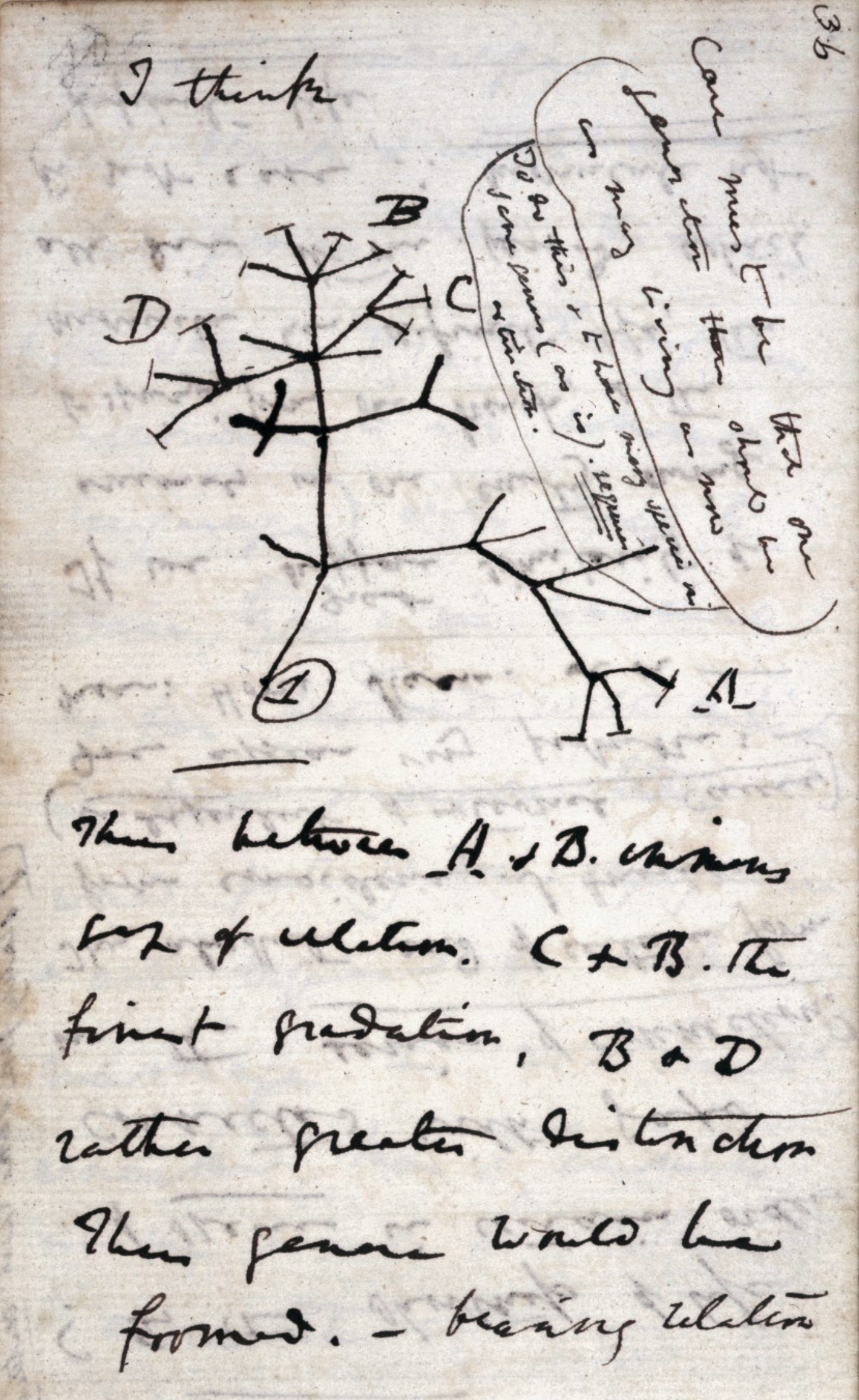 Theory
"My specific... object has been to contain, within the prescribed limits, the whole of the students course, from the confines of elementary algebra and trigonometry, to the entrance of the highest works on mathematical physics. A learner who has a good knowledge of the subjects just named, and who can master the present treatise, taking up elementary works on conic sections, application of algebra to geometry, and the theory of equations, as he wants them, will, I am perfectly sure, find himself able to conquer the difficulties of anything he may meet with; and need not close any book of Laplace, Lagrange, Legendre, Poisson, Fourier, Cauchy, Gauss, Abel, Hindenburgh and his followers. or of any one of our English mathematicians, under the idea that it is too hard for him."
"Religious faith in the case of the Hindus has never been allowed to run counter to scientific laws, moreover the former is never made a condition for the knowledge they teach, but there are always scrupulously careful to take into consideration the possibility that by reason both the agnostic and atheist may attain truth in their own way. Such tolerance may be surprising to religious believers in the West, but it is an integral part of Vedantic belief."
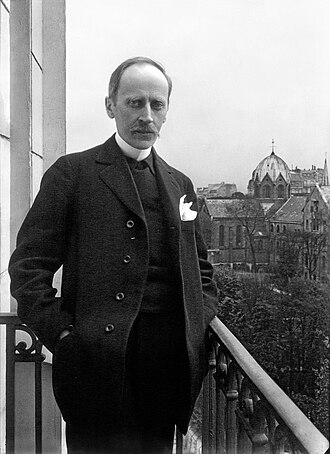 Romain Rolland