SHAWORDS

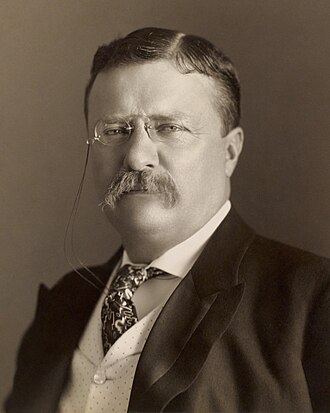
We cannot afford to continue to use hundreds of thousands of immigrant — Theodore Roosevelt

"We cannot afford to continue to use hundreds of thousands of immigrants merely as industrial assets while they remain social outcasts and menaces any more than fifty years ago we could afford to keep the black man merely as an industrial asset and not as a human being. We cannot afford to build a big industrial plant and herd men and women about it without care for their welfare. We cannot afford to permit squalid overcrowding or the kind of living system which makes impossible the decencies and necessities of life. We cannot afford the low wage rates and the merely seasonal industries which mean the sacrifice of both individual and family life and morals to the industrial machinery. We cannot afford to leave American mines, munitions plants, and general resources in the hands of alien workmen, alien to America and even likely to be made hostile to America by machinations such as have recently been provided in the case of the two foreign embassies in Washington. We cannot afford to run the risk of having in time of war men working on our railways or working in our munition plants who would in the name of duty to their own foreign countries bring destruction to us. Recent events have shown us that incitements to sabotage and strikes are in the view of at least two of the great foreign powers of Europe within their definition of neutral practices. What would be done to us in the name of war if these things are done to us in the name of neutrality?"
Theodore Roosevelt
Theodore Roosevelt
Theodore Roosevelt
author353 quotes

Theodore Roosevelt Jr. was the 26th president of the United States, serving from 1901 to 1909. Previously serving six months as vice president under William McKinley, Roosevelt became president after McKinley's assassination in 1901. He was 42 years old upon his first inauguration, making him the youngest person to hold the office.

More by Theodore Roosevelt

View all →
Quote
"Justice Bowling in his speech has described the excellent fourth degree of your order, of how in it you dwell upon duties rather than rights, upon the great duties of patriotism and of national spirit. It is a fine thing to have a society that holds up such a standard of duty. I ask you to make a special effort to deal with Americanization, the fusing into one nation, a nation necessarily different from all other nations, of all who come to our shores. Pay heed to the three principal essentials: (i) the need of a common language, with a minimum amount of illiteracy; (2) the need of a common civil standard, similar ideals, beliefs, and customs symbolized by the oath of allegiance to America; and (3) the need of a high standard of living, of reasonable equality of opportunity and of social and industrial justice. In every great crisis in our history, in the Revolution and in the Civil War, and in the lesser crises, like the Spanish war, all factions and races have been forgotten in the common spirit of Americanism. Protestant and Catholic, men of English or of French, of Irish or of German, descent have joined with a single-minded purpose to secure for the country what only can be achieved by the resultant union of all patriotic citizens. You of this organization have done a great service by your insistence that citizens should pay heed first of all to their duties. Hitherto undue prominence has been given to the question of rights. Your organization is a splendid engine for giving to the stranger within our gates a high conception of American citizenship. Strive for unity. We suffer at present from a lack of leadership in these matters."
Theodore RooseveltTheodore Roosevelt

More on Life

View all →
Quote
"If it fulfills our hopes, this center will be, at once, a symbol and a reflection and a hope. It will symbolize our belief that the world of creation and thought are at the core of all civilization. Only recently in the White House we helped commemorate the 400th anniversary of Shakespeare. The political conflicts and ambitions of his England are known to the scholar and to the specialist. But his plays will forever move men in every corner of the world. The leaders that he wrote about live far more vividly in his words than in the almost forgotten facts of their own rule. Our civilization, too, will largely survive in the works of our creation. There is a quality in art which speaks across the gulf dividing man from man and nation from nation, and century from century. That quality confirms the faith that our common hopes may be more enduring than our conflicting hostilities. Even now men of affairs are struggling to catch up with the insights of great art. The stakes may well be the survival of civilization. The personal preferences of men in government are not important--except to themselves. However, it is important to know that the opportunity we give to the arts is a measure of the quality of our civilization. It is important to be aware that artistic activity can enrich the life of our people, which really is the central object of Government. It is important that our material prosperity liberate and not confine the creative spirit."
L
Lyndon B. Johnson
Quote
"I did not go to join Kurtz there and then. I did not. I remained to dream the nightmare out to the end, and to show my loyalty to Kurtz once more. Destiny. My destiny! Droll thing life is — that mysterious arrangement of merciless logic for a futile purpose. The most you can hope from it is some knowledge of yourself — that comes too late — a crop of unextinguishable regrets. I have wrestled with death. It is the most unexciting contest you can imagine. It takes place in an impalpable grayness, with nothing underfoot, with nothing around, without spectators, without clamor, without glory, without the great desire of victory, without the great fear of defeat, in a sickly atmosphere of tepid skepticism, without much belief in your own right, and still less in that of your adversary. If such is the form of ultimate wisdom, then life is a greater riddle than some of us think it to be. I was within a hairs-breadth of the last opportunity for pronouncement, and I found with humiliation that probably I would have nothing to say. This is the reason why I affirm that Kurtz was a remarkable man. He had something to say. He said it. Since I had peeped over the edge myself, I understand better the meaning of his stare, that could not see the flame of the candle, but was wide enough to embrace the whole universe, piercing enough to penetrate all the hearts that beat in the darkness. He had summed up — he had judged. The horror! He was a remarkable man. After all, this was the expression of some sort of belief; it had candor, it had conviction, it had a vibrating note of revolt in its whisper, it had the appalling face of a glimpsed truth — the strange commingling of desire and hate."
H
Heart of Darkness