Quote
"[T]he human reason discovers new relations between things not by deduction, but by that unpredictable blend of speculation and insight... induction, which—like other forms of imagination—cannot be formalized."
 Jacob Bronowski
"We do not construct the world from our experiences; we are aware of the world in our experiences."
Jacob Bronowski was a Polish-British mathematician and philosopher. He is best known for developing a humanistic approach to science, and as the presenter and writer of the thirteen-part 1973 BBC television documentary series, and accompanying book, The Ascent of Man. He was widely regarded as "one of the most revered intellectuals on the global stage."
"[T]he human reason discovers new relations between things not by deduction, but by that unpredictable blend of speculation and insight... induction, which—like other forms of imagination—cannot be formalized."
Jacob Bronowski"When a man counts one, two, three, he is not only doing mathematics, he is on the path to the mysticism of numbers in Pythagoras and Vitruvius and Kepler, to the Trinity and the signs of the Zodiac."
Jacob Bronowski"The symbol of the University is the iron statue outside the Rathskeller of a barefoot goose girl that every student kisses at graduation. The University is a Mecca to which students come with something less than perfect faith. It is important that students bring a certain ragamuffin, barefoot irreverence to their studies; they are not here to worship what is known but to question it."
Jacob Bronowski"Almost everything that we do that is worth doing is done in the first place in the minds eye."
Jacob Bronowski"We are all afraid - for our confidence, for the future, for the world. That is the nature of the human imagination. Yet every man, every civilization, has gone forward because of its engagement with what it has set itself to do. The personal commitment of a man to his skill, the intellectual commitment and the emotional commitment working together as one, has made the Ascent of Man."
Jacob Bronowski"What we really mean by free will... is the visualizing of alternatives and making a choice between them. ...the central problem of human consciousness depends on this ability to imagine."
Jacob Bronowski"Gentlemen, no fighting please. This is, after all, a council of war. (p. 26)"
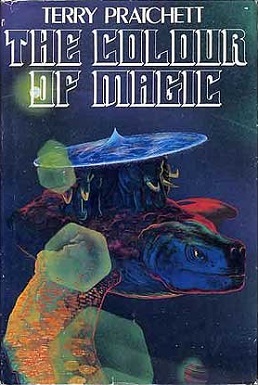 Discworld
"I should say that when people talk about capitalism its a bit of a joke. Theres no such thing. No country, no business class, has ever been willing to subject itself to the free market, free market discipline. Free markets are for others. Like, the Third World is the Third World because they had free markets rammed down their throat. Meanwhile, the enlightened states, England, the United States, others, resorted to massive state intervention to protect private power, and still do. Thats right up to the present. I mean, the Reagan administration for example was the most protectionist in post-war American history. Virtually the entire dynamic economy in the United States is based crucially on state initiative and intervention: computers, the internet, telecommunication, automation, pharmaceutical, you just name it. Run through it, and you find massive ripoffs of the public, meaning, a system in which under one guise or another the public pays the costs and takes the risks, and profit is privatized. Thats very remote from a free market. Free market is like what India had to suffer for a couple hundred years, and most of the rest of the Third World."
"The Dwarf sees farther than the Giant, when he has the Giants shoulders to mount on."
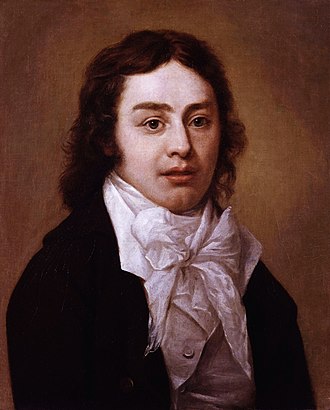 Samuel Taylor Coleridge
"If civilization has an opposite, it is war."
"A word of the faith that never balks, Here or henceforward it is all the same to me, I accept Time absolutely. It alone is without flaw, it alone rounds and completes all, That mystic baffling wonder alone completes all. (23)"
"I am dominated by one thing, an irresistible, burning attraction towards the abstract. The expression of human feelings and the passions of man certainly interest me deeply, but I am less concerned with expressing the motions of the soul and mind than to render visible, so to speak, the inner flashes of intuition which have something divine in their apparent insignificance and reveal magic, even divine horizons, when they are transposed into the marvellous effects of pure plastic art."
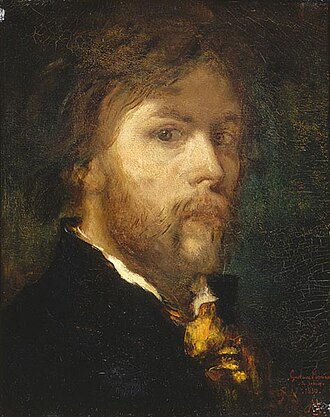 Gustave Moreau