Quote
"What do I know about God and the purpose of life? I know that this world exists."
R
Religiousness"We have now learned from our generalizations of the great complexity of the interactions of principles... that what is approached is eternal and instant awareness of absolute reality of all that ever existed. All the great metaphysical integrity of all the individuals, which is potential and inherent in the complex interactions of generalized principles, will always and only coexist eternally."
The Oxford English Dictionary defines religiosity as: "Religiousness; religious feeling or belief. [...] Affected or excessive religiousness". Different scholars have seen this concept as broadly about religious orientations and degrees of involvement or commitment. The contrast between "religious" and "religiose" and the concept of "strengthening" faith
"What do I know about God and the purpose of life? I know that this world exists."
"Hinduism as I know it entirely satisfies my soul, fills my whole being … When doubts haunt me, when disappointments stare me in the face, and when I see not one ray of light on the horizon, I turn to the Bhagavad Gita, and find a verse to comfort me; and I immediately begin to smile in the midst of overwhelming sorrow. My life has been full of tragedies and if they have not left any visible and indelible effect on me, I owe it to the teachings of the Bhagavad Gita."
"Atheism leads not to badness, but only to an incurable sadness and loneliness."
"I saw my Lord with the Eye of my heart, And I said: Truly there is no doubt that it is You. It is You that I see in everything; And I do not see You through anything (but You)."
"Every religion assumes that God loves men, since He establishes a religion for their happiness; and since He loves men we are certain of pleasing Him in loving them, too. Usbek’s prayer in Letter XLVI. Is not yet out of date. “Lord, I do not understand any of those discussions that are carried on without end regarding Thee: I would serve Thee according to Thy will; but each man whom I consult would have me serve Thee according to his.” He insists that religion is intended for man’s happiness; and that, in order to love it and fulfil its behests, it is not necessary to hate and persecute those who are opposed to our beliefs – not necessary even to attempt to convert them."
"[Z]eal for the advancement of religion is different from a due attachment to it; and that in order to love it and fulfil its behests, it is not necessary to hate and persecute those who are opposed to it."
"We have created a wealthy society with tens of millions of talented, resourceful individuals who play virtually no role whatsoever as citizens. Bringing these people in — with their networks of influence, their knowledge, and their resources — is the key to creating the capacity for shared intelligence that we need to solve our problems."
 Al Gore
"As in respect of the first wonder we are all on the same level, how comes it that the philosophic mind should, in all ages, be the privilege of a few? The most obvious reason is this: The wonder takes place before the period of reflection, and (with the great mass of mankind) long before the individual is capable of directing his attention freely and consciously to the feeling, or even to its exciting causes. Surprise (the form and dress which the wonder of ignorance usually puts on) is worn away, if not precluded, by custom and familiarity."
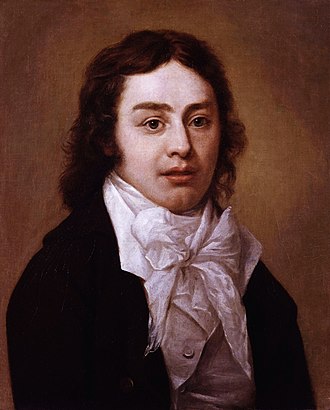 Samuel Taylor Coleridge
"The dualistic philosophy reigned supreme in Europe, dominating the development of Western science. But with the advent of atomic physics, findings based on demonstrable experiment were seen to negate the dualistic theory, and the trend of thought since then has been back to the monistic conception of the ancient Taoists."
"Under the rule of a repressive whole, liberty can be made into a powerful instrument of domination. The range of choice open to the individual is not the decisive factor in determining the degree of human freedom, but what can be chosen and what is chosen by the individual."
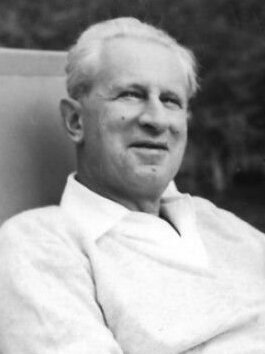 Herbert Marcuse
"All economic activity is carried out through time. Every individual economic process occupies a certain time, and all linkages between economic processes necessarily involve longer or shorter periods of time."
"I believe that the main lesson which our generation has learnt is that we must find a new limit for the activities of government, a limit which leaves ample scope for sensible experimentation but which secures the freedom of the individual as the mainspring of all social and political activity. The whole purpose of these lectures has been to suggest that we can find such a limit if we are willing to revive and develop the ancient ideal of the Rule of Law."