Quote
"Im not a millionaire but Im very comfortable doing what I do, and Im more productive now than I was in my mid-20s. Its all down to functionality eventually. If youre functional it doesnt matter if youre mad."
A
Alan Moore"We only know the world as we have lived in it. A lot of things we thought were givens have turned out to be local and temporary phenomena. Capitalism and communism felt like they were always going to be around, but it turns out they were just two ways of ordering an industrial society. If you were looking for more fundamental human political poles, you’d take anarchy and fascism, for my money. Which are not dependent upon economic trends because they are both a bit mad. One of them is complete abdication of individual responsibility into the collective, and one of them absolute responsibility for the individual. I think these will both still be with us, but fascism becomes less and less possible. We have to accept that we are moving towards some sort of anarchy."
Alan Moore is an English author known primarily for his work in comics including Watchmen, V for Vendetta, The Ballad of Halo Jones, Swamp Thing, Batman: The Killing Joke, Superman: Whatever Happened to the Man of Tomorrow? and From Hell. He is widely recognised among his peers and critics as one of the best comic book writers in the English language. Moore has occasionally used such pseudonyms as
"Im not a millionaire but Im very comfortable doing what I do, and Im more productive now than I was in my mid-20s. Its all down to functionality eventually. If youre functional it doesnt matter if youre mad."
"I don’t really feel, with the recent films, that they have stood by what I assumed were their original principles. So I asked for DC Comics to send all of the money from any future TV series or films to Black Lives Matter."
"Anarchy – anarchon – no leaders. Which means, everybody is a leader. You can’t have an official set of rules for anarchy. I tend to think such connections casually, and break and form and break and form throughout our lives. If you look back ten years, you will remember a group of friends who you were productively involved with at that time, now some of them have drifted away, new people have come in. These are more naturalistic linkages, which exist while there is a need for them to exist. It’s more like the way ants work."
"Annie Besant’s book where she put forward the idea that theosophical mystical energies could be portrayed as colours or abstract shapes was practically the invention of abstract art. A lot of artists rushed out and read it and suddenly thought, ‘oh God you could, you could portray love as a colour, or depression as a colour” All of a sudden abstract art happens, a flowering out of occultism."
"What I would prefer to have is to have a kind of magic where we say, "OK, we’re going to do a magical performance on this night, at this time. You come along, if you don’t think it’s magical, that’s fine. We’ll show you. We’ll show you what we mean, and you judge for yourself." That’s only fair. So a lot of the magic we do tends to gravitate toward the practical end, toward something that is tangible. Where you’ve got a record at the end of it, a performance at the end of it, a painting at the end of it. You’ve conjured some energy, some idea, some information from somewhere and put it in a tangible form. You conjure something into existence in a literal sense. A rabbit out of a hat. Something out of nothing. That’s one level to it, but there’s a lot of background to that. That’s the stuff that people see, that’s the end result of the process. But we also do a lot of ritual work purely on our own."
"B. F. Skinner actually put forward – and this is a measure of scientific desperation over consciousness – the idea that consciousness was a weird vibrational by-product of the vocal cords. That we did not actually think. We thought we thought because of this weird vibration caused by the vocal cords. This shows the lengths that hard science will go to to banish the ghost from the machine."
"We have created a wealthy society with tens of millions of talented, resourceful individuals who play virtually no role whatsoever as citizens. Bringing these people in — with their networks of influence, their knowledge, and their resources — is the key to creating the capacity for shared intelligence that we need to solve our problems."
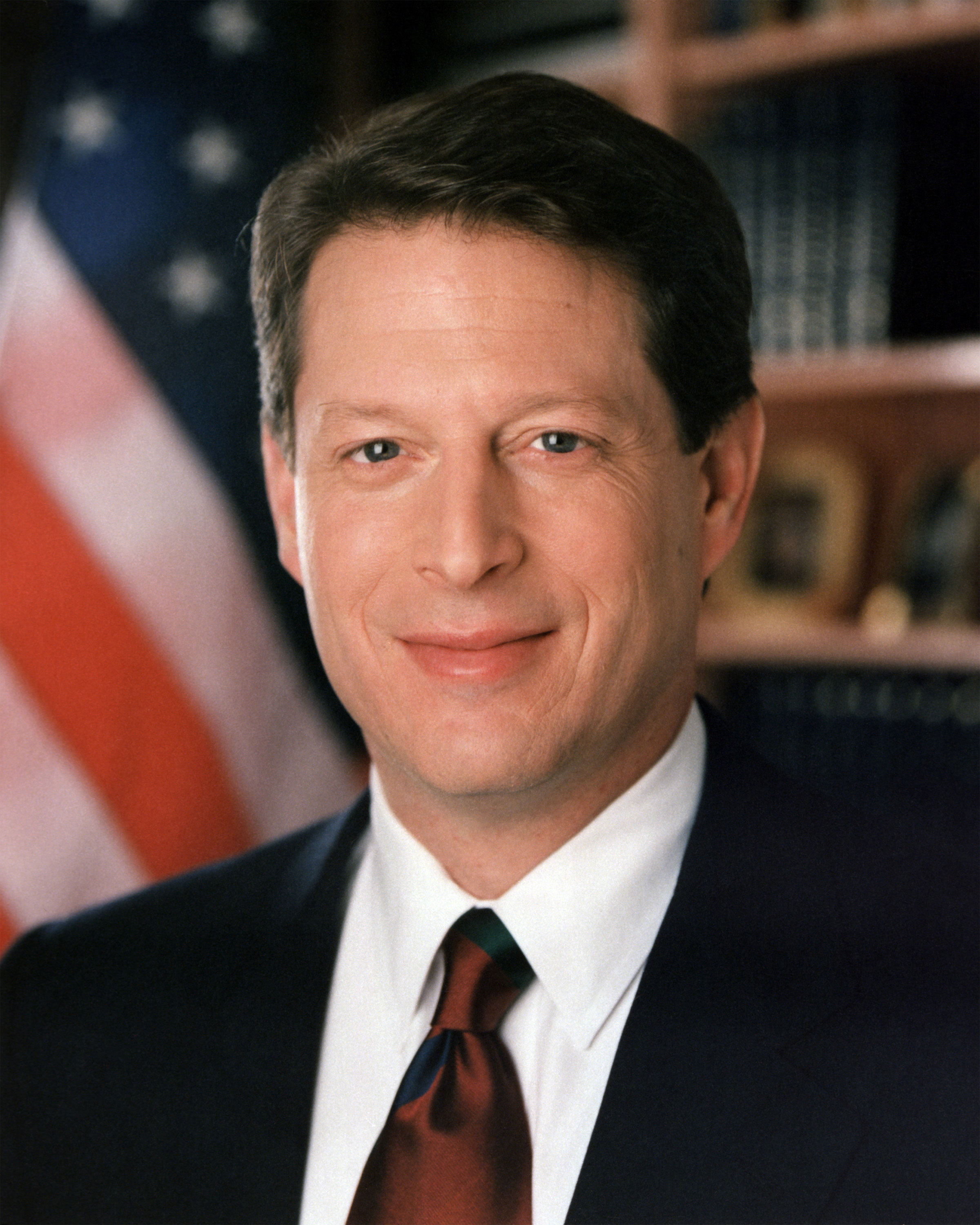 Al Gore
"As in respect of the first wonder we are all on the same level, how comes it that the philosophic mind should, in all ages, be the privilege of a few? The most obvious reason is this: The wonder takes place before the period of reflection, and (with the great mass of mankind) long before the individual is capable of directing his attention freely and consciously to the feeling, or even to its exciting causes. Surprise (the form and dress which the wonder of ignorance usually puts on) is worn away, if not precluded, by custom and familiarity."
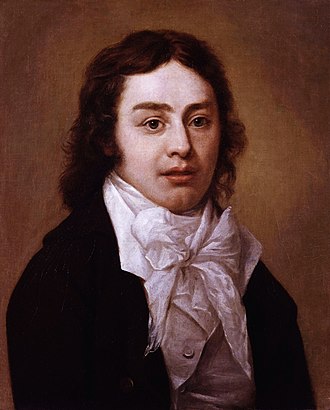 Samuel Taylor Coleridge
"The dualistic philosophy reigned supreme in Europe, dominating the development of Western science. But with the advent of atomic physics, findings based on demonstrable experiment were seen to negate the dualistic theory, and the trend of thought since then has been back to the monistic conception of the ancient Taoists."
"Under the rule of a repressive whole, liberty can be made into a powerful instrument of domination. The range of choice open to the individual is not the decisive factor in determining the degree of human freedom, but what can be chosen and what is chosen by the individual."
 Herbert Marcuse
"All economic activity is carried out through time. Every individual economic process occupies a certain time, and all linkages between economic processes necessarily involve longer or shorter periods of time."
"I believe that the main lesson which our generation has learnt is that we must find a new limit for the activities of government, a limit which leaves ample scope for sensible experimentation but which secures the freedom of the individual as the mainspring of all social and political activity. The whole purpose of these lectures has been to suggest that we can find such a limit if we are willing to revive and develop the ancient ideal of the Rule of Law."