SHAWORDS

We see again confirmed the correlation between spiritual impotence and — Eric Voegelin

"We see again confirmed the correlation between spiritual impotence and antirationalism: one cannot deny God and retain reason."
Eric Voegelin
Eric Voegelin
Eric Voegelin
author15 quotes

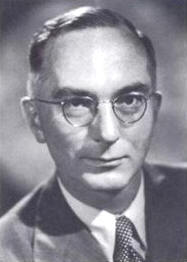
Eric Voegelin was a German-American political philosopher. He was born in Cologne, and educated in political science at the University of Vienna, where he became an associate professor of political science in the law faculty. In 1938, he and his wife fled from the Nazi forces which had entered Vienna. They emigrated to the United States, where they became citizens in 1944. He spent most of his aca

More by Eric Voegelin

View all →
Quote
"The tenacity of faith in this complex of ideas is certainly not caused by its merits as an adequate interpretation of man and society. The inadequacy of a pleasure-pain psychology, the poverty of utilitarian ethics, the impossibility of explaining moral phenomena by the pursuit of happiness, the uselessness of the greatest happiness of the greatest number as a principle of social ethics - all these have been demonstrated over and over again in a voluminous literature. Nevertheless, even today this complex of ideas holds a fascination for a not inconsiderable number of persons. This fascination will be more intelligible if we see the complex of sensualism and utilitarianism not as number of verifiable propositions but as the dogma of a religion of socially immanent salvation. Enlightened utilitarianism is but the first in a series of totalitarian, sectarian movements to be followed later by Positivism, Communism and National Socialism."
Eric VoegelinEric Voegelin
Quote
"The criterion of integral sanity [for Littré] is the acceptance of Positivism in its first stage. The criteria of decadence or decline are (1) a faith in transcendental reality, whether it expresses itself in the Christian form or in that of a substitute religion, (2) the assumption that all human faculties have a legitimate urge for public expression in a civilization, and (3) the assumption that love can be a legitimate guiding principle of action, taking precedence before reason. This diagnosis of mental deficiency is of an importance which can hardly be exaggerated. It is not the isolated diagnosis of Littré; it is rather the typical attitude toward the values of Western civilization which has continued among "intellectual positivists" from the time of Mill and Littré down to the neo-Positivistic schools of the Viennese type. Moreover, it has not remained confined to the schools but has found popular acceptance to such a degree that this variant of Positivism is today one of the most important mass movements. It is impossible to understand the graveness of the Western crisis unless we realize that the cultivation of values beyond Littrés formula of civilization as the dominion of man over nature and himself by means of science is considered by broad sectors of Western society to be a kind of mental deficiency."
Eric VoegelinEric Voegelin
Quote
"The three mid-twentieth-century master painters of liberal disorder considered here—Richard Weaver, Eric Voegelin and Alasdair MacIntyre—all worked in the United States. Voegelin and MacIntyre were European emigrés. They wrote with a historical and geographic broad sweep. By the “West” they meant, willy-nilly, the classical Mediterranean world, medieval Christendom, and present-day rich, non-Communist nations. All took for granted a pervasive spiritual decline. None focused topically on this or that particular social harm or its solution. They wrote as if Western troubles were, if not of one kind, at any rate from a common source in a collective moral disorder. The scholastic and historical detail was imposing. With Voegelin, it was overwhelming. Despite the detail, however, the appeal of the picture lay in its simplicity and familiarity. Each told a time-honored story of Luciferan pride and fall. What liberals saw as progress, these thinkers took for ruinous and merited decline. Reversing decline, supposing that reversal were possible, was a matter of morals and how to think about morals. Each had a social diagnosis, a historical story, and a suggested cure. On the diagnosis, they concurred. We were suffering from liberal modernity. On the timing of its onset they differed: the twelfth century, perhaps earlier (Voegelin); the fourteenth century (Weaver); eighteenth-century Enlightenment (MacIntyre). The suggested cure was to rebuff liberal efforts to privatize morality and put morality back into politics and public life. Weaver, Voegelin, and MacIntyre opened paths toward present-day “values” conservatism. They pointed to a sphere of politics that conservatives might hope to claim as their own."
Eric VoegelinEric Voegelin