Quote
"Those writings of mine arent anything. There is nothing instructive in what I wrote."
M
Mao Zedong"We spoke at length and We really liked Mao Zedong. A lot. He gave Us a very good impression, as Paul VI did. He is a good and very serious leader, and his people have done well to embrace him."
Mao Zedong was a Chinese revolutionary, politician, writer, political theorist and the founder of the People's Republic of China (PRC). He led China from the PRC's establishment in October 1949 until his death in September 1976, primarily through his role as the Chairman of the Chinese Communist Party (CCP). His theories, which he advocated as a Chinese adaptation of Marxism–Leninism, are known as
"Those writings of mine arent anything. There is nothing instructive in what I wrote."
"I like rightists... I am comparatively happy when these people on the right come into power."
"The masses, the army, and the cadres are the three pillars on which we rely."
"Mao’s impact on China must also be assessed in terms of economic and social changes in China after 1949. Despite the setbacks of the Great Leap and the Cultural Revolution, overall China’s economy made decided advances during the Maoist period. China’s industrial sector grew rapidly and agricultural output was once again showing increases by the time of Mao’s death. China’s infrastructure expanded with the addition of new railways and improved roads. Electricity became available in all but the most remote villages. Life expectancy reached 65 years by the time of Mao’s death, a remarkable increase over the 1949 figure. Under the new laws of the PRC, women held equal status with men and, as a result of the commune movement, worked outside the home. Although efforts to expand education stumbled repeatedly because of political campaigns, the number of literate men and women climbed as schools and colleges grew in number throughout the period. These accomplishments are part of the legacy of the first generation of revolutionary leadership. At the same time, Maoist policies exacted an enormous human cost. Misguided policy decisions of the Great Leap Forward claimed millions of lives. Whether this cost was levied unintentionally or not, Mao himself chose the policies that led to human disaster and he cannot be absolved of responsibility for the outcomes. When the records of the CCP are someday made available for objective examination, both the Chinese people and the world community will be able to assess more clearly the circumstances that led to the greatest tragedies of the Maoist period and how that experience influenced China’s current economic reforms and its political direction."
"Is Mao dead? That we even feel the need to ask the question betrays part of the answer. Yes he’s dead, but more importantly, his legacy still exerts a profound influence on China, both in his continuing grassroots popularity and in the instruments of governance that the C.C.P. still uses—most of which have Mao’s fingerprints all over them."
"All the rest of the world uses the word "electricity." Theyve borrowed the word from English. But we Chinese have our own word for it!"
"The smart way to keep people passive and obedient is to strictly limit the spectrum of acceptable opinion, but allow very lively debate within that spectrum - even encourage the more critical and dissident views. That gives people the sense that theres free thinking going on, while all the time the presuppositions of the system are being reinforced by the limits put on the range of the debate."
"With much care and skill power has been broken into fragments in the American township, so that the maximum possible number of people have some concern with public affairs."
"The people reign over the American political world as God rules over the universe. It is the cause and the end of all things; everything rises out of it and is absorbed back into it."
"I should say that when people talk about capitalism its a bit of a joke. Theres no such thing. No country, no business class, has ever been willing to subject itself to the free market, free market discipline. Free markets are for others. Like, the Third World is the Third World because they had free markets rammed down their throat. Meanwhile, the enlightened states, England, the United States, others, resorted to massive state intervention to protect private power, and still do. Thats right up to the present. I mean, the Reagan administration for example was the most protectionist in post-war American history. Virtually the entire dynamic economy in the United States is based crucially on state initiative and intervention: computers, the internet, telecommunication, automation, pharmaceutical, you just name it. Run through it, and you find massive ripoffs of the public, meaning, a system in which under one guise or another the public pays the costs and takes the risks, and profit is privatized. Thats very remote from a free market. Free market is like what India had to suffer for a couple hundred years, and most of the rest of the Third World."
"I appeal to all pupils, students and young people, asking you to focus on the horizons that are opening up for you, and which you could only dream of a year ago. Our future will depend on your desire for education and moral values as well as on your entrepreneurial spirit."
"We have created a wealthy society with tens of millions of talented, resourceful individuals who play virtually no role whatsoever as citizens. Bringing these people in — with their networks of influence, their knowledge, and their resources — is the key to creating the capacity for shared intelligence that we need to solve our problems."
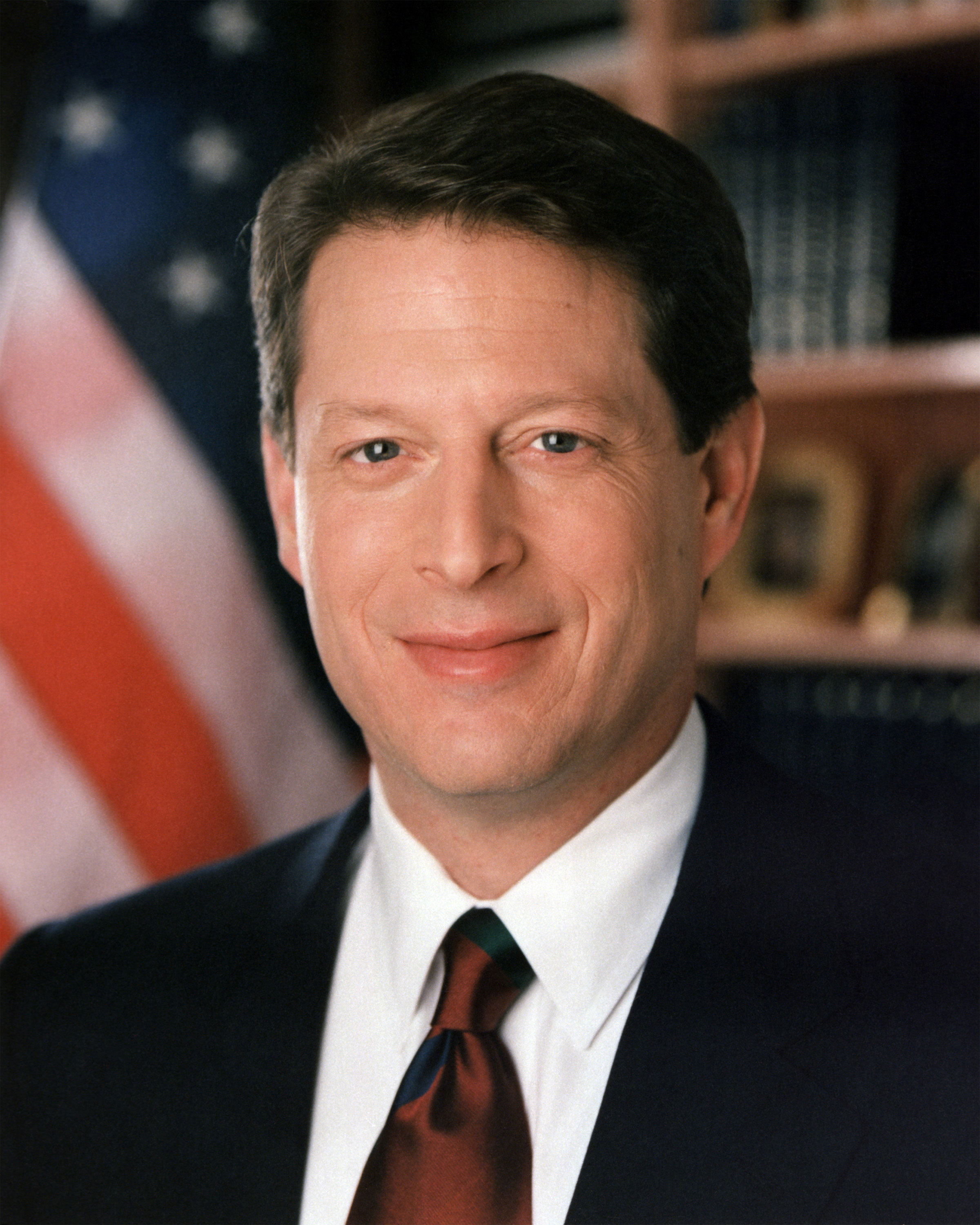 Al Gore