SHAWORDS

Well, we will indeed see how things develop and what will become of ou — Wassily Kandinsky

"Well, we will indeed see how things develop and what will become of our art! In any case, artists should remain apolitical and only think of their work and dedicate all their energies to this work."
Wassily Kandinsky
Wassily Kandinsky
Wassily Kandinsky
author87 quotes

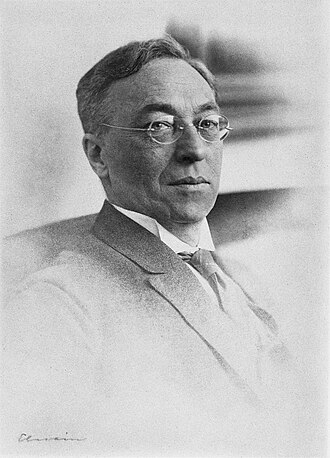
Wassily Wassilyevich Kandinsky was a Russian painter and art theorist active in Germany during the late Belle Époque and Interwar eras. Kandinsky is generally credited as one of the pioneers of abstraction in Western art. Born in Moscow, he began painting studies at the age of 30.

More by Wassily Kandinsky

View all →
Quote
"Up till then [c. 1895] I had known nothing but realist art, in effect only the Russians.. .And suddenly for the first time a saw a picture. The catalog told me it was a haystack of Claude Monet; I couldnt tell it from looking. Not able to tell it upset me. I also considered that the artist had no right to paint so indistinctly. I had the dull sensation that the pictures subject was missing. And was amazed and confused to realize that the picture did not merely fascinate but impressed itself indelibly on my memory and constantly floated before my eyes, quite unexpectedly, completely in every detail. I did not understand any of this.. .What was quite plain to me, however, was that the palette had a strength that I heave never before suspected, far beyond anything that I had ever dreamt.."
Wassily KandinskyWassily Kandinsky
Quote
"Every work of art is the child of its age and, in many cases, the mother of our emotions. It follows that each period of culture produces an art of its own which can never be repeated. Efforts to revive the art-principles of the past will at best produce an art that is still-born. It is impossible for us to live and feel, as did the ancient Greeks. In the same way those who strive to follow the Greek methods in sculpture achieve only a similarity of form, the work remaining soulless for all time. Such imitation is mere aping. Externally the monkey completely resembles a human being; he will sit holding a book in front of his nose, and turn over the pages with a thoughtful aspect, but his actions have for him no real meaning."
Wassily KandinskyWassily Kandinsky
Quote
"The more freely abstract the form becomes, the purer, and also the more primitive it sounds. Therefore, in a composition in which corporeal elements are more or less superfluous, they can be more or less omitted and replaced by purely abstract forms, or by corporeal forms that have been completely abstracted.. .Here we are confronted by the question: Must we not then renounce the object altogether, throw it to the winds and instead lay bare the purely abstract? This is a question that naturally arises, the answer to which is at once indicated by an analysis of the concordance of the two elements of form (the objective and the abstract). Just as every word spoken (tree, sky, man) awakens an inner vibration, so too does every pictorially represented object. To deprive oneself of the possibility of this calling up vibrations would be to narrow ones arsenal of expressive means. At least, that is how it is today. But apart from todays answer, the above question receives the eternal answer to every question in art that begins with must. There is no must in art, which is forever free."
Wassily KandinskyWassily Kandinsky

More on Hard Work

View all →
Quote
"I, too, believed it was impossible to change the existing society into one that would be for the benefit of all; neither could I espouse any given ideal for society. But [...] I felt that even if one did not have an ideal vision of society, one could have one’s work to do. Whether it was successful or not was not our concern; it was enough that we believed it to be a valid work. The accomplishment of that work, I believed, was what our real life was about. Yes. I want to carry out a work of my own; for I feel that by so doing our lives are rooted in the here and now, not in some far-off ideal goal."
P
Purpose
Quote
"Nobody should start to undertake a large project. You start with a small _trivial_ project, and you should never expect it to get large. If you do, youll just overdesign and generally think it is more important than it likely is at that stage. Or worse, you might be scared away by the sheer size of the work you envision. So start small, and think about the details. Dont think about some big picture and fancy design. If it doesnt solve some fairly immediate need, its almost certainly over-designed. And dont expect people to jump in and help you. Thats not how these things work. You need to get something half-way _useful_ first, and then others will say "hey, that _almost_ works for me", and theyll get involved in the project."
Free softwareFree software
Quote
"Without getting complicated let me recapitulate my art training in the following way: the Academy first, the break with the Academy when I hit the Hofmann School which is Cubist. The next real break follows when I see Pollock’s work [1940-41] and once more another transition occurs.. .It was a force [Pollock’s work], a living force, the same sort of thing I responded to in Matisse, in Picasso, in Mondrian. Once more, I was hit that hard with what I saw... I began feeling the need to break with what I was doing and to approach something else."
Lee KrasnerLee Krasner
Quote
"Action in its essence, the creative art of a writer of fiction may be compared to rescue work carried out in darkness against cross gusts of wind swaying the action of a great multitude. It is rescue work, this snatching of vanishing phases of turbulence, disguised in fair words, out of the native obscurity into a light where the struggling forms may be seen, seized upon, endowed with the only possible form of permanence in this world of relative values — the permanence of memory."
H
Henry James (book)