SHAWORDS

When called to him upon his receiving the fatal wound, I found him hal — Alexander Hamilton

"When called to him upon his receiving the fatal wound, I found him half sitting on the ground, supported in the arms of Mr. Pendleton. His countenance of death I shall never forget. He had at that instant just strength to say, This is a mortal wound, doctor; when he sunk away, and became to all appearance lifeless. I immediately stripped up his clothes, and soon, alas I ascertained that the direction of the ball must have been through some vital part. His pulses were not to be felt, his respiration was entirely suspended, and, upon laying my hand on his heart and perceiving no motion there, I considered him as irrecoverably gone. I, however, observed to Mr. Pendleton, that the only chance for his reviving was immediately to get him upon the water. We therefore lifted him up, and carried him out of the wood to the margin of the bank, where the bargemen aided us in conveying him into the boat, which immediately put off. During all this time I could not discover the least symptom of returning life. I now rubbed his face, lips, and temples with spirits of hartshorn, applied it to his neck and breast, and to the wrists and palms of his hands, and endeavoured to pour some into his mouth."
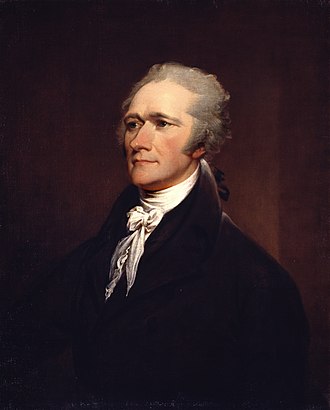
Alexander Hamilton
Alexander Hamilton
Alexander Hamilton

author99 quotes

Alexander Hamilton was an American military officer, statesman, and Founding Father who served as the first U.S. secretary of the treasury from 1789 to 1795 under the presidency of George Washington. He also founded America's first political party, the Federalist Party, in 1791.

More by Alexander Hamilton

View all →
Quote
"The origin of all civil government, justly established, must be a voluntary compact, between the rulers and the ruled; and must be liable to such limitations, as are necessary for the security of the absolute rights of the latter; for what original title can any man or set of men have, to govern others, except their own consent? To usurp dominion over a people, in their own despite, or to grasp at a more extensive power than they are willing to entrust, is to violate that law of nature, which gives every man a right to his personal liberty; and can, therefore, confer no obligation to obedience."
Alexander HamiltonAlexander Hamilton

More on Life

View all →