Quote
"Well never forget you, Mary Poppins!"
P
P. L. Travers"When I write it’s more a process of listening. I don’t pretend that there is some spirit standing beside me that tells me things. More and more I’ve become convinced that the great treasure to possess is the unknown. I’m going to write, I hope, a lot about that. It’s with my unknowing that I come to the myths. If I came to them knowing, I would have nothing to learn. But I bring my unknowing, which is a tangible thing, a clear space, something that’s been made room for out of the muddle of ordinary psychic stuff, an empty space."
Pamela Lyndon Travers was an Australian-British writer who spent most of her career in England. She is best known for the Mary Poppins series of books, which feature the eponymous magical nanny.
"Well never forget you, Mary Poppins!"
"It may be that to eat and be eaten are the same thing in the end. My wisdom tells me that this is probably so. We are all made of the same stuff, remember, we of the Jungle, you of the City. The same substance composes us — the tree overhead, the stone beneath us, the bird, the beast, the star — we are all one, all moving to the same end. Remember that when you no longer remember me, my child."
"The true fairytales … come straight out of myth; they are, as it were, minuscule reaffirmation of myths, or perhaps the myth made accessible to the local folky mind. One might say that fairytales are the myths falling into time and locality … is the same stuff, all the essentials are there, it is small, but perfect. Not minimized, not to be made digestible for children."
"On September 6, 1995 La Stampa, Turins daily newspaper, titled at full page "Is Mary Poppins really Satan?". Many readers were, understandably, surprised but no reader was more astonished than the undersigned. In fact I learned from the article that I had accused Mary Poppins to have "clear links with the esoteric and satanic thought". I was credited for having discovered that "under the gentle mask of the extraordinary nanny a dangerous creature was hidden, with features no less than satanic". The same journalist, appropriately, interviewed an exorcist who complained that "Introvigne normally minimizes the presence of Satan in our life" (a reference to my book on Satanism, where I argue that the number of real Satanists is minimum compared to the number of those who promote Satanism scares). But this, for the exorcist, amounted to still more convincing evidence that Mary Poppins was really satanic: "If someone like Massimo Introvigne has written such a thing, this could only mean that the danger is really there". The problem was, however, that I had never written such a thing."
"In an interview which appeared in The Paris Review in 1982 the interviewers asked Travers whether "Mary Poppins teaching — if one can call it that — resemble that of Christ in his parables". Travers replied: "My master, because Ive studied Zen for a long time, told me that every one (and all the stories werent written then) of the Mary Poppins stories is in essence a Zen story. And someone else, who is a bit of a , told me that every one of the stories is a moment of tremendous sexual passion, because it begins with such tension and then it is reconciled and resolved in a way that is gloriously sensual". The answer is clarified by the following question: "So people can read anything and everything into the stories?" "Indeed."
"What I want to know is this: Are the stars gold paper or is the gold paper stars?"
"The absolute requisites for the study of this work... are a knowledge of algebra to the binomial at least, plane and solid geometry, plane trigonometry, and the most simple part of the usual applications of algebra to geometry. ...A. De Morgan. London July 1, 1836"
"Captain Littlepage had overset his mind with too much reading."
"What say you? It is useless? Ay, I know But who fights ever hoping for success? I fought for lost cause, and for fruitless quest! You there, who are you! — You are thousands! Ah! I know you now, old enemies of mine! Falsehood! Have at you! Ha! and Compromise! Prejudice, Treachery! … Surrender, I? Parley? No, never! You too, Folly, — you? I know that you will lay me low at last; Let be! Yet I fall fighting, fighting still!"
"Ive been taking a closer look at these graduates. They are actually taller, stronger, smarter than we were, smart enough maybe to take our mistakes as their messages, to make our weaknesses their lessons, and to make our example — good and not so good — part of their education."
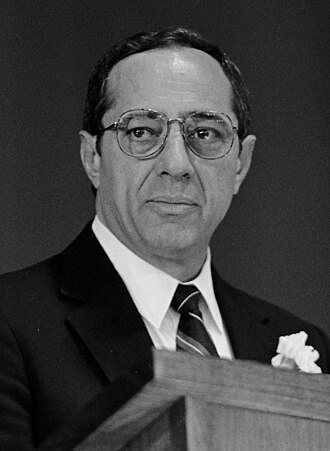 Mario Cuomo
"In short, it is not merely that Johnny cant read, or even that Johnny cant think. Johnny doesnt know what thinking is, because thinking is so often confused with feeling in many public schools. [emphasis in the original]"
"Bigotry is the disease of ignorance, of morbid minds; enthusiasm of the free and buoyant. Education & free discussion are the antidotes of both."
 Thomas Jefferson