Quote
"I managed to get a quick PhD — though when I got it I knew almost nothing about physics. But I did learn one big thing: that no one knows everything, and you dont have to."
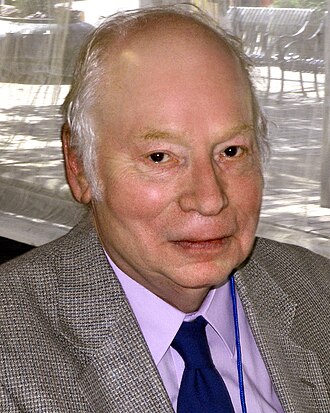 Steven Weinberg
"When several forces act... the total force is the sum... each component of the total force is the sum of the corresponding components of the individual forces."
Steven Weinberg was an American theoretical physicist. He shared the 1979 Nobel Prize in Physics with Abdus Salam and Sheldon Glashow "for their contributions to the theory of the unified weak and electromagnetic interaction between elementary particles, including, inter alia, the prediction of the weak neutral current".
"I managed to get a quick PhD — though when I got it I knew almost nothing about physics. But I did learn one big thing: that no one knows everything, and you dont have to."
Steven Weinberg"To start, we will consider a single particle moving in three space dimensions under the influence of a general central potential. Later we will specialize to the case of a Coulomb potential, and work out the spectrum of hydrogen. One other classic problem, the harmonic oscillator, will be treated at the end of this chapter."
Steven Weinberg"Another lesson to be learned, to continue using my oceanographic metaphor, is that while you are swimming and not sinking you should aim for rough water."
Steven Weinberg"Elementary particles are terribly boring, which is one reason why were so interested in them."
Steven Weinberg"One of the great achievements of science has been, if not to make it impossible for intelligent people to be religious, then at least to make it possible for them not to be religious. We should not retreat from this accomplishment."
Steven Weinberg"So what happens to the effective field theories of electroweak, strong, and gravitational interactions at energies of order 1015–1018 GeV? I know of only two plausible alternatives. One possibility is that the theory remains a quantum field theory, but one in which the finite or infinite number of renormalized couplings do not run off to infinity with increasing energy, but hit a fixed point of the renormalizable group equations. ... The other possibility, which I have to admit is a priori more likely, is that at very high energy we will run into really new physics, not describable in terms of a quantum field theory. I think that by far the most likely possibility is that this will be something like a string theory."
Steven Weinberg"We have created a wealthy society with tens of millions of talented, resourceful individuals who play virtually no role whatsoever as citizens. Bringing these people in — with their networks of influence, their knowledge, and their resources — is the key to creating the capacity for shared intelligence that we need to solve our problems."
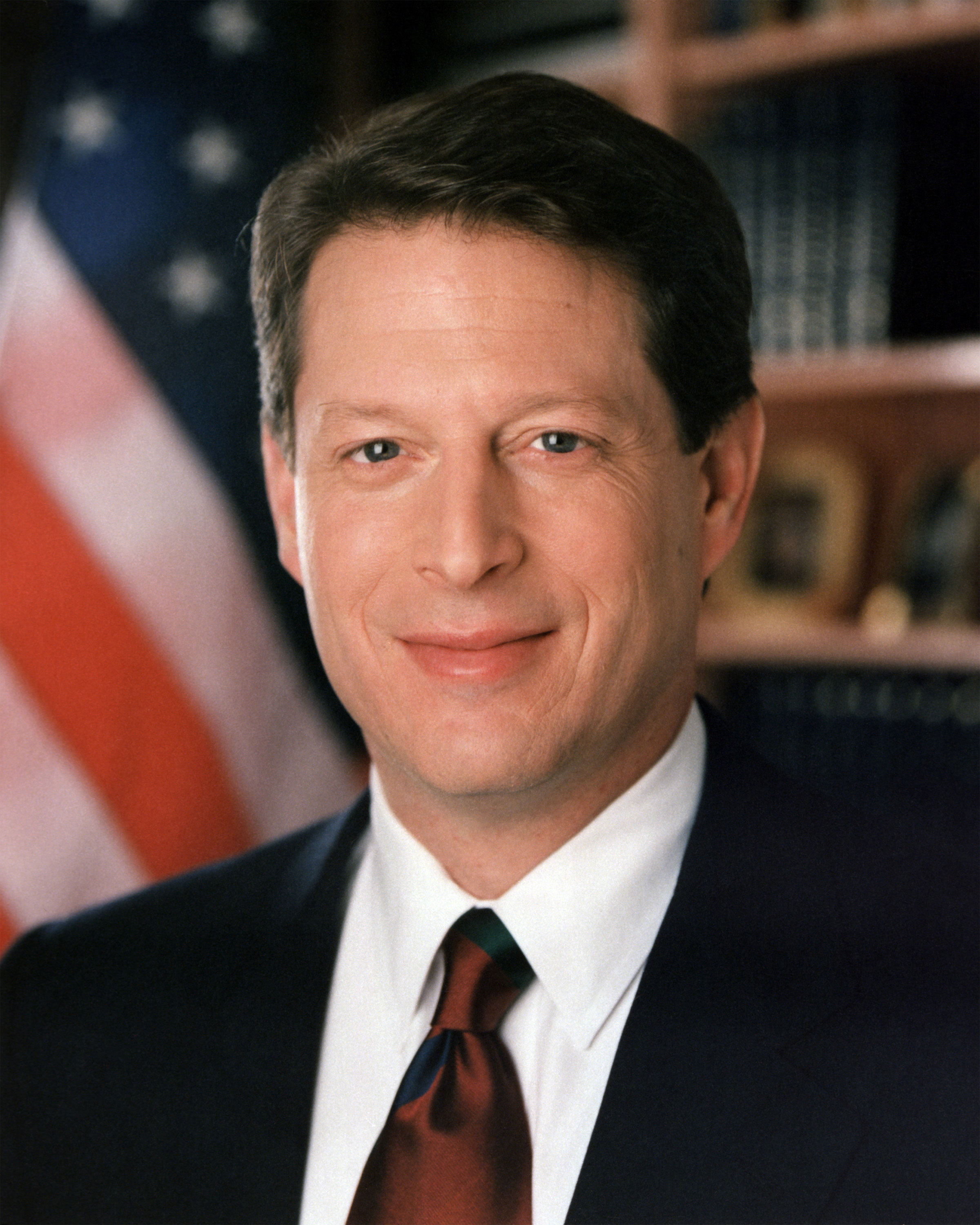 Al Gore
"As in respect of the first wonder we are all on the same level, how comes it that the philosophic mind should, in all ages, be the privilege of a few? The most obvious reason is this: The wonder takes place before the period of reflection, and (with the great mass of mankind) long before the individual is capable of directing his attention freely and consciously to the feeling, or even to its exciting causes. Surprise (the form and dress which the wonder of ignorance usually puts on) is worn away, if not precluded, by custom and familiarity."
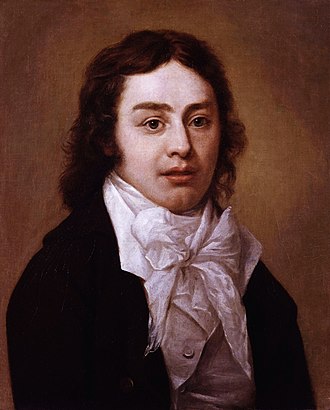 Samuel Taylor Coleridge
"The dualistic philosophy reigned supreme in Europe, dominating the development of Western science. But with the advent of atomic physics, findings based on demonstrable experiment were seen to negate the dualistic theory, and the trend of thought since then has been back to the monistic conception of the ancient Taoists."
"Under the rule of a repressive whole, liberty can be made into a powerful instrument of domination. The range of choice open to the individual is not the decisive factor in determining the degree of human freedom, but what can be chosen and what is chosen by the individual."
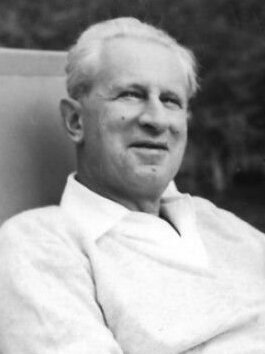 Herbert Marcuse
"All economic activity is carried out through time. Every individual economic process occupies a certain time, and all linkages between economic processes necessarily involve longer or shorter periods of time."
"I believe that the main lesson which our generation has learnt is that we must find a new limit for the activities of government, a limit which leaves ample scope for sensible experimentation but which secures the freedom of the individual as the mainspring of all social and political activity. The whole purpose of these lectures has been to suggest that we can find such a limit if we are willing to revive and develop the ancient ideal of the Rule of Law."