SHAWORDS

Where are these rational practices to be taught and acquired? Not with — Robert Owen

HomeRobert OwenQuote
"Where are these rational practices to be taught and acquired? Not within the four walls of a bare building, in which formality predominates... But in the nursery, play-ground, fields, gardens, workshops, manufactures, museums and class-rooms. …The facts collected from all these sources will be concentrated, explained, discussed, made obvious to all, and shown in their direct application to practice in all the business of life."
Robert Owen
Robert Owen
Robert Owen
author40 quotes

Robert Owen was a Welsh textile manufacturer, philanthropist, political philosopher and social reformer, and a founder of utopian socialism and the co-operative movement. He strove to improve factory working conditions, promoted experimental socialistic communities, sought a more collective approach to child-rearing, and 'believed in lifelong education, establishing an Institute for the Formation

More by Robert Owen

View all →
Quote
"My friends, I tell you that hitherto you have been prevented from even knowing what happiness really is, solely in consequence of the errors — gross errors — that have been combined with the fundamental notions of every religion that has hitherto been taught to men. And, in consequence, they have made man the most inconsistent, and the most miserable being in existence. By the errors of these systems he has been made a weak, imbecile animal; a furious bigot and fanatic or a miserable hypocrite; and should these qualities be carried, not only into the projected villages, but into Paradise itself, a Paradise would no longer be found!"
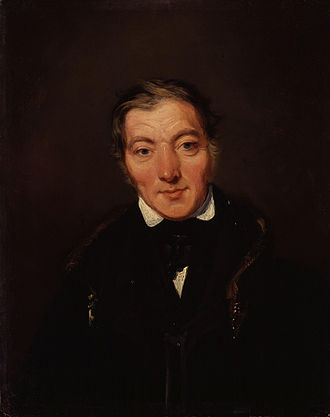
Robert OwenRobert Owen
Quote
"All that is now requisite, previous to withdrawing the last mental bandage by which hitherto the human race has been kept in darkness and misery, is, by calm and patient reasoning to tranquillize the public mind, and thus prevent the evil effects which otherwise might arise from the too sudden prospect of freely enjoying rational liberty of mind. To withdraw that bandage without danger, reason must be judiciously applied to lead men of every sect (for all have been in part abused to reflect that if untold myriads of beings, formed like themselves, have been so grossly deceived as they believe them to have been, what power in nature was there to prevent them from being equally deceived? Such reflections, steadily pursued by those who are anxious to follow the plain and simple path of reason, will soon make it obvious that the inconsistencies which they behold in all other sects out of their own pale, are precisely similar to those which all other sects can readily discover within that pale. It is not, however, to be imagined, that this free and open exposure of the gross errors in which the existing generation has been instructed, should be forthwith palatable to the world; it would be contrary to reason to form any such expectations. Yet, as evil exists, and as man cannot be rational, nor of course happy, until the cause of it shall be removed; the writer, like a physician who feels the deepest interest in the welfare of his patient, has hitherto administered of this unpalatable restorative the smallest quantity which he deemed sufficient for the purpose. He now waits to see the effects which that may produce. Should the application not prove of sufficient strength to remove the mental disorder, he promises that it shall be increased, until sound health to the public mind be firmly and permanently established."
Robert OwenRobert Owen
Quote
"He organised infants schools. He secured the reduction of the hours of labour for women and children in factories. He was a liberal supporter of the earliest efforts to obtain national education. He laboured to promote international arbitration. He was one of the foremost Britons who taught men to aspire to a higher social state by reconciling the interests of capital and labour. He spent his life and a large fortune in seeking to improve his fellowmen by giving them education, self-reliance, and moral worth. His life was sanctified by human affection and lofty effort."
Robert OwenRobert Owen
Quote
"It is confidently expected that the period is at hand, when man, through ignorance, shall not much longer inflict unnecessary misery on man; because the mass of mankind will become enlightened, and will clearly discern that by so acting they will inevitably create misery to themselves. As soon as the public mind shall be sufficiently prepared to receive it, the practical detail of this system shall be fully developed. For the extensive knowledge of the facts which present themselves on the globe, makes it evident to those whose reasoning faculties have not been entirely paralysed, that all mankind firmly believe, that everybody except themselves has been grievously deceived in his fundamental principles; and feel the utmost astonishment that the nations of the world could embrace such gross inconsistencies for divine or political truths. Most persons are now also prepared to understand, that these weaknesses are firmly and conscientiously fixed in the minds of millions, who, when born, possessed equal faculties with themselves. And although they plainly discern in others what they deem inconceivable aberrations of the mental powers, yet, in despite of such facts, they are taught to believe that they themselves could not have been so deceived; and this impression is made upon the infant mind with the greatest ease, whether it be to create followers of the most ignorant, or of the most enlightened systems."
Robert OwenRobert Owen

More on Life

View all →
Quote
"If it fulfills our hopes, this center will be, at once, a symbol and a reflection and a hope. It will symbolize our belief that the world of creation and thought are at the core of all civilization. Only recently in the White House we helped commemorate the 400th anniversary of Shakespeare. The political conflicts and ambitions of his England are known to the scholar and to the specialist. But his plays will forever move men in every corner of the world. The leaders that he wrote about live far more vividly in his words than in the almost forgotten facts of their own rule. Our civilization, too, will largely survive in the works of our creation. There is a quality in art which speaks across the gulf dividing man from man and nation from nation, and century from century. That quality confirms the faith that our common hopes may be more enduring than our conflicting hostilities. Even now men of affairs are struggling to catch up with the insights of great art. The stakes may well be the survival of civilization. The personal preferences of men in government are not important--except to themselves. However, it is important to know that the opportunity we give to the arts is a measure of the quality of our civilization. It is important to be aware that artistic activity can enrich the life of our people, which really is the central object of Government. It is important that our material prosperity liberate and not confine the creative spirit."
L
Lyndon B. Johnson
Quote
"I did not go to join Kurtz there and then. I did not. I remained to dream the nightmare out to the end, and to show my loyalty to Kurtz once more. Destiny. My destiny! Droll thing life is — that mysterious arrangement of merciless logic for a futile purpose. The most you can hope from it is some knowledge of yourself — that comes too late — a crop of unextinguishable regrets. I have wrestled with death. It is the most unexciting contest you can imagine. It takes place in an impalpable grayness, with nothing underfoot, with nothing around, without spectators, without clamor, without glory, without the great desire of victory, without the great fear of defeat, in a sickly atmosphere of tepid skepticism, without much belief in your own right, and still less in that of your adversary. If such is the form of ultimate wisdom, then life is a greater riddle than some of us think it to be. I was within a hairs-breadth of the last opportunity for pronouncement, and I found with humiliation that probably I would have nothing to say. This is the reason why I affirm that Kurtz was a remarkable man. He had something to say. He said it. Since I had peeped over the edge myself, I understand better the meaning of his stare, that could not see the flame of the candle, but was wide enough to embrace the whole universe, piercing enough to penetrate all the hearts that beat in the darkness. He had summed up — he had judged. The horror! He was a remarkable man. After all, this was the expression of some sort of belief; it had candor, it had conviction, it had a vibrating note of revolt in its whisper, it had the appalling face of a glimpsed truth — the strange commingling of desire and hate."
H
Heart of Darkness