SHAWORDS

Why doesnt he throw himself on the ground, saying "You are my Soul, my — Robertson Davies

"Why doesnt he throw himself on the ground, saying "You are my Soul, my Better Self, be mine or I stab myself with this pair of protractors"; then she could reply, "Nay, press me not, I am Anothers". In that way they could really have some romantic fun and store up things to tell their grandchildren. No style, no breadth, thats the trouble with the modern High School set."
R
Robertson Davies
Robertson Davies
author258 quotes

William Robertson Davies was a Canadian novelist, playwright, critic, journalist, and professor. He was one of Canada's best known and most popular authors and one of its most distinguished "men of letters", a term Davies gladly accepted for himself. Davies was the founding Master of Massey College, a graduate residential college associated with the University of Toronto.

More by Robertson Davies

View all →
Quote
"The first principle, when you dont know anything about the subject of a thesis, is to let the candidate talk, nodding now and then with an ambiguous smile. He thinks you know, and are counting his mistakes, and it unnerves him... the second principle of conducting an oral, … is to pretend ignorance, and ask for explanations of very simple points. Of course your ignorance is real, but the examinee thinks you are being subtle, and that he is making an ass of himself, and this rattles him."
R
Robertson Davies
Quote
"When the time came for Pompadour herself to die, she confessed, was given her viaticum, and was from that time forth forbidden to see her lover. And when her body was borne away from Versailles, Louis was thought to have behaved rather badly because he watched the sad procession from a balcony. Let no one suppose that these people lived lives that were any more free from religious and neighbourly censure than the adulterers in our smallest Canadian villages. Even wealth and privilege could not wholly insulate them from that frost."
R
Robertson Davies

More on Education

View all →
Quote
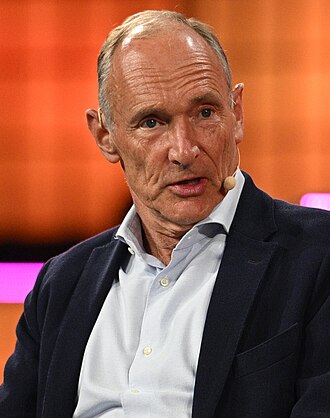
"An [hypertext] encyclopaedia will be an overall attempt by the knowledgeable, the learned societies or anyone else, to represent the state-of-the-art in their field. An encyclopaedia will be a living document, as up to date as it can be, instantly accessible at any time. It will contain carefully authored explanations and summaries of the subject, as well as computer-generated indexes of literature. A reference to a paper from the encyclopaedia conveys authority and acceptance by academic society. A measure of a paper’s standing may be conveyed by the number of links it is away from an encyclopaedia."
Tim Berners-LeeTim Berners-Lee
Quote
"A sample of the modern debate, which neatly summarizes the anti-reductionist position is provided by Grene (1974). She points out that in principle a one-level ontology—the belief, for example, that with increasing knowledge all science will become an account of the world in the language of, say, atomic events—contradicts itself. This is so because such a belief, to be meaningful, requires an ontology which admits both atomic events and cognition. Here at once a second level is smuggled in! It is logically possible... that there might be no levels in between those of atomic events and cognition (that in essence is Descartess position) but the sciences of chemistry and biology consist of some well-tested conjectures that there are such intermediate levels as are represented by molecules, cells, organelles, organs, and organisms."
O
Ontology
Quote
"All competent thinkers agree with Bacon that there can be no real knowledge except that which rests upon observed facts. This fundamental maxim is evidently indisputable if it is applied, as it ought to be, to the mature state of our intelligence. But, if we consider the origin of our knowledge, it is no less certain that the primitive human mind could not, and indeed ought not to, have thought in that way. For if, on the one hand, every Positive theory must necessarily be founded upon observations, it is, on the other hand, no less true that, in order to observe, our mind has need of some theory or other. If in contemplating phenomena we did not immediately connect them with principles, not only would it be impossible for us to combine these isolated observations, and therefore to derive profit from them, but we should even be entirely incapable of remembering facts, which would for the most remain unnoted by us. Thus there were two difficulties be overcome: the human mind had to observe in order to form real theories, and yet had to form theories of some sort before it could apply itself to a connected series of observations. The primitive human mind, therefore, found itself involved in a vicious circle, from which it would never have had any means of escaping, if a natural way of the difficulty had not fortunately found by the spontaneous development of Theological conceptions. ...chimerical hopes ..exaggerated ideas of mans importance in the universe to which the Theological Philosophy ...at the commencement, ...afforded an indispensable stimulus without the aid which we cannot, indeed, conceive how the primitive human mind would have been induced to undertake any arduous labours."
TheoryTheory