Quote
"Randolph, thy wreath has lost a rose."
W
Walter Scott"Wise men say that we resign to civil society our natural right of self-defence only on condition that the ordinances of law should protect us."
Sir Walter Scott, 1st Baronet, was a Scottish novelist, poet and historian. Many of his works remain classics of European and Scottish literature. He is known for his Waverley novels (1814–1831), which were, for nearly a century, among the most popular and widely read novels in Europe. He is also known for his narrative poems Marmion (1808) and The Lady of the Lake (1810). He greatly influenced Eu
"Randolph, thy wreath has lost a rose."
"You have power, rank, command, influence; we have wealth, the source both of our strength and weakness; the value of these toys, ten times multiplied, would not influence half so much as your slightest wish."
"One hour of life, crowded to the full with glorious action, and filled with noble risks, is worth whole years of those mean observances of paltry decorum, in which men steal through existence, like sluggish waters through a marsh, without either honour or observation."
"Time rolls his ceaseless course."
"Soldier, rest! thy warfare oer, Sleep the sleep that knows not breaking; Dream of battled fields no more, Days of danger, nights of waking."
"Breathes there the man, with soul so dead, Who never to himself hath said, This is my own, my native land! Whose heart hath neer within him burnd, As home his footsteps he hath turnd, From wandering on a foreign strand! If such there breathe, go, mark him well; For him no Minstrel raptures swell; High though his titles, proud his name, Boundless his wealth as wish can claim; Despite those titles, power, and pelf, The wretch, concentred all in self, Living, shall forfeit fair renown, And, doubly dying, shall go down To the vile dust, from whence he sprung, Unwept, unhonord, and unsung."
"I should say that when people talk about capitalism its a bit of a joke. Theres no such thing. No country, no business class, has ever been willing to subject itself to the free market, free market discipline. Free markets are for others. Like, the Third World is the Third World because they had free markets rammed down their throat. Meanwhile, the enlightened states, England, the United States, others, resorted to massive state intervention to protect private power, and still do. Thats right up to the present. I mean, the Reagan administration for example was the most protectionist in post-war American history. Virtually the entire dynamic economy in the United States is based crucially on state initiative and intervention: computers, the internet, telecommunication, automation, pharmaceutical, you just name it. Run through it, and you find massive ripoffs of the public, meaning, a system in which under one guise or another the public pays the costs and takes the risks, and profit is privatized. Thats very remote from a free market. Free market is like what India had to suffer for a couple hundred years, and most of the rest of the Third World."
"He, who begins by loving Christianity better than Truth, will proceed by loving his own Sect or Church better than Christianity, and end in loving himself better than all."
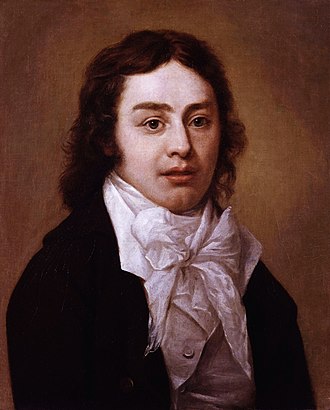 Samuel Taylor Coleridge
"I believe that the unity of man as opposed to other living things derives from the fact that man is the conscious life of himself. Man is conscious of himself, of his future, which is death, of his smallness, of his impotence; he is aware of others as others; man is in nature, subject to its laws even if he transcends it with his thought."
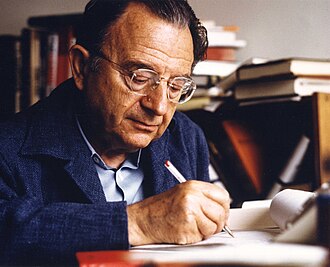 Erich Fromm
"You cant manage yourself, Root. How do you expect to manage others?"
"Do not try to make the brilliant pupil a replica of yourself."
"I believe that man is in the last resort so free a being that his right to be what he believes himself to be cannot be contested."