Quote
"Many a time I have wanted to stop talking and find out what I really believed."
W
Walter Lippmann"With exceptions so rare they are regarded as miracles of nature, successful democratic politicians are insecure and intimidated men. They advance politically only as they placate, appease, bribe, seduce, bamboozle, or otherwise manage to manipulate the demanding and threatening elements in their constituencies. The decisive consideration is not whether the proposition is good but whether it is popular—not whether it will work well and prove itself but whether the active talking constituents like it immediately. Politicians rationalize this servitude by saying that in a democracy public men are the servants of the people."
Walter Lippmann was an American journalist. With a career spanning 60 years, he is famous for being among the first to introduce the concept of the Cold War, coining the term "stereotype" in the modern psychological meaning, as well as critiquing media and democracy in his newspaper column and several books, most notably his 1922 Public Opinion.
"Many a time I have wanted to stop talking and find out what I really believed."
"[T]here is nothing disastrous in the temporary nature of our ideas. They are always that. But there may very easily be a train of evil in the self-deception which regards them as final. I think God will forgive us our skepticism sooner than our Inquisitions."
"Unless our ideas are questioned, they become part of the furniture of eternity."
"The ideal of the omni-competent, sovereign citizen is ... a false ideal. It is unattainable. The pursuit of it is misleading. The failure to achieve it has produced the current disenchantment. At the root of the effort to educate a people for self-government there has ... always been the assumption that the voter should aim to approximate as nearly as he can the knowledge and the point of view of the responsible man. He did not, of course, ever approximate it very nearly. But he was supposed to. It was believed that if only he could be taught more facts, if only he would take more interest, if only he would read more and better newspapers, if only he would listen to more lectures and read more reports, he would gradually be trained to direct public affairs. The whole assumption is false ... No progress can be made towards this unattainable ideal. This democratic conception is false because it fails to note the radical difference between the experience of the insider and the outsider ... No device of publicity, no machinery of enlightenment can endow [the outsider] during a crisis with the antecedent detailed and technical knowledge which is required for executive action. The public must be put in its place, so that it may exercise its own powers, but no less and perhaps even more, so that each of us may live free of the trampling and the roar of a bewildered herd."
"Looking back we can see how indirectly we know the environment in which nevertheless we live. We can see that the news of it comes to us now fast, now slowly; but that whatever we believe to be a true picture, we treat as if it were the environment itself."
"The facts we see depend on where we are placed, and the habits of our eyes."
"What say you? It is useless? Ay, I know But who fights ever hoping for success? I fought for lost cause, and for fruitless quest! You there, who are you! — You are thousands! Ah! I know you now, old enemies of mine! Falsehood! Have at you! Ha! and Compromise! Prejudice, Treachery! … Surrender, I? Parley? No, never! You too, Folly, — you? I know that you will lay me low at last; Let be! Yet I fall fighting, fighting still!"
"Ministers who deal with billions of dollars cannot be paid low salaries without risking a system malfunction. Low salaries will not attract able men who are or can be successful in their professions or business. Low salaries will draw in the hypocrites who sweet talk their way into power in the name of public services, but once in charge will show their true colour, and ruin the country. This has happened in many countries."
"In a Thumbnail Sketch here is [the Multiple Drafts theory of consciousness] so far:There is no single, definitive "stream of consciousness," because there is no central Headquarters, no Cartesian Theatre where "it all comes together" for the perusal of a Central Meaner. Instead of such a single stream (however wide), there are multiple channels in which specialist circuits try, in parallel pandemoniums, to do their various things, creating Multiple Drafts as they go. Most of these fragmentary drafts of "narrative" play short-lived roles in the modulation of current activity but some get promoted to further functional roles, in swift succession, by the activity of a virtual machine in the brain. The seriality of this machine (its "von Neumannesque" character) is not a "hard-wired" design feature, but rather the upshot of a succession of coalitions of these specialists.The basic specialists are part of our animal heritage. They were not developed to perform peculiarly human actions, such as reading and writing, but ducking, predator-avoiding, face-recognizing, grasping, throwing, berry-picking, and other essential tasks. They are often opportunistically enlisted in new roles, for which their talents may more or less suit them. The result is not bedlam only because the trends that are imposed on all this activity are themselves part of the design. Some of this design is innate, and is shared with other animals. But it is augmented, and sometimes even overwhelmed in importance, by microhabits of thought that are developed in the individual, partly idiosyncratic results of self-exploration and partly the predesigned gifts of culture. Thousands of memes, mostly borne by language, but also by wordless "images" and other data structures, take up residence in an individual brain, shaping its tendencies and thereby turning it into a mind."
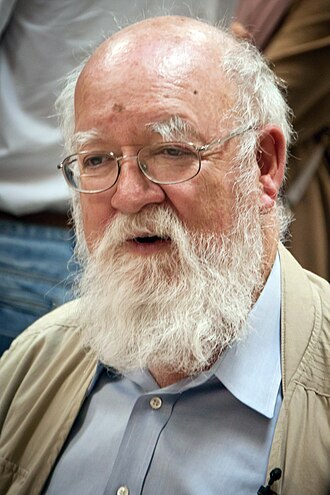 Daniel Dennett
"We recognize that in the reconstruction of most things – national, international, social, political – he is destined to play a commanding part. ... Its looks as if he were fated, despite his reluctance – for he is a modest man and his ambition, whatever it may be, is carefully concealed – to be a Saviour of Society, as well as an Organizer of Victory."
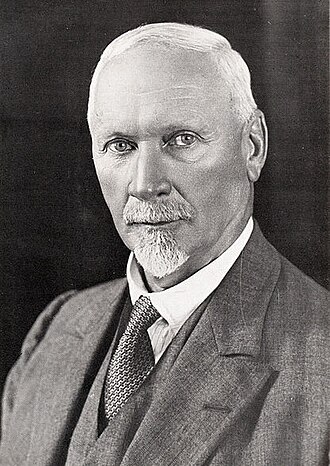 Jan Smuts
"I am speechless about the idea of putting music fans in jail for downloading music. It is wrong to illegally download, but the answer cannot be jail. Here in America we create new opportunities out of adversity, not punitive laws, and we should look to new technologies like Apples new Music Store for solutions. This way, innovation continues to be the hallmark of America. It is the fans that drive the success of the music business."
"We foreign journalists in Moscow used to amuse ourselves, as a matter of fact, by competing with one another as to who could wish upon one of these intelligentsia visitors to the USSR the most outrageous fantasy…One story I floated myself, for which I received considerable acclaim, was that the huge queues outside food shops came about because the Soviet workers were so ardent in building Socialism that they just wouldnt rest, and the only way the government could get them to rest for even two or three hours was organizing a queue for them to stand in. I laugh at it all now, but at the time you can imagine what a shock it was to someone like myself, who had been brought up to regard liberal intellectuals as the samurai, the absolute elite, of the human race, to find that they could be taken in by deceptions which a half-witted boy would see through in an instant…I could never henceforth regard the intelligentsia as other than credulous fools who nonetheless became the medias prophetic voices, their heirs and successors remaining so still."
 Malcolm Muggeridge