Quote
"Why dont you, uh...loosen your bullets?"
B
Blazing Saddles"Work, work, work, work, work, work, work. [turns to the bosom of a female staffer] Hello boys! Have a good nights rest? I missed you!"
Blazing Saddles is a 1974 American satirical Western comedy film directed by Mel Brooks, who co-wrote the screenplay with Andrew Bergman, Richard Pryor, Norman Steinberg and Alan Uger, based on a story treatment by Bergman. The film stars Cleavon Little and Gene Wilder. Brooks appears in two supporting roles: Governor William J. Le Petomane, and a Yiddish-speaking Native American chief; he also du
"Why dont you, uh...loosen your bullets?"
"You men will be risking only your lives.... whilst I will be risking an almost certain Academy Award nomination for Best Supporting Actor!"
"Sir, he specifically requested two niggers. Well, to tell the family secret, my grandmother was Dutch."
"Alright, here we go. Hold your ears, folks. Its showtime!"
"Come on, boys! The way youre lollygaggin around here with them picks and them shovels, youd think it was a hundert an twenty degrees...! Cant be more than a hundert an fourteen! [A Chinese railroad worker collapses from heat exhaustion] Dock that Chink a days pay for napping on the job."
"Willkommen, Bienvenue, Welcome, Cmon in."
"The office is designed for "work," not productivity. Work can be defined as "anything youd rather not be doing." Productivity is a different matter. Telecommuting substitutes two hours of productivity for ten hours of work."
"He found his best satisfaction not in pleasure but in toil. He could live with little food, little sleep - and very little dalliance. The one thing he could not dispense with was work, and work in prodigious quantities."
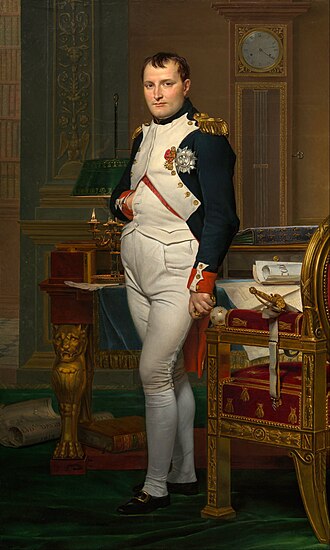 Napoleon
"The work of the eyes is done. Go now and do the heart-work on the images imprisoned within you."
"Open, ye heavens, your living doors; let in The great Creator from his work returnd Magnificent, his six days work, a world!"
"Work work, work, work, die. Youd think I was a protestant."
"I, too, believed it was impossible to change the existing society into one that would be for the benefit of all; neither could I espouse any given ideal for society. But [...] I felt that even if one did not have an ideal vision of society, one could have one’s work to do. Whether it was successful or not was not our concern; it was enough that we believed it to be a valid work. The accomplishment of that work, I believed, was what our real life was about. Yes. I want to carry out a work of my own; for I feel that by so doing our lives are rooted in the here and now, not in some far-off ideal goal."