Quote
"Cet enseignement, cest quil faut vivre comme on pense, sinon, tôt ou tard, on finit par penser comme on a vécu. (This teaching is to live as we think, otherwise, sooner or later, we end up thinking as we lived.)"
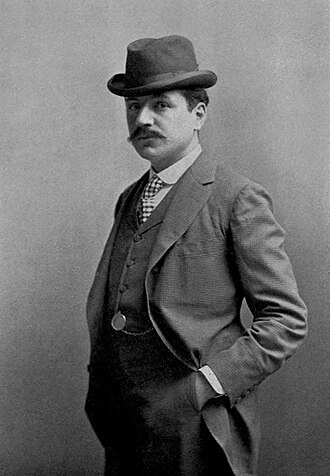 Paul Bourget
"You wished to be only a spectator, the gentleman in the balcony who wipes the glasses of his lorgnette in order to lose none of the comedy. Well, you could not do so. That role is not permitted a man. He must act, and he acts always, even when he thinks he is looking on, even when he washes his hands as Pontius Pilate, that dilettante, too, who uttered the words of your masters and of yourself. What is truth? Truth is that there is always and everywhere a duty to fulfil."
Paul Charles Joseph Bourget was a French poet, novelist and critic. He was nominated for the Nobel Prize in Literature five times.
"Cet enseignement, cest quil faut vivre comme on pense, sinon, tôt ou tard, on finit par penser comme on a vécu. (This teaching is to live as we think, otherwise, sooner or later, we end up thinking as we lived.)"
Paul Bourget"I have been thinking about our conversation and about your book, and I am afraid that I expressed myself badly yesterday. When I said that one may love and be loved at any age I ought to have added that sometimes this love comes too late. It comes when one no longer has the right to prove to the loved one how much she is loved, except by loves sacrifice."
Paul Bourget"I listened while he thought aloud and had almost forgotten my Machiavellian combination, so keen was my relish of the joyous intimacy of this communion with a mind I had passionately loved in his works. He was the first of the great writers of our day whom I had thus approached on something like terms of intimacy. As we talked I observed the strange similarity between his spoken and his written words. I admired the charming simplicity with which he abandoned himself to the pleasures of imagination, his superabundant intelligence, the liveliness of his impressions and his total absence of arrogance and of pose."
Paul Bourget"Is there any God, any justice, is there either good or evil? None, none, none, none! There is nothing but a pitiless destiny which broods over the human race, iniquitous and blind, distributing joy and grief at haphazard. A God who says, "Thou shalt not kill," to him whose father has been killed? No, I dont believe it. No, if hell were there before me, gaping open, I would make answer: "I have done well," and I would not repent. I do not repent. My remorse is not for having seized the weapon and struck the blow, it is that I owe to him — to him — that infamous good service which he did me — that I cannot to the present hour shake from me the horrible gift I have received from that man. If I had destroyed the paper, if I had gone and given myself up, if I had appeared before a jury, revealing, proclaiming my deed, I should not be ashamed; I could still hold up my head. What relief, what joy it would be if I might cry aloud to all men that I killed him, that he lied, and I lied, that it was I, I, who took the weapon and plunged it into him! And yet, I ought not to suffer from having accepted — no — endured the odious immunity. Was it from any motive of cowardice that I acted thus? What was I afraid of? Of torturing my mother, nothing more. Why, then, do I suffer this unendurable anguish? Ah, it is she, it is my mother who, without intending it, makes the dead so living to me, by her own despair. She lives, shut up in the rooms where they lived together for sixteen years; she has not allowed a single article of furniture to be touched; she surrounds the mans accursed memory with the same pious reverence that my aunt formerly lavished on my unhappy father. I recognize the invincible influence of the dead in the pallor of her cheeks, the wrinkles in her eyelids, the white streaks in her hair. He disputes her with me from the darkness of his coffin; he takes her from me, hour by hour, and I am powerless against that love."
Paul Bourget"The forests have taught man liberty."
Paul Bourget"There are some surely whom you like and whom you dislike, for whom you entertain esteem and for whom you feel contempt? Have you not thought that you have some duties toward them, that you can aid them in leading better lives?"
Paul Bourget"O dread and silent mount! I gazed upon thee, Till thou, still present to the bodily sense, Didst vanish from my thought: entranced in prayer, I worshipped the Invisible alone."
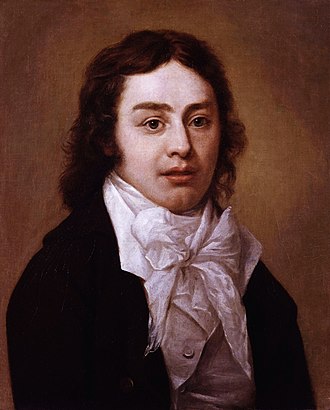 Samuel Taylor Coleridge
"Mister Toombs was willing to dissolve the Union to save slavery, Mister Phillips, to save liberty; while Mister Seward, denounced and derided by both, declared that the deepest instinct of the American people was for union. Reserved rights. State rights, limited powers, the advantages of union and disunion, were the cucumbers from which we were busily engaged in distilling light, overlooking the fact of nationality in discussing the conditions of union. We were speculating upon costume. We gravely proved that the clothes were the clothes of a woman, or of a child, without seeing that whatever the clothes might be there was a full-grown man inside of them. "The Constitution is a contract between sovereign States", shouted Mister Toombs, "let Georgia tear it and separate". "The Constitution is a league with hell", calmly replied Mister Phillips, "let New York cut off New Orleans to rot alone". "Oh, dear! it"s a dreadful dilemma", whimpered President Buchanan. "States have no right to secede, and the United States have no right to coerce. Oh, dear me! it"s perfectly awful! I"m the most patriotic of men, but what shall I do? what shall I do?" Separate! Cut off! Secede! It was of a living body they spoke, which, pierced anywhere, quivered everywhere."
 Wendell Phillips
"Its never a matter of ethics versus pragmatism; its a question of which informs the other. Humans have shown themselves capable of almost unlimited imagination and innovation—qualities that could be said to define human beings. People have used this capacity to do both great good and great harm. The point is that when humans set their minds to doing something, its frequently possible. It makes sense to first ask what people want to do and why, from an ethical standpoint, and then get to the pragmatic how-to questions. The very process of asking whats right is how people fill out ethics in praxis, to meet new demands and dilemmas, new social conditions and contexts. Anarchism, then, brings an egalitarian ethics out into the world, making it transparent, public, and shared. It maintains an ethical orientation, while continually trying to put such notions into practice, as flawed as the effort might be. When other people come into contact with this ethical compass, they will hopefully "get it" and incorporate the same values into their lives, because it works. It offers directionality to political involvement and buttresses peoples efforts to remake society. It turns surviving into thriving. Thats the crucial difference between a pragmatic versus ethical impulse: people, in cooperative concert, qualitatively transform one anothers lives."
"Thats... the big discovery of this principle of computational equivalence of mine. ...This is something which is kind of a follow-on to Gödels theorem, to Turings work on the ... that there is this fundamental limitation built into science, this idea of computational irreducibility that says that even though you may know the rules by which something operates, that does not mean that you can readily... be smarter that it and jump ahead and figure out what its going to do."
"The art of leading, in operations large or small, is the art of dealing with humanity, of working diligently on behalf of men, of being sympathetic with them, but equally, of insisting that they make a square facing toward their own problems."
 Leadership
"The establishment of "The Times" newspaper is an example, on a large scale, of a manufactory in which the division of labour, both mental and bodily, is admirably illustrated, and in which also the effect of domestic economy is well exemplified. It is scarcely imagined, by the thousands who read that paper in various quarters of the globe, what a scene of organized activity the factory presents during the whole night, or what a quantity of talent and mechanical skill is put in action for their amusement and information."
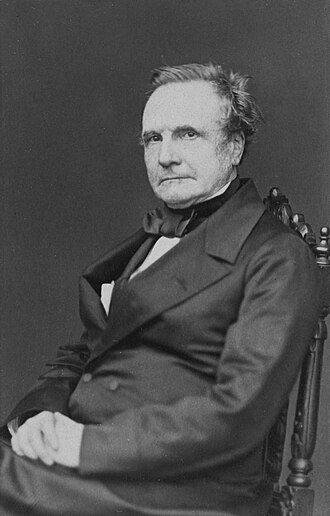 Charles Babbage