Quote
"I have a different take, which I learned from Bob Chapman, CEO of Barry-Wehmiller and author of the bestselling leadership book Everybody Matters."
 Amy Cuddy
Amy Cuddy
Amy Cuddy
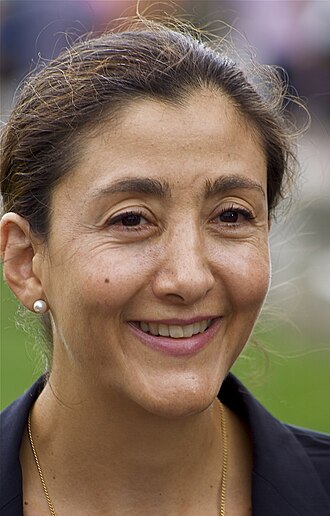
Amy Joy Casselberry Cuddy is an American social psychologist, author and speaker. She is a proponent of "power posing", a self-improvement technique whose scientific validity has been questioned. She has served as a faculty member at Rutgers University, Kellogg School of Management and Harvard Business School. Cuddy's most cited academic work involves using the stereotype content model that she he
"I have a different take, which I learned from Bob Chapman, CEO of Barry-Wehmiller and author of the bestselling leadership book Everybody Matters."
Amy Cuddy"A persons ability to be bold enough to take some personal risks and confident in a genuine, grounded way will, in my opinion, always be helpful to them in getting in the door and being heard."
Amy Cuddy"I introduced my AP Physics students to power posing last spring. One student in particular was always so nervous during assessments and therefore her test scores did not represent her abilities at all. We all know that old saying about correlation and causation — and this was no scientific study — but from that day forward that student power posed before every physics test and her grades went from high Cs and low Bs to where she belonged — in the mid to lower As. Im convinced that power posing helped her even if it is difficult to prove."
Amy Cuddy"First, we have to define power: social or formal power is control over other people, their choices, their outcomes, and control of resources and decisions that affect other people,"
Amy Cuddy"I still see men using body language that conveys dominance rather than confidence, “Feet too far apart, speaking too loudly, looking as if they’re trying to control, not connect with, the audience. And that just doesn’t work."
Amy Cuddy"I love working with the World Business Forum [...] I find the participants uniquely engaged and optimistic – they’re really happy to be there and always eager to understand and apply what they’re learning about."
Amy Cuddy"To have control over our own internal resources – so skills, knowledge, emotional intelligence, empathy – activates the behavioral approach system,” Cuddy notes. “It makes us more optimistic, able to take risks, create and be cognitively agile, courageous and even willing to protect or stand up for others when necessary. I think there’s a much greater focus on that kind of power today than there was 10 years ago."
Amy Cuddy"Theyre less tolerant of and more likely to reject abusive workplace situations [...] If employers want to keep good people, theyre going to have to ask their employees what works for them and actually listen and adapt to their answers."
Amy Cuddy"Its this sense of company-wide empowerment that has the potential to take your business to new heights [...] We should strive to help everyone in our places of work to feel more powerful, because it tends to bring out the best in us."
Amy Cuddy"Effective body language conveys a combination of confidence (not dominance) and trustworthiness, "It tells people, Im comfortable and I’m worth listening to, and also, I respect you and Im interested in learning about you and earning your trust. Its body language thats less choreographed, less scripted and more responsive to whats happening in the present."
Amy Cuddy"What boldness and confidence mean for leaders in the workplace has, to the benefit of everyone, evolved in the last decade, and even more so in the last few years, given the COVID-19 pandemic."
Amy Cuddy"Hes a phenomenally successful leader and he does that not by focusing on recruiting new people, but by genuinely, compassionately taking care of and rewarding the people who are already working for him. He always tells me, "Its not about getting the right people on the bus; it’s about having a safe bus, and making sure that the person driving the bus – the leader – knows how to take the people to a better place."
Amy Cuddy