SHAWORDS
Arthur Danto

Arthur Danto

Arthur Danto

author ·

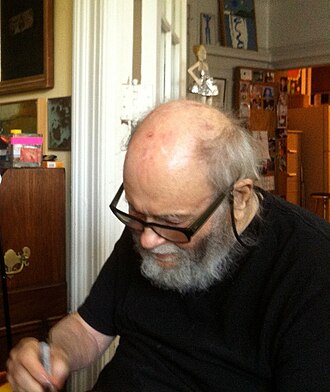
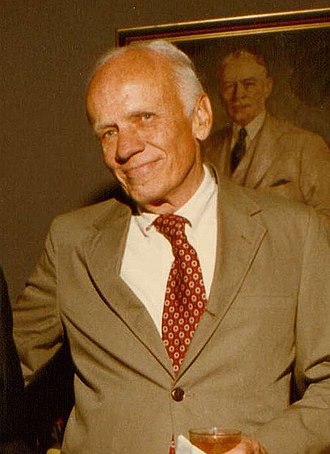
Arthur Coleman Danto was an American art critic, philosopher, and professor at Columbia University. He was best known for having been a long-time art critic for The Nation and for his work in philosophical aesthetics and philosophy of history, though he contributed significantly to a number of fields, including the philosophy of action. His interests included thought, feeling, philosophy of art, t

Popular Shayari & Quotes

Quote
"Any movement can be a dance movement and hence achieve the dreamlike. The same may be true of acting, as when, for example, an actress serves cocktails that are actually glasses filled with just water. To taste the tasteless is a kind of bad dream. It is not possible to catalog all the different ways artists have found to dream-ify. I’ll take a flier at Michelangelo’s masterpiece, the great decoration of the Sistine Chapel’s vault, with the scenes of a narrative in which, when I first saw it, figures move in and out of an enveloping dark."
Arthur DantoArthur Danto
Quote
"My sense, in bringing to art the double criteria of meaning and embodiment, is to bring to art a connection with cognizance: to what is possible and, to the faithful, to the actual. Gregory the Great spoke of the carved capitals in the Romanesque basilica as the Bible of the Illiterate: they show what the Bible tells us took place. They tell the uneducated what they are supposed to know. That is, they tell them what they are to believe as true. Beauty has nothing to do with it, though the capable carver presents the Queen of Sheba as the great beauty she was. It is possible that she looked that way. But it can be art without being beautiful at all. Beauty was an eighteenth century value."
Arthur DantoArthur Danto
Quote
"What impresses me is that Kant’s highly compressed discussion of spirit is capable of addressing the logic of artworks invariantly as to time, place, and culture, and of explaining why Formalism is so impoverished a philosophy of art. The irony is that Kant’s Critique of Judgment is so often cited as the foundational text for Formalistic analysis. What Modernist Formalism did achieve, on the other hand—and Greenberg recognizes this—was the enfranchisement of a great deal of art that the Victorians, say, would have found “primitive,” meaning that the artists who made it would have carved or painted like nineteenth century Europeans if they only knew how. African sculpture came to be appreciated for its “expressive form” by Roger Fry, and by the severe Bloomsbury Formalist Clive Bell in his book Art. That meant that it was ornamentalized, in effect, like the tattoo, according to Kant. I often wonder if those who celebrated Kant aesthetics read as far as section forty-nine of his book, where he introduces his exceedingly condensed view of what makes art humanly important."
Arthur DantoArthur Danto
Quote
"It struck me only recently that nineteenth century painters must have believed that visual truth was defined by photography, however alien to human vision what the camera reproduced often was. A good example of this would have been Eadweard Muybridge’s photographs of horses in motion. Painters decided that Muybridge’s images showed what horses really look like when they run, and in effect copied Muybridge’s photographs in their paintings of horses, even though that is not at all the way we see horses when they run. We really don’t see animals move the way Muybridge shows them moving, or else there would have been no need for the photographs in the first place: Muybridge hit upon his awkward but seemingly authoritative experiments that were really designed to answer such questions as whether all four of a horse’s hooves ever touch the ground at the same time—in other words, phenomena the human eye could not perceive."
Arthur DantoArthur Danto
Quote
"The great thing about the sixties was the dawning recognition that anything could be a work of art, which was something evident in all the main movements of the time—in Pop art, Minimalism, Fluxus, Conceptual art, and so on. What accounted for the difference? The big mantra in the art world was Frank Stella’s sullen “What you see is what you see.” But there was not a lot of difference between what you see when you see a Brillo Box by Warhol and the Brillo boxes designed by James Harvey for the Brillo people to use for moving their products about. So: why weren’t they artworks if Andy’s Factory-produced boxes were? I have answered this in my first chapter, so what I want to do now instead is to marvel at the way in which the camera helped give form to the philosophical question that had been kicking around for a few millennia, “What is art?,” and to explain why the photography-painting paragone had to be the last paragone. By the time Duchamp and Warhol had left the scene, everything in the concept of art had been changed. We had entered the second phase in the history of art, broadly considered."
Arthur DantoArthur Danto