Quote
"He undertook to disparage my age when he himself had appointed his ten-year-old son."
 Elagabalus
Elagabalus
Elagabalus
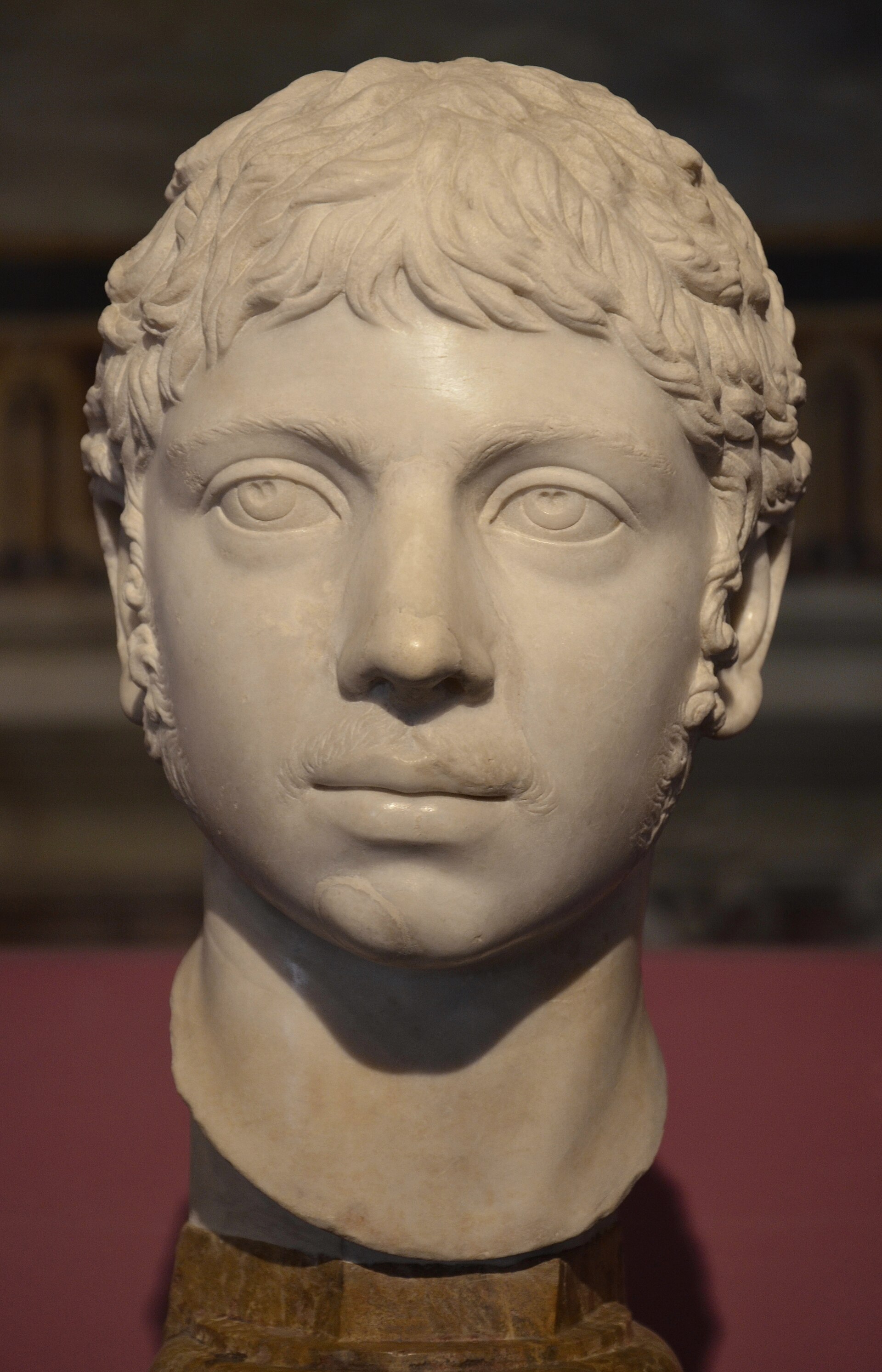
Marcus Aurelius Antoninus, better known by his posthumous nicknames Elagabalus and Heliogabalus, was Roman emperor from 218 to 222, while he was still a teenager. His short reign was notorious for religious controversy and alleged sexual debauchery. A close relative to the Severan dynasty, he came from a prominent Syrian Arab family in Emesa (Homs), Syria, where he served as the head priest of the
"He undertook to disparage my age when he himself had appointed his ten-year-old son."
Elagabalus"Scholars have often viewed the failure of Elagabalus reign as a clash of cultures between "Eastern" (Syrian) and "Western" (Roman), but this dichotomy is not very useful. The criticisms of the emperors effeminacy and sexual behavior mirror those made of earlier emperors (such as Nero) and do not need to be explained through ethnic stereotypes. With regard to religion, the emperors promotion of the cult of the Emesene sun-god was certainly ridiculed by contemporary observers, but this cult was popular among soldiers and would remain so. Moreover, the cult continued to be promoted by later emperors of non-Syrian ethnicity, calling the god The Unconquered Sun (Sol Invictus). Elagabalus is best understood as a teenager who was raised near the luxury of the imperial court and who then suffered a drastic change of fortune brought about by the sudden deaths — probably within one year — of his father, his grandfather and his cousin, the emperor Caracalla . Thrust upon the throne, Elagabalus lacked the required discipline. For a while, Romans may well have been amused by his "Merrie Monarch" behavior, but he ended up offending those he needed to inspire. His reign tragically demonstrated the difficulties of having a teenage emperor."
Elagabalus"The life of Elagabalus Antoninus, also called Varius, I should never have put in writing — hoping that it might not be known that he was emperor of the Romans — were it not that before him this same imperial office had had a Caligula, a Nero, and a Vitellius. But, just as the selfsame earth bears not only poisons but also grain and other helpful things, not only serpents but flocks as well, so the thoughtful reader may find himself some consolation for these monstrous tyrants by reading of Augustus, Trajan, Vespasian, Hadrian, Pius, Titus, and Marcus."
Elagabalus"Elagabalus (218-222 A.D.)" in De Imperatoribus Romanis : An Online Encyclopedia of Roman Emperors (1997), by Michael L. Meckler"
Elagabalus"I am emperor. It is I who know what is best for Rome. Not you traitors. Now, let go of my horses!"
Elagabalus"[He was] delighted to be called the mistress, the wife, the Queen of Hierocles."
Elagabalus"The Follies of Elagabalus" By Edward Gibbon"
Elagabalus"The Untold History of Elagabalus by Laura Darlene Lansberry"
Elagabalus