Quote
"To repel ones cross is to make it heavier."
H
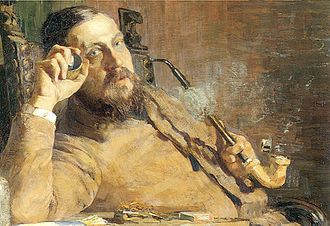
Henri-Frédéric AmielHenri-Frédéric Amiel
Henri-Frédéric Amiel
Henri Frédéric Amiel was a Swiss moral philosopher, poet, and critic.
"To repel ones cross is to make it heavier."
"There is no repose for the mind except in the absolute; for feeling except in the infinite; for the soul except in the divine. Nothing finite is true, is interesting, is worthy to fix my attention. All that is particular is exclusive, and all that is exclusive repels me. There is nothing non-exclusive but the All; my end is communion with Being through the whole of Being."
"[There still remains the question whether] he who discovers a new world in the depths of the invisible would not do wisely to plant on it a flag known to himself alone, and, like Achilles, "devour his heart in secret;" whether the greatest problems which have ever been guessed on earth had not better have remained buried in the brain which had found the key to them, and whether the deepest thinkers — those whose hand has been boldest in drawing aside the veil, and their eye keenest in fathoming the mysteries beyond it — had not better, like the prophetess of Ilion, have kept for heaven, and heaven only, secrets and mysteries which human tongue cannot truly express, nor human intelligence conceive."
"At bottom there is but one subject of study: the forms and metamorphoses of mind. All other subjects may be reduced to that; all other studies bring us back to this study."
"There is but one thing needful — to possess God. All our senses, all our powers of mind and soul, all our external resources, are so many ways of approaching the divinity, so many modes of tasting and of adoring God. We must learn to detach ourselves from all that is capable of being lost, to bind ourselves absolutely only to what is absolute and eternal, and to enjoy the rest as a loan, as a usufruct…. To worship, to comprehend, to receive, to feel, to give, to act: this our law, our duty, our happiness, our heaven."
"Put personal ambition away from you, and then you will find consolation in living or in dying, whatever may happen to you."