Quote
"If there were a billion people living on the planet, we could do whatever we please. But there are nearly seven billion. At this scale, life as we know it today is not sustainable."
J
James LovelockJames Lovelock
James Lovelock
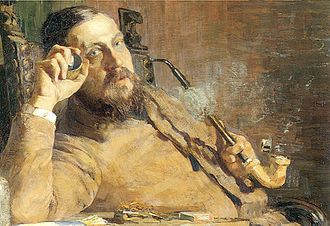
James Ephraim Lovelock was an English independent scientist, environmentalist and futurist. He is best known for proposing the Gaia hypothesis, which postulates that the Earth functions as a self-regulating system.
"If there were a billion people living on the planet, we could do whatever we please. But there are nearly seven billion. At this scale, life as we know it today is not sustainable."
"Challenging the conventional wisdom is the way to make waves in science."
"The climate and the chemical properties of the Earth now and throughout its history seem always to have been optimal for life. For this to have happened by chance is as unlikely as to survive unscathed a drive blindfold through rush hour traffic."
"In the current fashionable denigration of technology, it is easy to forget that nuclear fission is a natural process. If something as intricate as life can assemble by accident, we need not marvel at the fission reactor, a relatively simple contraption, doing likewise."
"Our planet... consists largely of lumps of fall-out from a star-sized hydrogen bomb...Within our bodies, no less than three million atoms rendered unstable in that event still erupt every minute, releasing a tiny fraction of the energy stored from that fierce fire of long ago."
"We have since defined Gaia as a complex entity involving the Earths biosphere, atmosphere, oceans, and soil; the totality constituting a feedback or cybernetic system which seeks an optimal physical and chemical environment for life on this planet."
"Life has to take charge of its environment and evolve with it."
"Life has to be a planetary phenomenon. You could no more have a partially occupied planet than you could half a cat or half a dog."
"If you were an artist or novelist, or a poet or somebody like that, nobody would think it odd if you worked in your own home. In science theres none of this at all. Im almost the only independent scientist in Britain. Everybody else works in large institutions, universities, or industrial labs. Why should one expect scientists to work that way?"
"Bacteria … have been here for three and a half billion years, and without them we have no chance whatsoever of survival. Humans are something very recent, like the froth on top of a glass of beer."
"I dont think were yet evolved to the point where were clever enough to handle a complex a situation as climate change. … The inertia of humans is so huge that you cant really do anything meaningful."
"Even the best democracies agree that when a major war approaches, democracy must be put on hold for the time being. I have a feeling that climate change may be an issue as severe as a war. It may be necessary to put democracy on hold for a while."