Quote
"I owe the discovery of Uqbar to the conjunction of a mirror and an encyclopedia."
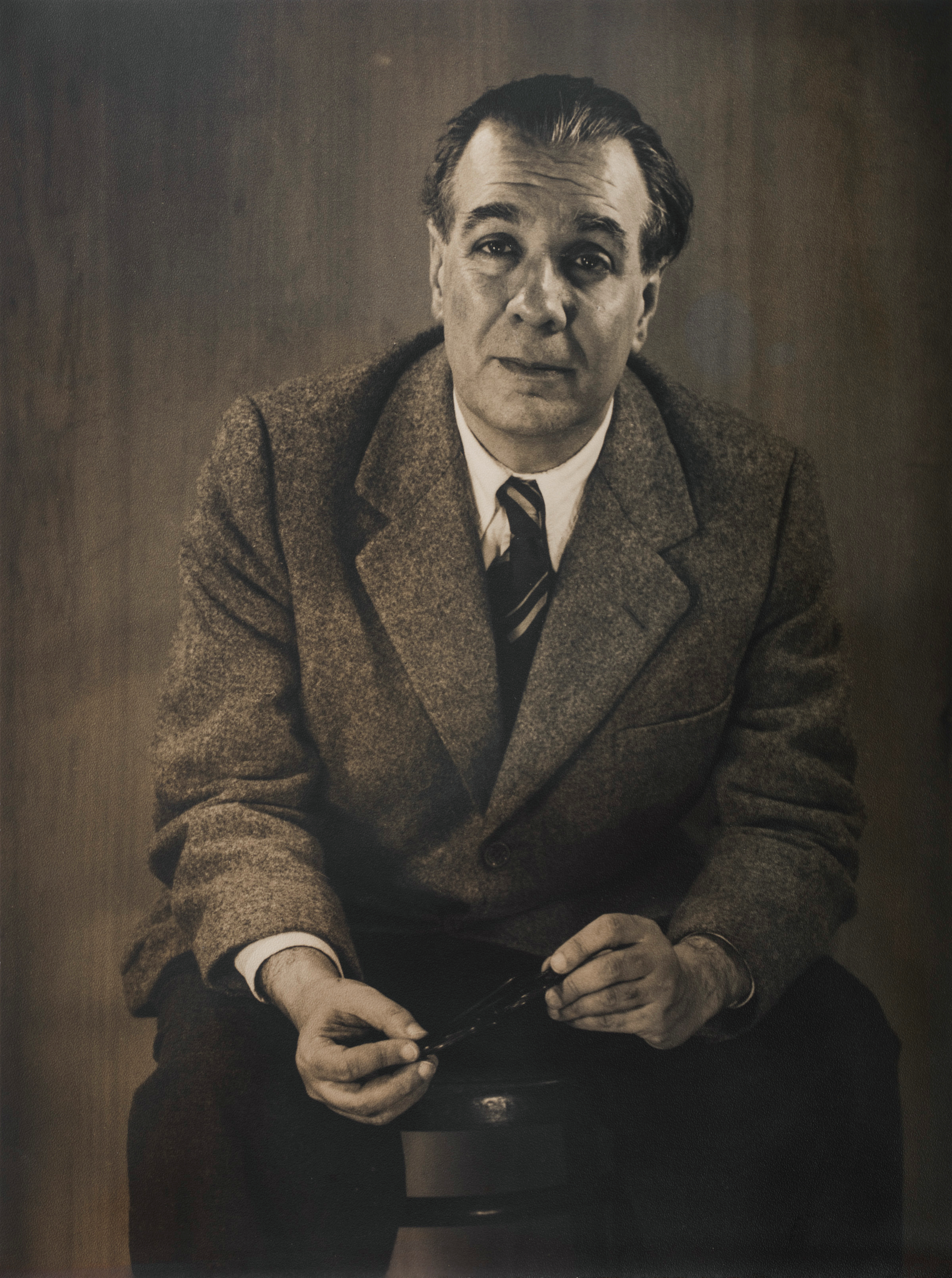 Jorge Luis Borges
Jorge Luis Borges
Jorge Luis Borges
Jorge Francisco Isidoro Luis Borges was an Argentine short-story writer, essayist, poet and translator regarded as a key figure in Spanish-language and international literature. His best-known works, Ficciones (transl. Fictions) and El Aleph, published in the 1940s, are collections of short stories exploring motifs such as dreams, labyrinths, chance, infinity, archives, mirrors, fictional writers,
"I owe the discovery of Uqbar to the conjunction of a mirror and an encyclopedia."
Jorge Luis Borges"I leave to the various futures (not to all) my garden of forking paths."
Jorge Luis Borges"The time for your labor has been granted."
Jorge Luis Borges"The universe (which others call the Library) is composed of an indefinite and perhaps infinite number of hexagonal galleries, with vast air shafts between, surrounded by very low railings."
Jorge Luis Borges"El original es infiel a la traducción."
Jorge Luis Borges"Some days past I have found a curious confirmation of the fact that what is truly native can and often does dispense with local color; I found this confirmation in Gibbons Decline and Fall of the Roman Empire. Gibbon observes that in the Arabian book par excellence, in the Koran, there are no camels; I believe if there were any doubt as to the authenticity of the Koran, this absence of camels would be sufficient to prove it is an Arabian work. It was written by Mohammed, and Mohammed, as an Arab, had no reason to know that camels were especially Arabian; for him they were part of reality, he had no reason to emphasize them; on the other hand, the first thing a falsifier, a tourist, an Arab nationalist would do is have a surfeit of camels, caravans of camels, on every page; but Mohammed, as an Arab, was unconcerned: he knew he could be an Arab without camels. I think we Argentines can emulate Mohammed, can believe in the possibility of being Argentine without abounding in local color."
Jorge Luis Borges




