Quote
"If economists wished to study the horse, they wouldnt go and look at horses. Theyd sit in their studies and say to themselves, "what would I do if I were a horse?"
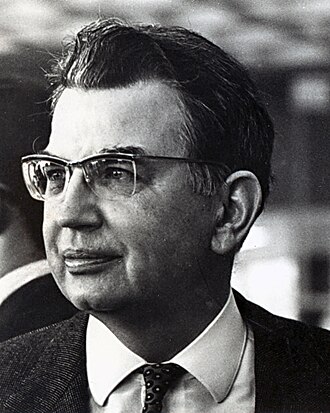 Ronald Coase
Ronald Coase
Ronald Coase
Ronald Harry Coase was a British economist and author. Coase was educated at the London School of Economics, where he was a member of the faculty until 1951. He was the Clifton R. Musser Professor of Economics at the University of Chicago Law School, where he arrived in 1964 and remained for the rest of his life. He received the Nobel Memorial Prize in Economic Sciences in 1991.
"If economists wished to study the horse, they wouldnt go and look at horses. Theyd sit in their studies and say to themselves, "what would I do if I were a horse?"
Ronald Coase"In my youth it was said that what was too silly to be said may be sung. In modern economics it may be put into mathematics."
Ronald Coase"Transaction costs were used in the one case to show that if they are not included in the analysis, the firm has no purpose, while in the other I showed, as I thought, that if transaction costs were not introduced into the analysis, for the range of problems considered, the law had no purpose."
Ronald Coase"I cant remember [of a good regulation]. Regulation of transport, regulation of agriculture—agriculture is a, zoning is z. You know, you go from a to z, they are all bad. There were so many studies, and the result was quite universal: The effects were bad."
Ronald Coase"A firm consist of the system of relationships which comes into existence when the direction of resources is dependent on an entrepreneur."
Ronald Coase"The question always is, will it pay to bring an extra exchange transaction under the organizing authority? At the margin, the costs of organizing within the firm will be equal either to the costs of organizing in another firm or to the costs involved in leaving the transaction to be “organised” by the price mechanism. Business men will be constantly experimenting, controlling more or less, and in this way equilibrium will be maintained. This gives the position of equilibrium for static analysis."
Ronald Coase"In mainstream economic theory, the firm and the market are, for the most part, assumed to exist and are not themselves the subject of investigation. One result has been that the crucial role of the law in determining the activities carried out by the firm and in the market has been largely ignored."
Ronald Coase"But a theory is not like an airline or bus timetable. We are not interested simply in the accuracy of its predictions. A theory also serves as a base for thinking. It helps us to understand what is going on by enabling us to organize our thoughts. Faced with a choice between a theory which predicts well but gives us little insight into how the system works and one which gives us this insight but predicts badly, I would choose the latter, and I am inclined to think that most economists would do the same."
Ronald Coase"What I have done is to show the importance for the working of the economic system of what may be termed the institutional structure of production."
Ronald Coase"Economists have uncovered the conditions necessary if Adam Smith’s results are to be achieved and where, in the real world, such conditions do not appear to be found, they have proposed changes which are designed to bring them about. It is what one finds in the textbooks. Harold Demsetz has said rightly that what this theory analyses is a system of extreme decentralisation. It has been a great intellectual achievement and it throws light on many aspects of the economic system. But it has not been by any means all gain."
Ronald Coase"What is studied is a system which lives in the minds of economists but not on earth. I have called the result “blackboard economics.” The firm and the market appear by name but they lack any substance. The firm in mainstream economic theory has often been described as a “black box.” And so it is."
Ronald Coase"In my view, what is wanted in industrial organization is a direct approach to the problem. This would concentrate on what activities firms undertake, and would endeavor to discover the characteristics of the groupings of activities within firms. Which activities tend to be associated and which do not? The answer may well differ for different kinds of firm."
Ronald Coase