SHAWORDS
Shaka

Shaka

Shaka

Shaka

author
9Quotes

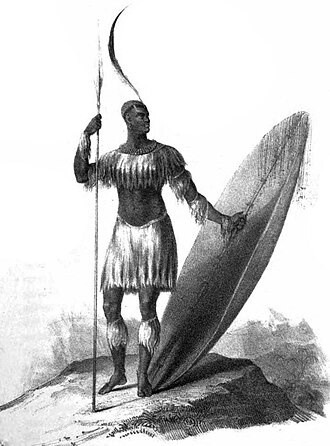
Shaka kaSenzangakhona, also known as Shaka (the) Zulu and Sigidi kaSenzangakhona, was the king of the Zulu Kingdom from 1816 to 1828. One of the most influential monarchs of the Zulu, he ordered wide-reaching reforms that reorganized the military into a formidable force.

Popular Quotes

9 total
Quote
"But what is relevant here is to understand why a Shaka was possible in Africa in the nineteenth century, before the coming of colonial rule. Had Shaka been a slave to some cotton planter in Mississippi or some sugar planter in Jamaica, he might have had an ear or a hand chopped off for being a “recalcitrant nigger,” or at best he might have distinguished himself in leading a slave revolt. For the only great men among the unfree and the oppressed are those who struggle to destroy the oppressor. On a slave plantation, Shaka would not have built a Zulu army and a Zulu state—that much is certain. Nor could any African build anything during the colonial period, however much a genius he may have been. As it was, Shaka was a herdsman and a warrior. As a youth, he tended cattle on the open plains—free to develop his own potential and apply it to his environment."
ShakaShaka
Quote
"The Shaka story … has a Faustian quality. A tale of temptation, it asks what price a person is willing to pay, how far he is willing to go, to obtain power. In revealing Shakas heart of darkness, it reveals the dangerous consequences of closing a pact with the devil: hubris, violence, death. And it warns of the presence of these destructive forces in all of us. Shaka is himself in this story, but he also represents the darker, shadow side of humankind generally. We see ourselves when we watch him become so obsessed by power that he sacrifices human relationships for what the devil (in the person of malevolent diviners and witchdoctors) can offer him, and when he loses the ability to distinguish between killing for a just cause and wanton killing for killings sake. The ending is predictable, surely: loneliness and despair. Shaka ends up on a throne of blood, isolated from his fellow human beings, struggling with depression and despondency."
ShakaShaka
Quote
"Shaka was able to invest his talents and creative energies in a worthwhile endeavor of construction. He was not concerned with fighting for or against slave traders; he was not concerned with the problem of how to resell goods made in Sweden and France. He was concerned with how to develop the Zulu area within the limits imposed by his people’s resources. It must be recognized that things such as military techniques were responses to real needs, that the work of the individual originates in and is backed by the action of society as a whole, and that whatever was achieved by any one leader must have been bounded by historical circumstances and the level of development, which determine the extent to which an individual can first discover, then augment, and then display his potential."
ShakaShaka
Quote
"It can be noted that Shaka was challenged to create the heavy stabbing when he realized that the throwing spear broke when used as a stabbing weapon. More important still, what Shaka came up with depended upon the collective effort of the Ama-Zulu. Shaka could ask that a better assegai be forged, because the Ama-Ngoni had been working iron for a long time, and specialist black-smiths had arisen within certain clans. It was a tribute to the organizational and agricultural capacity of the society as a whole that it could feed and maintain a standing army of thirty thousand men, re-equip them with iron weapons, and issue each soldier with the full-length Zulu shield made from cattle hide. Because the scientific basis and experimental preconditions were lacking in Zulu society, Shaka could not have devised a firearm—no matter how much genius he possessed. But, he could get his people to forge better weapons, as explained above; and he found them receptive to better selective breeding practices when he set up special royal herds, because the people already had a vast fund of empirical knowledge about cattle and a love of the cattle-herding profession."
ShakaShaka

Similar Authors & Thinkers



