SHAWORDS

But what is relevant here is to understand why a Shaka was possible in — Shaka

HomeShakaQuote
"But what is relevant here is to understand why a Shaka was possible in Africa in the nineteenth century, before the coming of colonial rule. Had Shaka been a slave to some cotton planter in Mississippi or some sugar planter in Jamaica, he might have had an ear or a hand chopped off for being a “recalcitrant nigger,” or at best he might have distinguished himself in leading a slave revolt. For the only great men among the unfree and the oppressed are those who struggle to destroy the oppressor. On a slave plantation, Shaka would not have built a Zulu army and a Zulu state—that much is certain. Nor could any African build anything during the colonial period, however much a genius he may have been. As it was, Shaka was a herdsman and a warrior. As a youth, he tended cattle on the open plains—free to develop his own potential and apply it to his environment."
Shaka
Shaka
Shaka
author9 quotes

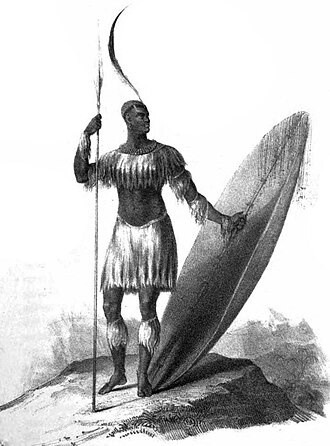
Shaka kaSenzangakhona, also known as Shaka (the) Zulu and Sigidi kaSenzangakhona, was the king of the Zulu Kingdom from 1816 to 1828. One of the most influential monarchs of the Zulu, he ordered wide-reaching reforms that reorganized the military into a formidable force.

More by Shaka

View all →
Quote
"The Shaka story … has a Faustian quality. A tale of temptation, it asks what price a person is willing to pay, how far he is willing to go, to obtain power. In revealing Shakas heart of darkness, it reveals the dangerous consequences of closing a pact with the devil: hubris, violence, death. And it warns of the presence of these destructive forces in all of us. Shaka is himself in this story, but he also represents the darker, shadow side of humankind generally. We see ourselves when we watch him become so obsessed by power that he sacrifices human relationships for what the devil (in the person of malevolent diviners and witchdoctors) can offer him, and when he loses the ability to distinguish between killing for a just cause and wanton killing for killings sake. The ending is predictable, surely: loneliness and despair. Shaka ends up on a throne of blood, isolated from his fellow human beings, struggling with depression and despondency."
ShakaShaka
Quote
"Shaka was able to invest his talents and creative energies in a worthwhile endeavor of construction. He was not concerned with fighting for or against slave traders; he was not concerned with the problem of how to resell goods made in Sweden and France. He was concerned with how to develop the Zulu area within the limits imposed by his people’s resources. It must be recognized that things such as military techniques were responses to real needs, that the work of the individual originates in and is backed by the action of society as a whole, and that whatever was achieved by any one leader must have been bounded by historical circumstances and the level of development, which determine the extent to which an individual can first discover, then augment, and then display his potential."
ShakaShaka

More on Self

View all →
Quote
"I should say that when people talk about capitalism its a bit of a joke. Theres no such thing. No country, no business class, has ever been willing to subject itself to the free market, free market discipline. Free markets are for others. Like, the Third World is the Third World because they had free markets rammed down their throat. Meanwhile, the enlightened states, England, the United States, others, resorted to massive state intervention to protect private power, and still do. Thats right up to the present. I mean, the Reagan administration for example was the most protectionist in post-war American history. Virtually the entire dynamic economy in the United States is based crucially on state initiative and intervention: computers, the internet, telecommunication, automation, pharmaceutical, you just name it. Run through it, and you find massive ripoffs of the public, meaning, a system in which under one guise or another the public pays the costs and takes the risks, and profit is privatized. Thats very remote from a free market. Free market is like what India had to suffer for a couple hundred years, and most of the rest of the Third World."
N
Noam Chomsky